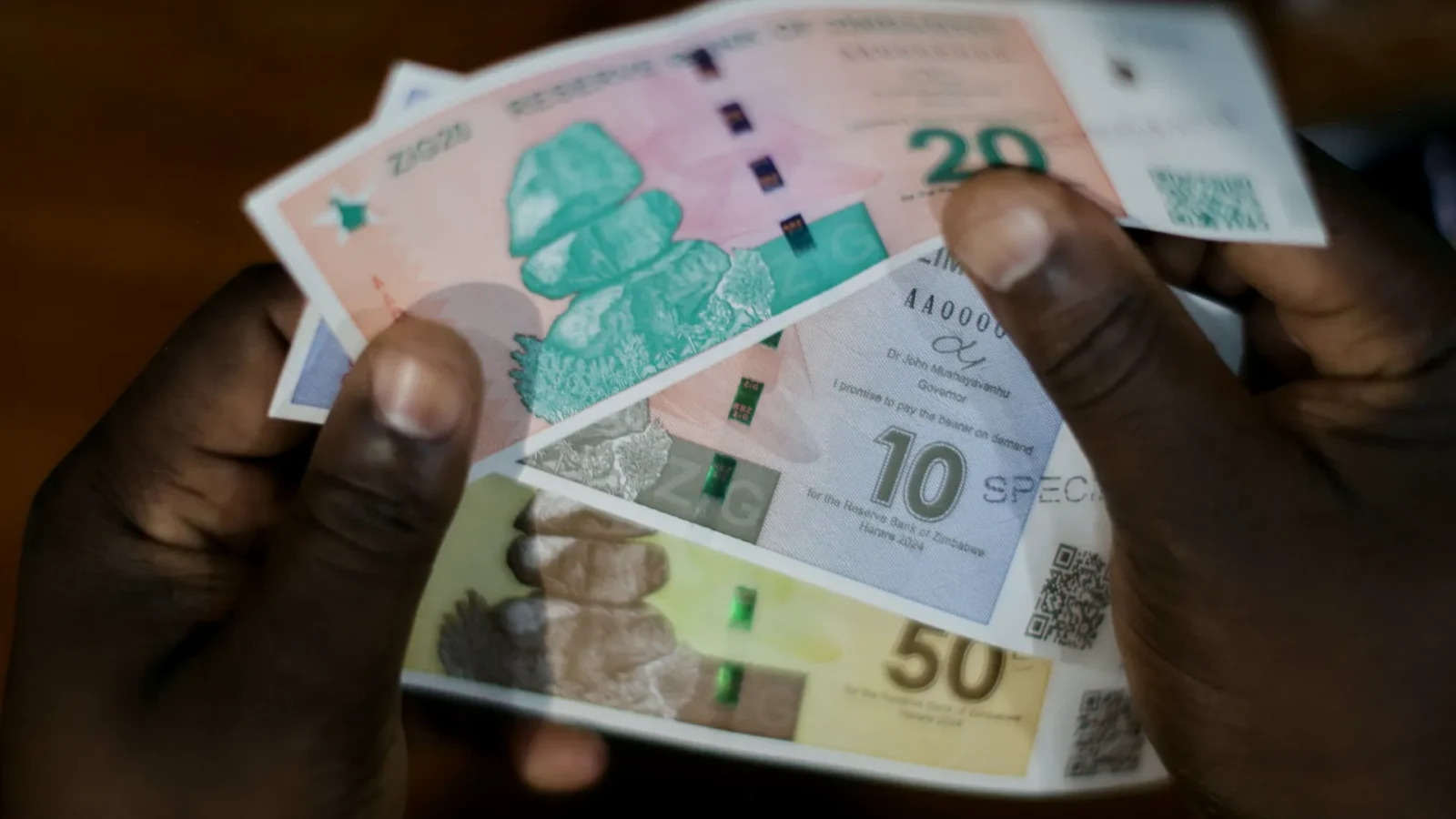
Zimbabwe has launched a new gold-backed currency, ZiG, in an effort to stabilize its volatile economy. The move aims to address the ongoing economic challenges that have plagued the nation for over two decades.
Central bank governor John Mushayavanhu unveiled ZiG, emphasizing its structured design and market-determined exchange rate. The decision comes as a response to the depreciation of the previous Zimbabwean dollar, the RTGS, which has experienced significant losses in value recently.
With inflation reaching a seven-month high of 55% in March, the government has provided a 21-day window for citizens to exchange their old, inflation-affected notes for the new ZiG currency. Despite this transition, the US dollar will remain legal tender, continuing to dominate approximately 85% of transactions.
ZiG banknotes, available in denominations from 1 to 200, aim to address the shortage of US coins, which has led to unconventional methods of providing change.
To ensure the stability of the new currency, Mushayavanhu has assured the public that the amount in circulation will be backed by equivalent value in precious minerals, particularly gold, or foreign exchange. This measure is intended to prevent the devaluation that plagued previous versions of the Zimbabwean dollar.
The decision to introduce ZiG comes amidst ongoing economic challenges, including a severe drought that has devastated half of the country’s maize crop, exacerbating economic pressures.
While there is cautious optimism surrounding the introduction of ZiG, Zimbabweans remain wary due to the nation’s history of economic instability. Economist Godfrey Kanyenze stresses the importance of disciplined fiscal management to ensure the success of ZiG and avoid past failures.
As Zimbabwe embarks on this new monetary venture, the government faces the challenge of restoring confidence in the financial system and delivering on promises of economic stability
photo source: Google
By: Montel Kamau
Serrari Financial Analyst
8th April, 2024