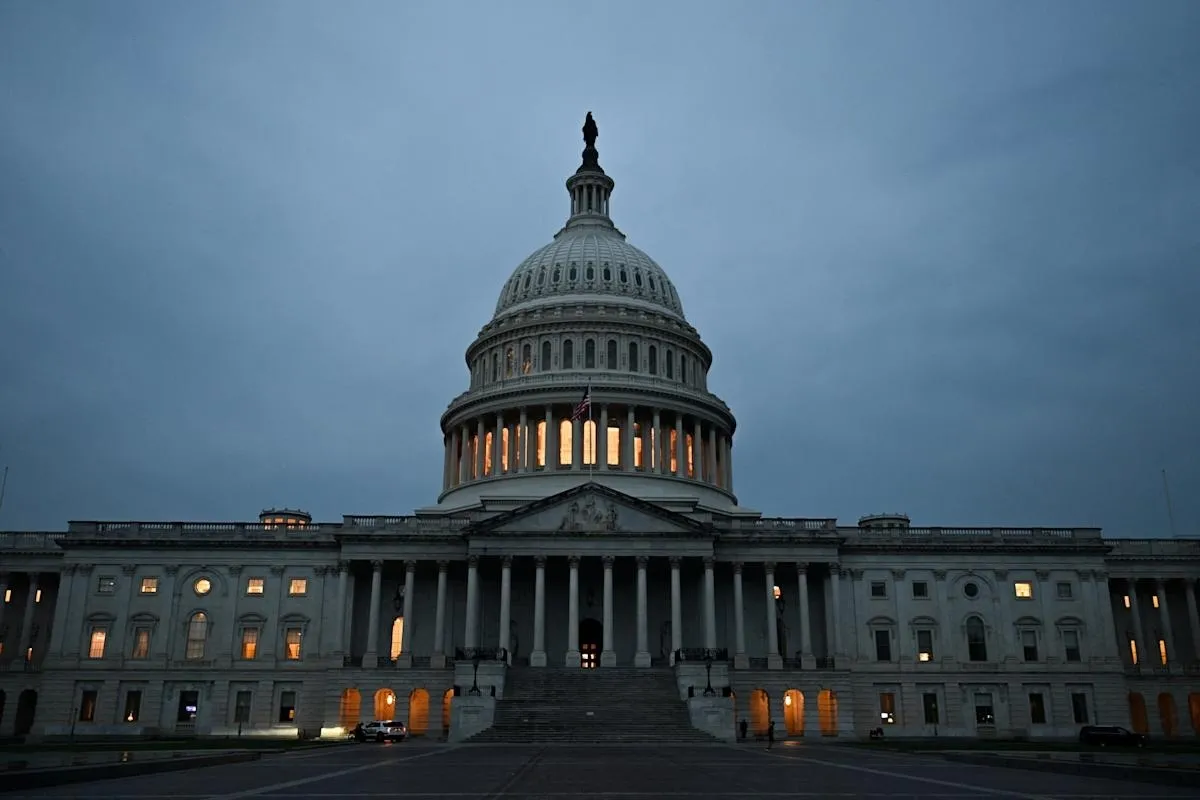
The United States government shutdown has entered a critical phase as it becomes the second-longest funding lapse in the nation’s history, with hundreds of thousands of federal workers missing their first full paychecks on Friday and no immediate resolution in sight. The unprecedented length of this budget impasse is creating cascading effects across multiple sectors of the American economy and government operations, raising concerns among policymakers, economists, and ordinary citizens about the mounting consequences of the political standoff in Washington.
Build the future you deserve. Get started with our top-tier Online courses: ACCA, HESI A2, ATI TEAS 7, HESI EXIT, NCLEX-RN, NCLEX-PN, and Financial Literacy. Let Serrari Ed guide your path to success. Enroll today.
The shutdown, which has now stretched beyond several weeks, represents a significant crisis in American governance and highlights the deep partisan divisions that continue to paralyze the federal government’s ability to fulfill its basic constitutional obligation of funding government operations. As the standoff continues, the real-world impacts are becoming increasingly severe, affecting everything from national security operations to critical economic data collection and social safety net programs that millions of Americans depend upon.
Critical Economic Data Collection Faces Unprecedented Disruption
In a particularly concerning development for economic policymakers and market participants, the White House announced through its rapid response social media account on Friday that October’s inflation data is unlikely to be released, even after the shutdown eventually ends. This represents an extraordinary disruption to the regular economic data collection and reporting that markets, businesses, and policymakers rely upon to make informed decisions.
“Surveyors cannot deploy to the field — depriving us of critical data,” the White House’s rapid response account posted to X (formerly Twitter), adding ominously that “the economic consequences could be devastating.” This statement underscores the far-reaching implications of the shutdown beyond the immediate impacts on federal workers and government services. The inability to collect and process inflation data represents a significant blind spot for the Federal Reserve, financial markets, and business decision-makers who use this information to assess economic conditions and adjust their strategies accordingly.
The announcement came on the same day that September’s inflation data was belatedly released, having been delayed by the shutdown. The September figures came in lower than economists had expected, providing some positive news amid the otherwise dire situation. However, the prospect of missing an entire month’s worth of inflation data represents an unprecedented gap in the economic data series that economists and analysts have relied upon for decades to track price trends and assess the effectiveness of monetary policy.
Transportation Infrastructure and Aviation Safety Concerns Mount
Among the most visible and immediately concerning impacts of the shutdown has been the strain on the nation’s aviation infrastructure. Transportation Secretary Sean Duffy issued a stark warning this past week about the deteriorating situation facing air traffic controllers, who are working without pay and becoming increasingly frustrated with their circumstances.
“Air traffic controllers are angry,” Secretary Duffy stated in remarks that sent shockwaves through the travel industry. More alarmingly, he added that as safety worries mount due to the strain on these critical personnel, “I can’t guarantee that your flight isn’t going to be canceled.” This unprecedented admission from a Cabinet secretary about potential threats to aviation safety highlights just how serious the situation has become for one of the nation’s most critical transportation sectors.
Air traffic controllers are considered essential personnel under federal shutdown procedures, meaning they are required to continue working even without receiving paychecks. This category of workers includes those whose jobs are deemed necessary for the safety of human life or the protection of property. However, the requirement to work without pay creates enormous financial and psychological stress for these professionals who perform high-stakes work requiring intense concentration and split-second decision-making.
The pay schedule for air traffic controllers means they are set to miss their first full paycheck next Tuesday, further intensifying the pressure on these critical workers. While federal law guarantees that all government workers will receive back pay once the shutdown ends, this provides little comfort to workers facing immediate financial obligations such as mortgage payments, rent, car loans, and other bills that cannot be deferred until an uncertain future date when the government reopens.
Federal Workers Face Financial Hardship
The human cost of the shutdown became starkly apparent on Friday when a large swath of federal employees missed their first full paychecks. For many government workers living paycheck to paycheck, this represents an immediate financial crisis. These workers, who range from park rangers and TSA agents to food safety inspectors and border patrol agents, suddenly find themselves in the position of working full-time jobs without compensation, uncertain when their next paycheck will arrive.
The financial strain extends beyond the approximately 800,000 federal workers directly affected by the shutdown. Government contractors, who number in the millions, typically do not receive back pay when shutdowns end, meaning they permanently lose income during these periods. Local businesses near federal facilities, from coffee shops to restaurants to dry cleaners, also suffer as their customer base suddenly has reduced spending power.
Federal worker unions and advocacy groups have reported increasing instances of workers seeking emergency financial assistance, visiting food banks, and struggling to pay for childcare and other essential expenses. Some workers have taken on second jobs or gig economy work in an attempt to make ends meet, raising questions about how individuals can effectively perform their federal duties while simultaneously working other jobs to survive financially.
Looming November 1 Triple Deadline Creates Urgency
Political observers and economists are increasingly focused on November 1 as a critical date that could significantly intensify both the economic and political pressure to resolve the shutdown. Three separate deadlines converge on or around this date, each representing a potential crisis that could force congressional action.
Military Personnel Face Missed Paychecks
The most politically sensitive of these deadlines involves active duty military personnel. November 1 marks the end of the month when America’s approximately 1.3 million active duty service members are scheduled to receive their paychecks. The prospect of military personnel — who are putting their lives on the line for the country — missing paychecks due to political gridlock in Washington represents an enormous political liability for whichever party is seen as responsible for the shutdown.
In a highly unusual move, President Trump announced on Friday that he had accepted a $130 million donation specifically designated to help pay soldiers during the shutdown. The New York Times reported that the donation came from reclusive billionaire Timothy Mellon, a member of one of America’s wealthiest families and a significant political donor. However, even this substantial private donation would cover only a small fraction of what is owed to America’s military personnel, who collectively earn billions of dollars monthly in salary and benefits.
The acceptance of private donations to pay military personnel raises significant constitutional and practical questions about the appropriate role of private wealth in funding core government functions. Legal scholars have debated whether such arrangements might create inappropriate dependencies or conflicts of interest, though the immediate financial relief may be welcomed by service members facing uncertainty about when they will receive their regular military pay.
Healthcare Enrollment Period Begins
November 1 also marks the beginning of the open enrollment period for healthcare programs administered through Affordable Care Act exchanges. This enrollment window is crucial for millions of Americans who obtain their health insurance through these marketplaces, and any disruption to the enrollment process could leave people without coverage or facing significant premium increases.
At the heart of the current budget impasse is a dispute over enhanced subsidies that help lower healthcare costs for Americans covered by ACA plans. Democrats are pushing to extend these subsidies, which were significantly expanded during the pandemic and are credited with reducing the number of uninsured Americans to historic lows. Republicans have resisted the extension, citing fiscal concerns about the long-term cost of these subsidies and arguing for different approaches to healthcare affordability.
The looming premium increases that would result from allowing the enhanced subsidies to expire represent one of the central points of contention preventing a budget deal. For millions of middle-class Americans who purchase insurance through the exchanges, the expiration of these subsidies could mean premium increases of hundreds or even thousands of dollars annually, a politically unpalatable outcome that Democrats are determined to prevent.
Food Assistance Programs Face Funding Crisis
Perhaps the most devastating of the November 1 deadlines involves the Supplemental Nutrition Assistance Program (SNAP), commonly known as food stamps. At least 25 states have announced that SNAP benefits will be shut off at the beginning of November due to lack of federal funding. This program serves more than 40 million Americans, including millions of children, elderly individuals, and people with disabilities who depend on this assistance to meet their basic nutritional needs.
The prospect of SNAP benefits being cut off represents a humanitarian crisis in the making. Food banks and charitable organizations, which typically see increased demand during economic downturns and government crises, have warned that they lack the capacity to fill the gap if SNAP benefits are discontinued. Nutritionists and public health experts have warned about the potential health consequences, particularly for vulnerable populations including children and seniors, if food assistance is interrupted for an extended period.
The political ramifications of cutting off food assistance to tens of millions of Americans could be enormous, potentially creating overwhelming pressure on lawmakers to reach a compromise. However, the fact that the shutdown has continued even as this deadline approaches suggests the depth of the political divisions and the difficulty of finding common ground.
One decision can change your entire career. Take that step with our Online courses in ACCA, HESI A2, ATI TEAS 7, HESI EXIT, NCLEX-RN, NCLEX-PN, and Financial Literacy. Join Serrari Ed and start building your brighter future today.
Broader Economic Consequences and Market Uncertainty
Beyond the immediate impacts on federal workers and program beneficiaries, the shutdown is creating broader economic uncertainty that is beginning to affect business confidence and economic activity. The inability to release regular economic data creates problems for businesses trying to plan inventory, hiring, and investment decisions based on economic trends.
Financial markets have shown increasing volatility as the shutdown has dragged on, with investors uncertain about both the direct economic impacts of reduced government spending and the indirect effects of increased uncertainty on consumer and business confidence. Economic forecasters have begun revising their growth projections downward, anticipating that the shutdown will subtract from GDP growth both during the shutdown itself and in the immediate aftermath as federal operations slowly return to normal.
Small businesses that rely on government contracts or serve federal workers have been particularly hard hit. Many have reported significant revenue declines, and some have been forced to lay off workers or reduce hours due to the sudden drop in business. The ripple effects extend throughout local economies near major federal installations, creating economic hardship well beyond the federal workforce itself.
Historical Context and Precedent
While this shutdown has now become the second-longest in United States history, it is worth noting that the longest shutdown occurred in 2018-2019 and lasted 35 days. That shutdown, which centered on funding for border wall construction, provides both cautionary lessons and potential roadmaps for how the current impasse might eventually be resolved.
The 2018-2019 shutdown ended without the president at the time obtaining his full requested funding for the border wall, demonstrating that extended shutdowns do not necessarily result in one side achieving its full objectives. Instead, the resolution came when the mounting economic and political costs became unsustainable for both parties, forcing a compromise that allowed the government to reopen while deferring some of the most contentious issues.
Voices Calling for Resolution
As the shutdown drags on, voices from across the political spectrum have been calling for an end to the impasse. Business groups, including the U.S. Chamber of Commerce, have urged lawmakers to prioritize reopening the government and have warned about the mounting economic costs of continued dysfunction. Federal worker unions have organized protests and lobbying efforts to highlight the hardships their members are facing and to pressure lawmakers to reach an agreement.
Some centrist lawmakers from both parties have been exploring potential compromise proposals that might break the deadlock, though so far these efforts have not gained sufficient traction to overcome the more hardline positions of party leaders. The White House and congressional leadership from both parties have continued to meet intermittently, but these negotiations have not yet produced a breakthrough.
Looking Ahead: Paths to Resolution
As the shutdown continues with no clear end in sight, analysts are watching several potential scenarios for how it might eventually be resolved. One possibility is that the mounting pressure from the November 1 deadlines forces a short-term continuing resolution that temporarily reopens the government while negotiations continue on the underlying policy disputes. Another scenario involves one party concluding that the political costs of the shutdown outweigh the benefits of holding firm on their positions, leading to a capitulation or compromise.
Some observers have suggested that external events — such as a significant market downturn, a natural disaster requiring federal response, or a national security crisis — might create the urgency needed to force lawmakers past their differences. However, the hope among many Americans is that such extreme circumstances will not be necessary and that elected leaders will find a way to fulfill their basic responsibility of keeping the government funded and operational.
Impact on Public Trust and Democratic Institutions
Beyond the immediate practical consequences, the extended shutdown is raising broader questions about the health of American democratic institutions and the ability of the political system to function effectively in an era of deep partisan polarization. Public opinion polls show that Americans across the political spectrum are frustrated with the dysfunction in Washington, though they disagree about which party bears primary responsibility for the impasse.
The shutdown represents a failure of the basic governmental process of budgeting and appropriations, a core constitutional responsibility that has traditionally been viewed as non-negotiable regardless of policy differences. The normalization of shutdowns as a political tactic represents what many scholars and observers view as a dangerous degradation of governmental norms and processes.
Conclusion
As the government shutdown continues into what is now the second-longest such impasse in American history, the consequences are mounting for federal workers, program beneficiaries, and the broader economy. The convergence of multiple critical deadlines around November 1 — including military paychecks, healthcare enrollment, and food assistance — may finally create sufficient pressure to force a resolution. However, until such an agreement is reached, hundreds of thousands of federal workers will continue working without pay, critical economic data will go uncollected, and millions of Americans will face increasing uncertainty about government services they depend upon. The ultimate resolution of this crisis, and the lessons that lawmakers and the public draw from it, will have important implications for American governance and political dynamics for years to come.
Ready to take your career to the next level? Join our Online courses: ACCA, HESI A2, ATI TEAS 7 , HESI EXIT , NCLEX – RN and NCLEX – PN, Financial Literacy!🌟 Dive into a world of opportunities and empower yourself for success. Explore more at Serrari Ed and start your exciting journey today! ✨
Track GDP, Inflation and Central Bank rates for top African markets with Serrari’s comparator tool.
See today’s Treasury bonds and Money market funds movement across financial service providers in Kenya, using Serrari’s comparator tools.
photo source: Google
By: Montel Kamau
Serrari Financial Analyst
27th October, 2025