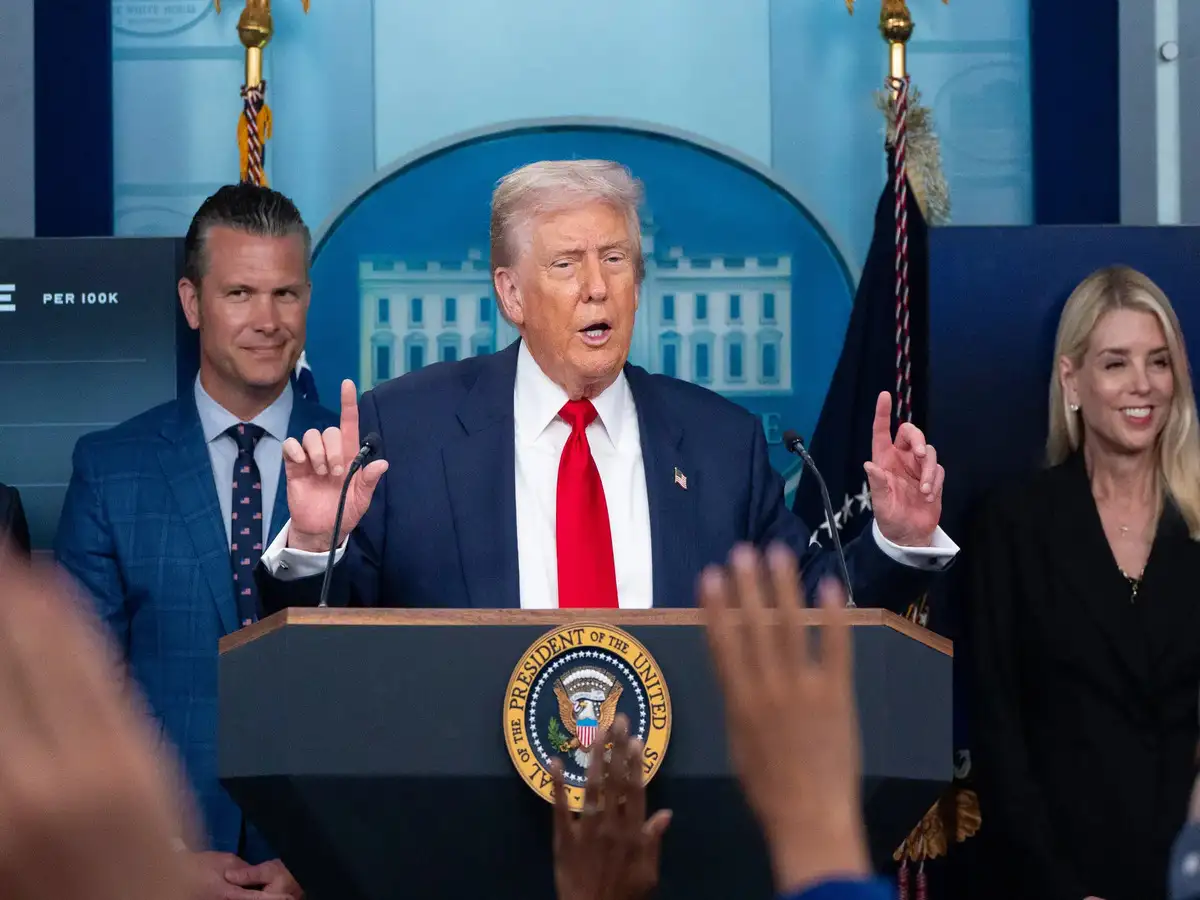
In a move that has brought a temporary sigh of relief to global markets and supply chains, the United States and China have once again extended their tariff truce. U.S. President Donald Trump, via his social media platform Truth Social, announced an executive order suspending the imposition of higher duties for another 90 days, until November 10, 2025. China’s Commerce Ministry quickly followed suit with a parallel announcement, postponing its own retaliatory measures. This extension buys critical time for both nations as they grapple with the complexities of a long-standing and deeply contentious trade dispute, just as retailers prepare for the vital end-of-year holiday season.
One decision can change your entire career. Take that step with courses in ACCA, HESI A2, ATI TEAS 7, HESI EXIT, NCLEX-RN, NCLEX-PN, and Financial Literacy. Join Serrari Ed and start building your brighter future today.
The decision to extend the truce prevents a dramatic escalation of the trade war, which would have seen tariffs on U.S. goods to China and Chinese goods to the U.S. soar to 125% and 145%, respectively. Such a move would have effectively created a trade embargo between the world’s two largest economies, causing significant disruption and economic pain. For now, the tariffs will remain at their current levels: 30% on Chinese imports to the U.S. and 10% on American goods entering China. This temporary stability is particularly important for industries that rely on smooth global supply chains, such as electronics, apparel, and toys, as they stock up for the Christmas season.
The Backdrop: A History of the Trade War
The current trade tensions didn’t appear overnight. They are the culmination of years of growing friction over what the United States has long considered to be China’s unfair trade practices. The trade war officially began in 2018 under President Trump’s first administration, an abrupt shift from decades of global market integration.
The initial U.S. actions were based on a “Section 301 investigation” by the Office of the U.S. Trade Representative, which accused China of engaging in a wide range of harmful activities. These included intellectual property (IP) theft, forced technology transfers from American companies to Chinese partners, and extensive government subsidies that give Chinese firms an unfair advantage. The U.S. government argued that these practices distorted global markets and hurt American workers.
In response, the U.S. began imposing tariffs on a broad list of Chinese goods, and China retaliated with tariffs of its own on American products. This led to a series of tit-for-tat escalations, with both sides steadily increasing the taxes on billions of dollars worth of each other’s goods. Key American exports to China, such as soybeans, pork, and automobiles, were hit hard by Beijing’s retaliatory tariffs, causing significant damage to the U.S. agriculture sector. At the same time, Chinese imports like electronics, machinery, and apparel faced higher costs in the U.S., which were often passed on to American consumers and businesses.
The escalation reached its peak in the first half of 2025, where tariffs on certain goods had skyrocketed to triple-digit levels, threatening to bring trade between the two nations to a halt. It was in May 2025 that the two sides first agreed to a 90-day truce in Geneva, lowering the most extreme tariffs and creating a window for further negotiation. The recent extension is a continuation of that initial pause, a fragile effort to prevent a full-blown economic conflict. For a detailed timeline of this year’s trade escalations and truces, you can refer to reports like this one from NDTV. A backgrounder from the Council on Foreign Relations provides more context on the contentious relationship.
Economic Stakes and Global Impact
The economic consequences of the trade war have been far-reaching, affecting not just the U.S. and China, but the entire global economy. Tariffs are essentially a tax on imported goods, and numerous studies have shown that it’s often the businesses and consumers in the importing country who bear the brunt of the cost. In the U.S., the tariffs have led to higher prices for a wide range of products, from washing machines to consumer electronics. A report by the Yale University Budget Lab indicated that the average U.S. tariff rate had surged to over 18% in 2025, a level not seen in decades. This has contributed to inflationary pressures and has put a strain on American households and companies.
The tariffs have also forced companies to rethink their global supply chains. Many multinational corporations are now implementing a “China+1” strategy, which involves diversifying their manufacturing to other countries like Vietnam, India, and Mexico. While this can add resilience to their operations in the long run, it also introduces new logistical and regulatory complexities, as detailed in an analysis from GRYDD. The tariffs have also disrupted the flow of specific critical components. For instance, Beijing’s retaliatory measures have included export controls on rare earth minerals, which are essential for producing everything from electric vehicles to fighter jets. This gives China significant leverage in negotiations and highlights the deep interdependence of the two economies.
Despite the tariffs, recent data has painted a complex picture. China’s exports to the U.S. have certainly fallen, but the country’s overall trade surplus has remained strong, in part because Chinese manufacturers have successfully pivoted to other markets, particularly in Southeast Asia. On the U.S. side, the trade deficit with China has shrunk to its lowest in over two decades, but this has been accompanied by signs of economic strain, including slower hiring and a creeping upward trend in inflation. The truce extension, therefore, is not a sign that the trade war has been a success for either side, but rather an acknowledgment of the self-inflicted economic pain both countries are enduring. As one economist pointed out in a Global Finance article, tariffs are unlikely to change the fundamental economic reality that the U.S. depends on imports and China on exports. The economic fallout has also been felt globally, with countries like Germany and Switzerland experiencing their own struggles with industrial production after facing a new wave of American tariffs, a point detailed in a report by the Associated Press.
Build the future you deserve. Get started with top-tier courses in ACCA, HESI A2, ATI TEAS 7, HESI EXIT, NCLEX-RN, NCLEX-PN, and Financial Literacy. Let Serrari Ed guide your path to success. Enroll today.
What’s on the Negotiation Table?
The 90-day extension provides a window for negotiators to continue their work on a long-term agreement. The key issues that remain on the table are the same ones that ignited the conflict in the first place, and they are notoriously difficult to resolve.
Intellectual Property and Technology Transfer
This is perhaps the most significant point of contention. The U.S. alleges that China’s policies have led to widespread theft of American intellectual property and have forced American companies to hand over their technology as a condition of doing business in China. Beijing has made some legislative changes in this area, but U.S. officials remain skeptical about the enforcement of these laws. A crucial part of any deal would require China to enact and enforce structural changes that protect trade secrets and patents. A fact sheet from the Office of the U.S. Trade Representative on the previous “Phase One” agreement provides insight into the kinds of intellectual property protections the U.S. is seeking.
Market Access and Industrial Subsidies
The U.S. has long argued that Chinese markets are not as open to American firms as U.S. markets are to Chinese companies. The U.S. is pushing for China to reduce non-tariff barriers and end industrial policies that unfairly subsidize its own firms, giving them a competitive advantage in the global market.
Fentanyl and Other Illicit Goods
A new and significant dimension to the talks is the issue of fentanyl, a powerful synthetic opioid. The U.S. has accused China of not doing enough to stop the flow of chemicals used to produce fentanyl, which has contributed to a public health crisis in America. President Trump has tied this issue directly to trade, even imposing additional tariffs specifically related to fentanyl trafficking. This adds a complex geopolitical and social element to what is already a difficult economic negotiation.
Agricultural Purchases
The U.S. has consistently pressed China to increase its purchases of American agricultural products, particularly soybeans. This demand has been a recurring theme in the negotiations, as a massive increase in Chinese purchases would be a visible win for the American farming community, which has been severely impacted by the trade war. However, as some analysts have noted, the feasibility of such a large-scale, immediate purchase remains a question.
Outlook and Future Challenges
The extension of the truce has been met with a mix of optimism and caution. Financial markets have reacted positively, with a brief rally in Asian stocks, as the fear of a new, major escalation has been postponed. U.S. business groups, such as the U.S.-China Business Council, have also welcomed the extension, emphasizing that it provides a much-needed window of certainty for companies to plan their operations.
However, many analysts believe that the fundamental issues dividing the two countries are far from resolved. The negotiations have proven to be a difficult, long-term affair, with both sides holding strong leverage. The U.S. can continue to threaten higher tariffs, but as the economic data shows, this strategy also inflicts pain on the American economy. China, in turn, can use its control over critical minerals and its immense market size to its advantage.
The path to a comprehensive agreement remains unclear. While there is a possibility that a “framework deal” could be reached in the fall, it is more likely that the two sides will continue to address issues in smaller, more manageable packages. For example, a deal might focus on a few key areas, such as increasing agricultural purchases and providing limited relief on tariffs, while leaving the more complex structural issues for future talks. The fact that the truce has been extended multiple times this year, often right down to the wire, suggests that a permanent resolution is not yet in sight. The ongoing negotiations are a testament to the fact that while a trade war has no winners, the deep interdependence between the U.S. and China makes a complete economic decoupling virtually impossible. The extension is a recognition that, for now, continuing to talk is better than escalating a conflict that would harm both nations.
Ready to take your career to the next level? Join our dynamic courses: ACCA, HESI A2, ATI TEAS 7 , HESI EXIT , NCLEX – RN and NCLEX – PN, Financial Literacy!🌟 Dive into a world of opportunities and empower yourself for success. Explore more at Serrari Ed and start your exciting journey today! ✨
Track GDP, Inflation and Central Bank rates for top African markets with Serrari’s comparator tool.
See today’s Treasury bonds and Money market funds movement across financial service providers in Kenya, using Serrari’s comparator tools.
photo source: Google
By: Montel Kamau
Serrari Financial Analyst
12th August, 2025