
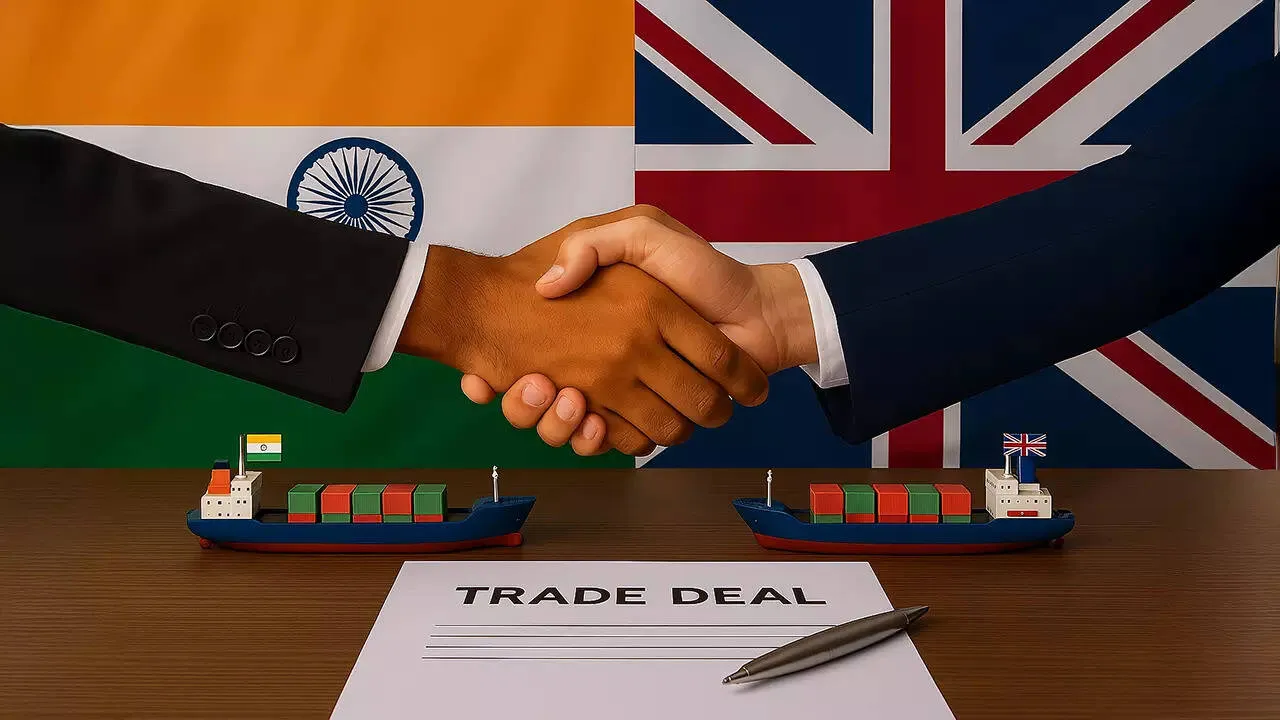
Britain and India sealed a landmark free trade agreement on May 6, 2025, after three years of stop‑start negotiations. As the world’s fifth‑ and sixth‑largest economies, they pledged to deepen their economic partnership at a time when global supply chains have been rattled by protectionist measures and volatility in major markets. The deal is hailed as the most significant post‑Brexit trade victory for London, promising to add roughly £25.5 billion in bilateral trade by 2040 while cutting tariffs, easing market access and setting the stage for closer cooperation on investment, services and emerging technologies.
A Response to an Unsettled Trade Environment
The urgency behind this pact owes much to the turmoil triggered by U.S. tariff hikes under the Trump administration. British whisky faced levies of up to 150 percent, while cars exported to India were slapped with duties well in excess of 100 percent. Both governments recognized that relying on third‑party markets under shifting policies left their exporters exposed. In private talks, ministers in London and New Delhi agreed that a bilateral agreement could insulate their key industries and send a strong signal that open markets still matter.
Setting Ambitious Targets
Under the new agreement, more than 90 percent of Indian tariffs covering UK exports will be eliminated over ten years. On day one, duties on iconic British goods—such as Scotch whisky and fine ales—will fall by half, from 150 percent to 75 percent. By year ten, these tariffs will taper to 40 percent. Similarly, India will introduce a managed quota for British automobile imports, capping duties at 10 percent on up to 50,000 passenger vehicles annually. Beyond these headline sectors, the pact reduces or removes levies on advanced engineering parts, medical devices, precision instruments and a wide array of food products—from salmon to specialty chocolates and premium biscuits.
In return, the UK will liberalize nearly all Indian exports, wiping out tariffs on textiles, apparel, leather goods, jewelry and marine products. These sectors collectively employ millions in India’s manufacturing hubs and account for a third of its export earnings. By offering duty‑free access to a 67 million‑strong UK consumer base, New Delhi’s negotiators expect to spur investment in factories and logistics, creating jobs in regions such as Tamil Nadu and Gujarat.
Expanding Beyond Goods
Crucially, the agreement lays the groundwork for deeper collaboration in services, investment and the digital economy. While detailed protocols on financial services, legal and professional work remain under negotiation, both sides committed to mutual recognition of certain qualifications. Senior executives, research scientists and digital specialists will benefit from streamlined visa procedures for short‑term postings of up to three years, exempt from duplicate social‑security contributions. This provision, though modest compared with full open mobility, reflects a compromise designed to balance competitiveness with border control.
Modern Rules of Origin and Procurement Access
Recognizing the complexity of global supply chains, negotiators agreed on flexible rules of origin. Manufacturers can incorporate up to 30 percent of third‑country components without forfeiting preferential tariffs, provided they meet a minimum value‑addition threshold. This ensures that British and Indian producers can continue using established suppliers while still reaping the benefits of the deal.
On public procurement, British firms will gain access to a broader roster of Indian government tenders—particularly in infrastructure, healthcare and urban development. By opening up these markets, the UK hopes to export engineering expertise, project‑management services and cutting‑edge technology, from railway signaling to waste‑water treatment systems. In turn, Indian contractors will vie for contracts in the UK, especially in fast‑growing sectors such as renewable energy installation and affordable housing.
Economic Projections and Growth Impacts
Economists estimate that the deal will boost UK GDP by around £4.8 billion by 2040. Enhanced market access is projected to underpin an additional £15 billion in UK exports and open a further £10 billion in Indian sales to the UK market. Trade volumes, which reached £42.6 billion in 2024, are expected to climb to over £70 billion by 2040 if both countries fully leverage the agreement’s provisions.
Sector by sector, the impact is significant:
Spirits and Beverages: Scotch whisky exports to India stood at 16 million bottles in 2024. With tariffs halved, industry leaders anticipate a 60 percent increase in volume over the next decade.
Automobiles: The UK currently exports around 45,000 cars to India each year. Under the new quota, manufacturers such as Jaguar Land Rover and Mini can plan capacity expansions, confident of long‑term market access.
Agriculture and Food: British lamb and salmon producers expect to double their shipments, capitalizing on rising middle‑class incomes and evolving tastes in urban India. Cheese makers and chocolatiers are also eyeing Delhi, Mumbai and Bengaluru as emerging gourmet hubs.
Textiles and Leather: Indian apparel exports to the UK—valued at £1.2 billion in 2024—will enjoy tariff‑free access, enabling brands in Surat and Tirupur to compete against established Asian rivals. Estimates suggest a 30 percent rise in shipments within five years.
Political Dynamics and Negotiation Challenges
Launched in January 2022, the talks faced multiple hurdles. Britain saw four prime ministers navigate the process—each with shifting priorities on domestic regulation, environmental standards and immigration controls. India, by contrast, benefited from continuity under Prime Minister Narendra Modi, who views economic reform as central to his “Make in India” vision. The change in UK leadership last summer, when Keir Starmer’s government replaced the previous administration, injected fresh impetus. Business and Trade Secretary Jonathan Reynolds led the final push in April, meeting his Indian counterpart, Commerce Minister Piyush Goyal, in London for marathon sessions that ironed out remaining disagreements.
Opposition voices in both countries have criticized aspects of the deal. In the UK, some lawmakers argued that the concessions on services and mobility fall short of a truly “liberal” agreement. They point to student and skilled‑worker visa caps as missed opportunities. In India, industry groups worry that rapid tariff cuts could expose fledgling manufacturers to a flood of cheap imports. To address these concerns, both governments agreed to a joint review mechanism—set to convene two years after implementation—to assess economic impacts and recommend targeted adjustments.
From Speyside to Surat
Beyond headline numbers, the agreement touches lives on the ground. In a distillery nestled among the rolling hills of Speyside, fourth‑generation cooper Angus MacLeod is already planning a small bottling line dedicated to the Indian market. “We’ve seen growing demand in Mumbai and Delhi at trade shows,” he says. “Cutting the duty in half means we can offer our premium single malts at a competitive price, and invest more in cask maturation.”
Meanwhile, in Surat—a textile powerhouse known for its synthetic fabric mills—entrepreneur Nisha Patel is finalizing a JV to produce eco‑friendly garments for UK fashion houses. “Tariff‑free access is a game‑changer,” she explains. “It gives us breathing room to upgrade machinery and train workers in quality control without worrying about unpredictable costs.”
Digital Trade and Innovation
The pact also nods to the digital economy. Both governments pledged to negotiate an e‑commerce annex by mid‑2026, aiming to ban customs duties on electronic transmissions and to safeguard cross‑border data flows. Given India’s booming fintech scene—with over $1 billion in venture capital invested in 2024—and the UK’s strengths in cybersecurity and AI, a future digital chapter could unlock joint ventures in everything from digital identification systems to blockchain‑enabled supply‑chain tracking.
Environmental and Labour Standards
While not a standalone “green” agreement, the deal includes a commitment to uphold each country’s environmental and labour laws. A dedicated working group will monitor compliance, share best practices on clean‑energy technologies and explore joint financing for climate‑resilient infrastructure. This framework aims to ensure that trade expansion does not come at the expense of sustainability or workers’ rights.
Next Steps and Implementation
With the treaty text finalized, both parliaments are expected to begin ratification debates in the autumn. Officials anticipate that the deal will enter into force in early 2026, triggered by deposit of ratification documents in New Delhi and London. A joint UK‑India Trade Commission will convene quarterly to oversee implementation, troubleshoot disputes and recommend sector‑specific enhancements.
Trade missions are already being planned: a British agribusiness delegation will visit India in September to forge partnerships in dairy processing and cold‑chain logistics; an Indian manufacturing tour will spotlight opportunities in the UK’s green‑energy supply chain. These roadshows are designed to convert high‑level commitments into concrete memoranda of understanding and investment agreements.
A Blueprint for Twenty‑First‑Century Trade
Beyond its immediate economic gains, the Britain‑India deal offers a template for modern trade treaties: it combines deep tariff cuts with flexible rules of origin, limited but meaningful mobility provisions, commitments on digital trade and a mechanism for ongoing review. In an era of geopolitical competition and shifting alliances, two democracies have shown that shared values can underpin a robust economic partnership—one that balances liberalization with safeguards and paves the way for collaboration in emerging sectors.
Conclusion
As the ink dries on this “historic” agreement, businesses on both sides of the world are already charting new strategies. From the highlands of Scotland to the textile mills of Gujarat, the pact promises to reshape supply chains, spark joint ventures and bring consumers a wider choice of goods. For policymakers, the real challenge now lies in smooth implementation, addressing unforeseen frictions and ensuring the benefits reach small businesses and workers as well as large exporters. If managed well, this deal could redefine how mid‑sized powers engage in global trade, demonstrating that thoughtful, values-based liberalization still has a vital role to play in a fractious world.
Ready to take your career to the next level? Join our dynamic courses: ACCA, HESI A2, ATI TEAS 7 , HESI EXIT , NCLEX – RN and NCLEX – PN, Financial Literacy!🌟 Dive into a world of opportunities and empower yourself for success. Explore more at Serrari Ed and start your exciting journey today! ✨
photo source: Google
By: Montel Kamau
Serrari Financial Analyst
7th May, 2025