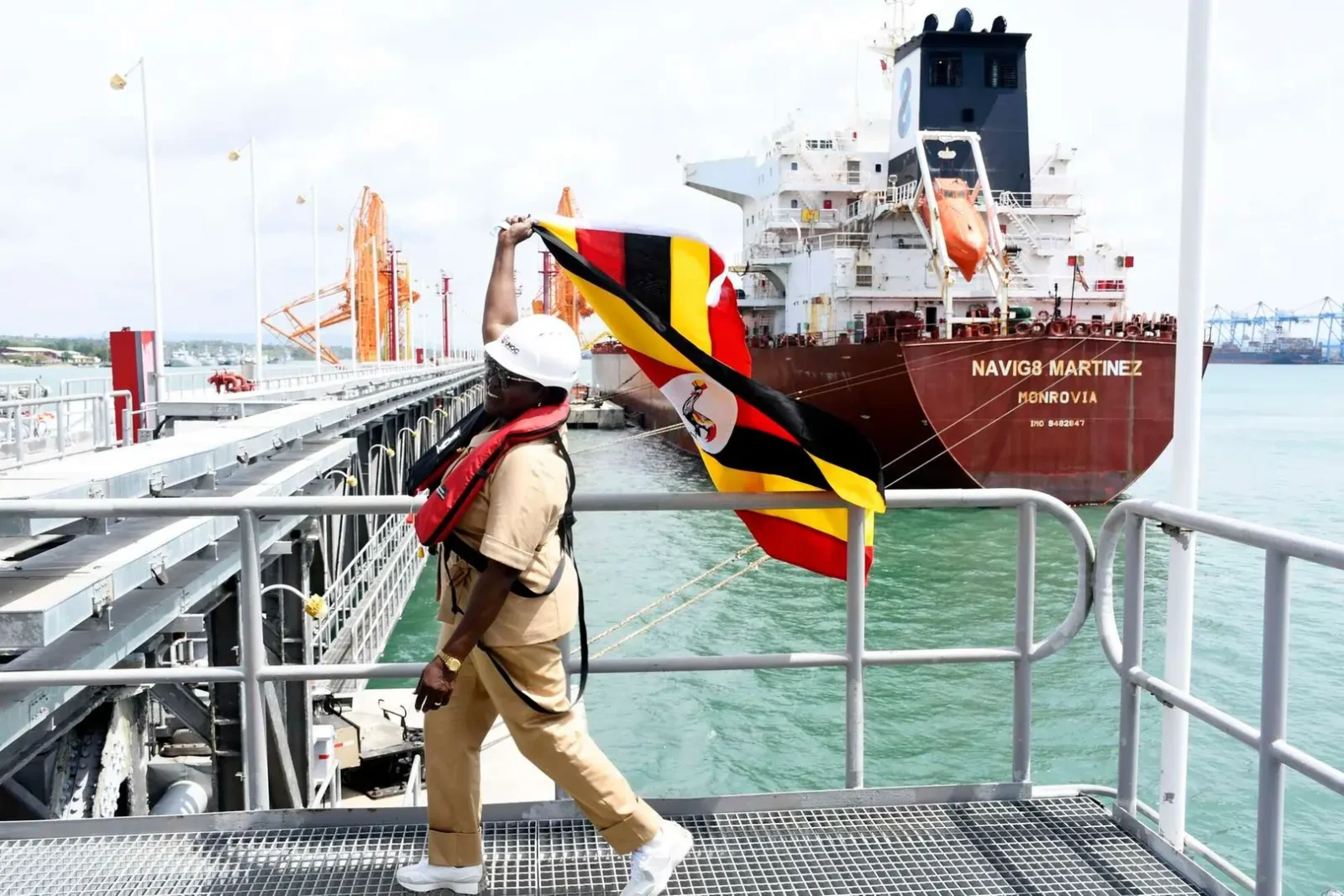
Uganda is intensifying its efforts to secure adequate oil supplies by diversifying its import routes, a strategy aimed at addressing persistent challenges in meeting its growing demand for petroleum products. The Uganda National Oil Corporation (UNOC) has recently expanded its importation efforts to include the port of Dar es Salaam in Tanzania, supplementing the traditional reliance on Kenya’s Mombasa port. This move, while more costly, is seen as essential to ensuring consistent and sufficient fuel supply amid the country’s rising consumption needs.
Background: Uganda’s Dependence on Kenyan Ports
For decades, Uganda has primarily relied on the port of Mombasa in Kenya for the importation of petroleum products. The port has been a critical hub for Uganda’s fuel needs, with most oil imports passing through this route. However, the growing demand for petroleum products, coupled with logistical challenges, has led Uganda to explore additional importation avenues to mitigate the risk of supply shortages.
The decision to diversify comes at a time when Uganda’s oil consumption is steadily increasing, driven by economic growth and expanding infrastructure projects. According to the UNOC, Uganda consumes approximately 7 million liters of petroleum products daily, with an annual growth rate of around 7%. This increasing demand has put pressure on the country’s existing supply chains, necessitating the need for more robust and diversified import routes.
Challenges with the Mombasa Route
Despite the long-standing reliance on Mombasa, Uganda has faced significant challenges with this route, particularly in terms of meeting its oil import quotas. In July 2024, Uganda imported its first oil shipment through Mombasa, but the volume was insufficient to meet the country’s needs. This shortfall led to the importation of an additional 15 metric tonnes (MT) of petroleum products beyond the initial shipment, highlighting the limitations of the current importation framework.
Moreover, logistical issues, including delays and capacity constraints at the Mombasa port, have exacerbated the situation. These challenges have prompted Uganda to seek alternative routes to ensure a steady supply of petroleum products. The move to diversify through the port of Dar es Salaam in Tanzania is part of this broader strategy to mitigate risks associated with over-reliance on a single import route.
The Role of Dar es Salaam Port in Uganda’s Oil Imports
The port of Dar es Salaam has emerged as a viable alternative for Uganda’s oil imports, despite the higher costs associated with this route. In August 2024, Uganda began supplementing its oil imports through Tanzania to ensure it could meet its monthly demand of 174,000 MT of petroleum products, including petrol, diesel, Jet-A1, and kerosene. The decision to utilize the Dar es Salaam port is driven by the need to maintain consistent stock levels and avoid the supply disruptions that have plagued the Mombasa route.
Uganda’s use of the Dar es Salaam port involves a combination of road and rail transport to deliver petroleum products to the country. This logistical approach, while more expensive, offers greater flexibility and redundancy in the supply chain, ensuring that Uganda can maintain adequate fuel stocks even in the face of challenges with the Mombasa route.
Tripartite Agreement and Regional Collaboration
In a significant development, Uganda has also entered into a tripartite agreement with Kenya and Tanzania, aimed at streamlining the importation and transit of petroleum products through the region. This agreement allows Uganda to import petroleum products through both Mombasa and Dar es Salaam, with the Kenya Pipeline Company (KPC) facilitating the transport of these products from the port of Mombasa to Eldoret and Kisumu for final delivery by road to Uganda.
The tripartite agreement marks a crucial step in ending the longstanding monopoly enjoyed by Kenya’s oil marketers and reflects Uganda’s strategic shift towards greater regional collaboration in securing its energy needs. The agreement also resolves a dispute between Uganda and Kenya, which had escalated earlier in 2024 when Uganda took Kenya to the East African Court of Justice (EACJ) over restrictions on Uganda’s state-owned oil imports through Kenya.
The Impact of the East African Crude Oil Pipeline (EACOP)
Another significant factor in Uganda’s evolving oil import strategy is the development of the East African Crude Oil Pipeline (EACOP), a project that aims to transport crude oil from Uganda’s oil fields in the Lake Albert region to the port of Tanga in Tanzania. The EACOP project, expected to be completed by 2025, will play a critical role in enhancing Uganda’s oil export capacity and reducing its dependence on imported petroleum products.
Once operational, the EACOP will enable Uganda to export crude oil directly to international markets, thereby boosting the country’s revenues and reducing its reliance on imported refined petroleum products. The pipeline is also expected to stimulate economic growth in the region by creating jobs and fostering infrastructure development along its route.
Uganda’s Strategic Shift: Moving Beyond Import Dependency
Uganda’s decision to diversify its oil import routes and invest in infrastructure projects like the EACOP is part of a broader strategy to reduce the country’s dependence on imported petroleum products and enhance its energy security. The government has also taken steps to increase domestic oil production, with the aim of becoming a net exporter of petroleum products in the coming years.
In line with this strategy, Uganda has been working to develop its oil refining capacity. The planned construction of the Uganda Oil Refinery in Hoima District is expected to further reduce the country’s reliance on imported refined products. The refinery, which will have a capacity of 60,000 barrels per day, is expected to supply the domestic market with petroleum products while also exporting surplus production to neighboring countries.
Challenges and Opportunities
While Uganda’s efforts to diversify its oil import routes and increase domestic production are commendable, the country faces several challenges in realizing its energy ambitions. The development of the EACOP and the Uganda Oil Refinery has faced delays due to financing issues, environmental concerns, and opposition from local communities. Additionally, the high cost of importing oil through alternative routes like Dar es Salaam poses a financial burden on the government and consumers.
However, these challenges also present opportunities for Uganda to strengthen its energy sector and position itself as a key player in the East African oil market. By investing in infrastructure, fostering regional collaboration, and increasing domestic production, Uganda can enhance its energy security, reduce its reliance on imported petroleum products, and unlock new economic opportunities.
Conclusion
Uganda’s decision to diversify its oil import routes and invest in infrastructure projects like the EACOP and the Uganda Oil Refinery reflects the country’s commitment to securing its energy future. While challenges remain, the strategic shift towards greater regional collaboration and domestic production is a positive step towards enhancing Uganda’s energy security and reducing its reliance on imported petroleum products.
As Uganda continues to navigate the complexities of the global oil market, the country’s ability to adapt to changing circumstances and leverage its natural resources will be critical to its long-term energy security and economic development. The diversification of import routes and the development of domestic infrastructure are essential components of this strategy, offering Uganda a path towards greater energy independence and prosperity.
photo source: Google
By: Montel Kamau
Serrari Financial Analyst
26th August, 2024