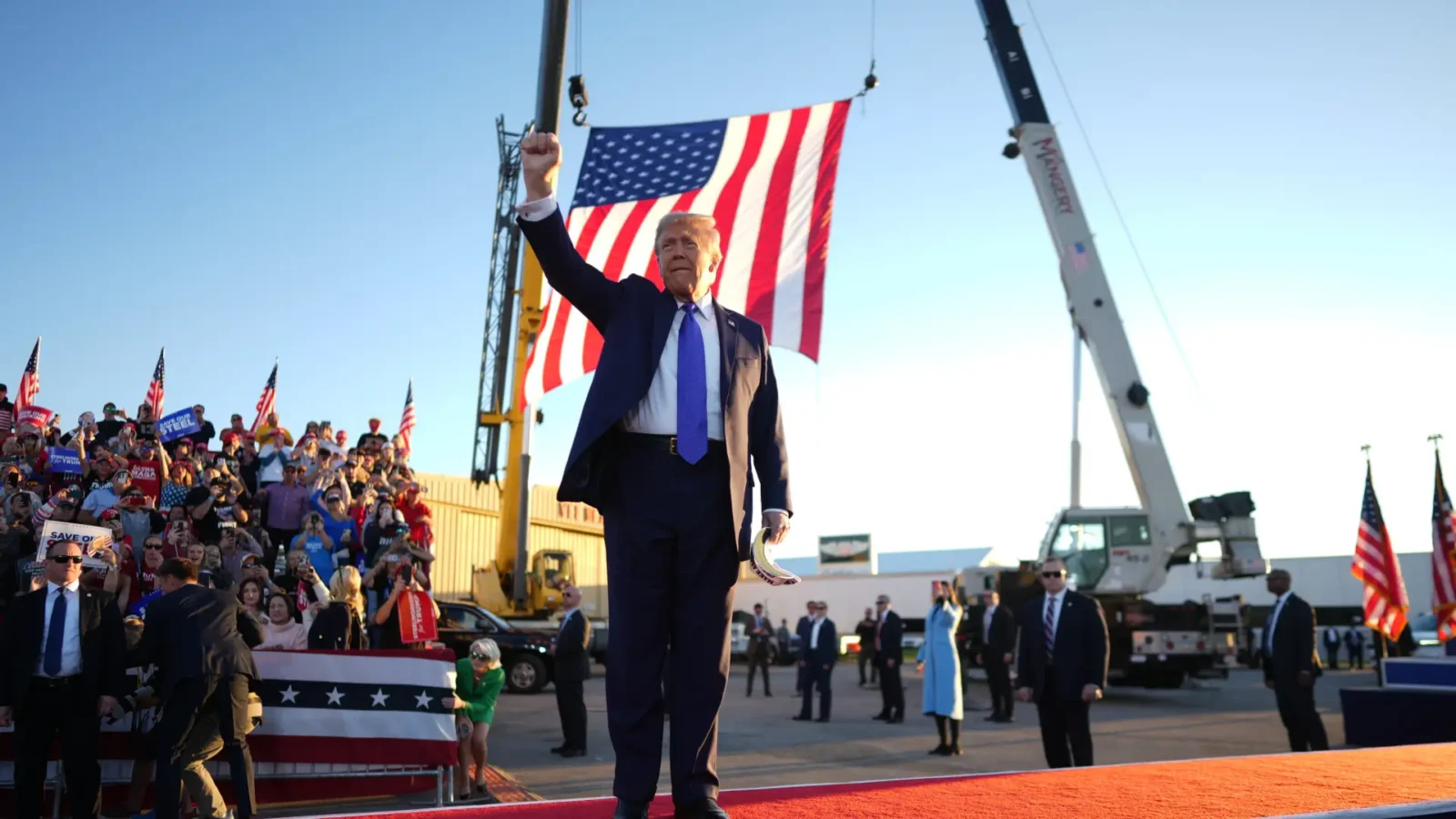
President Donald Trump has dramatically escalated tensions with America’s allies by threatening comprehensive tariffs and export controls on countries whose taxes, rules, or laws “discriminate” against US technology companies. In a late Monday post on Truth Social, Trump warned of “substantial” retaliatory measures against nations that maintain digital services taxes while allegedly exempting Chinese tech giants from similar scrutiny.
Build the future you deserve. Get started with our top-tier Online courses: ACCA, HESI A2, ATI TEAS 7, HESI EXIT, NCLEX-RN, NCLEX-PN, and Financial Literacy. Let Serrari Ed guide your path to success. Enroll today.
Truth Social Broadside Targets European Allies
Trump’s latest ultimatum represents a significant expansion of his administration’s confrontational approach to international tech regulation. “Digital Taxes, Digital Services Legislation, and Digital Markets Regulations are all designed to harm, or discriminate against, American Technology,” the president wrote. “They also, outrageously, give a complete pass to China’s largest Tech Companies. This must end, and end NOW!”
The president’s warning specifically targets digital services taxes, digital markets regulations, and related legislation that he claims unfairly burden American companies while allowing Chinese competitors to operate freely. Trump has raised the stakes significantly by threatening not only tariffs but also restrictions on exports of US technology and semiconductor components.
Expanding Arsenal of Economic Weapons
Unlike previous trade disputes that focused primarily on tariffs, Trump’s current threats include comprehensive export controls on American technology. This approach could potentially harm other US companies, particularly semiconductor manufacturers like Intel, Nvidia, and AMD, which rely on global markets for revenue.
The inclusion of export restrictions represents a significant escalation, as such measures would likely disrupt global supply chains in semiconductors, cloud computing, and telecommunications. Companies reliant on American high-tech components could be forced to accelerate diversification strategies, seeking alternative suppliers or investing in domestic production capabilities.
Targeting EU’s Landmark Digital Regulations
While Trump did not explicitly name countries in his Truth Social post, his comments directly challenge the European Union’s Digital Markets Act (DMA) and Digital Services Act (DSA), two landmark regulations that have redefined how large technology platforms operate in Europe.
The DMA, which took effect in 2023, designates major platforms like Google, Apple, Meta, Amazon, and Microsoft as “gatekeepers” and imposes strict obligations to ensure fair competition. These include requirements for interoperability, data portability, and restrictions on self-preferencing of their own services.
The DSA, meanwhile, requires large online platforms to take more aggressive action against illegal content, disinformation, and harmful material. Platforms with more than 45 million users in the EU face fines of up to 6% of global annual turnover for non-compliance—potentially billions of euros for the largest tech companies.
Digital Services Tax Landscape Across Europe
The president’s threats encompass a broad array of European digital taxation policies. Currently, Austria, Denmark, France, Hungary, Italy, Poland, Portugal, Spain, Switzerland, Turkey, and the United Kingdom have implemented digital services taxes, with several additional countries either proposing or considering such measures.
The UK’s digital services tax, a particular target of US criticism, imposes a 2% levy on tech giants including Alphabet, Meta, and Amazon. Applied to companies with global revenues exceeding £500 million, the tax affects revenues greater than £25 million derived from the UK and generates approximately £800 million annually.
France and Spain have implemented even more comprehensive approaches, with 3% taxes on digital advertising, data sales, and digital intermediation services for companies generating €750 million in annual global revenues. Austria focuses specifically on online advertising with a 5% levy for high-revenue companies.
Congressional Support and Bipartisan Opposition
Trump’s aggressive stance enjoys bipartisan support in Congress, where lawmakers have consistently criticized foreign digital taxes as discriminatory against American companies. In February 2025, House Judiciary Committee Chairman Jim Jordan sent a letter to EU antitrust chief Teresa Ribera, arguing that European regulations specifically target US firms while giving domestic companies competitive advantages.
The letter criticized the 10% fines on global revenues under the DMA, stating these “severe fines appear to have two goals: to compel businesses to follow European standards worldwide, and as a European tax on American companies.” This congressional pressure provides Trump with domestic political cover for his increasingly confrontational approach.
Reigniting Trade War Risks
Trump’s latest ultimatum risks reigniting comprehensive trade wars with America’s closest allies at a time when the US has recently concluded trade agreements with both the UK and EU. During his first presidential term, both Republican and Democratic lawmakers criticized foreign digital taxes, and Trump’s administration initiated multiple investigations under Section 301 of the Trade Act.
The previous administration initially threatened 25% tariffs on goods from France, Italy, Austria, Spain, the UK, and Turkey in response to their digital services taxes. However, these tariffs were suspended pending OECD negotiations on global tax reform—negotiations that Trump withdrew the US from on his first day back in office in January 2025.
Fuel your success with knowledge that matters. Enroll in our Online programs: ACCA, HESI A2, ATI TEAS 7, HESI EXIT, NCLEX-RN, NCLEX-PN, and Financial Literacy. Join Serrari Ed now and take control of your future.
Canadian Precedent and European Resistance
The effectiveness of Trump’s pressure tactics has already been demonstrated. In June 2025, Canada scrapped its digital services tax, which Trump had described as a “direct and blatant” attack on American companies. The decision came as Canada sought to smooth trade negotiations with its neighbor and avoid potential retaliatory measures.
However, European allies appear more resistant to American pressure. UK officials weighed changes to their tech tax during recent trade talks but ultimately reached an agreement without amending the levy. The European Commission has defended its regulations, arguing they apply equally to all large digital companies regardless of origin and promote fair competition while protecting consumer rights.
China Exemption Claims Under Scrutiny
Trump’s assertion that European regulations give Chinese companies a “complete pass” faces significant scrutiny from policy experts. Critics point out that Trump himself has given Chinese company ByteDance and its social network TikTok preferential treatment by declining to enforce a law requiring divestiture of US operations.
The reality of digital taxation is more complex than Trump’s characterization suggests. European digital services taxes typically apply to all qualifying companies based on revenue thresholds and service types, rather than country of origin. However, the high thresholds do mean that affected companies are predominantly American tech giants, as Chinese companies generally have smaller European market shares in the covered service categories.
Broader Implications for Tech Regulation
The confrontation extends beyond taxation to fundamental questions about tech regulation and content moderation. Trump’s memorandum also targets policies that “foster censorship or undermine free speech,” directly challenging European approaches to content moderation and platform accountability.
FCC Chairman Brendan Carr has criticized the Digital Services Act’s content moderation requirements as potentially clashing with American free speech values. Vice President JD Vance has similarly denounced European content moderation practices as “authoritarian censorship,” reflecting broader ideological differences between American and European approaches to platform regulation.
Economic Consequences and Market Reactions
The potential economic fallout from Trump’s threats could be substantial. Implementation of new tariffs or export restrictions could prompt retaliatory measures from affected countries, including reciprocal tariffs on US exports and restrictions on American technology companies operating abroad.
Global supply chains, particularly in semiconductors and telecommunications, face significant disruption risks. Companies dependent on American high-tech components may accelerate efforts to diversify their supply sources, potentially reducing long-term demand for US technology exports.
The semiconductor industry could face particular challenges, as companies like Intel—which the US government now partially owns through recent investments—could lose revenue from export restrictions designed to protect software companies like Google and Meta that aren’t subject to digital services taxes.
OECD Negotiations Collapse
The current tensions occur against the backdrop of collapsed international negotiations on digital taxation. The OECD’s “Pillar One” initiative aimed to create global rules for taxing digital services, potentially making national digital services taxes unnecessary.
However, progress has stalled due to geopolitical disagreements, and Trump’s withdrawal from the negotiations in January 2025 has effectively ended prospects for a multilateral solution. This collapse leaves countries free to implement their own digital taxation approaches, setting the stage for continued confrontation.
European Response and Future Outlook
European leaders face a challenging balance between maintaining sovereignty over their digital policies and avoiding damaging trade wars with their largest security guarantor and export market. The EU has indicated it will not back down from enforcing its digital regulations, despite pressure from Washington.
Key European Parliament lawmakers have urged the Commission not to cave to American pressure, while civil society organizations emphasize the importance of maintaining regulatory independence. However, the practical realities of European dependence on American security guarantees and market access create significant leverage for Trump’s administration.
Timeline for Action
Trump’s memorandum sets an April 2025 deadline for recommendations on appropriate retaliatory actions, with the US Trade Representative conducting investigations into digital services taxes and related policies. The administration has opened a public comment period running through March 11, seeking input on unfair trade practices from affected businesses and other stakeholders.
The findings will be published as part of Trump’s “America First Trade Policy Memorandum,” providing the framework for potential tariffs, export restrictions, or other retaliatory measures. This timeline suggests that concrete actions could emerge within months, rather than years.
Strategic Implications
The digital tax confrontation reflects broader tensions between American tech dominance and European regulatory sovereignty. As technology becomes increasingly central to economic and social life, these disputes may intensify rather than resolve.
The outcome could reshape global technology governance for decades, determining whether US companies operate under American regulatory principles worldwide or must adapt to diverse international standards. For European allies, the challenge lies in maintaining their regulatory autonomy while preserving crucial economic and security relationships with the United States.
Trump’s willingness to weaponize both trade policy and technology export controls signals a more aggressive approach to tech diplomacy than previous administrations. The success or failure of these tactics will likely influence how future US administrations approach similar disputes over digital governance and international regulation.
Ready to take your career to the next level? Join our Online courses: ACCA, HESI A2, ATI TEAS 7 , HESI EXIT , NCLEX – RN and NCLEX – PN, Financial Literacy!🌟 Dive into a world of opportunities and empower yourself for success. Explore more at Serrari Ed and start your exciting journey today! ✨
Track GDP, Inflation and Central Bank rates for top African markets with Serrari’s comparator tool.
See today’s Treasury bonds and Money market funds movement across financial service providers in Kenya, using Serrari’s comparator tools.
photo source: Google
By: Montel Kamau
Serrari Financial Analyst
26th August, 2025