What the Tribunal Decided
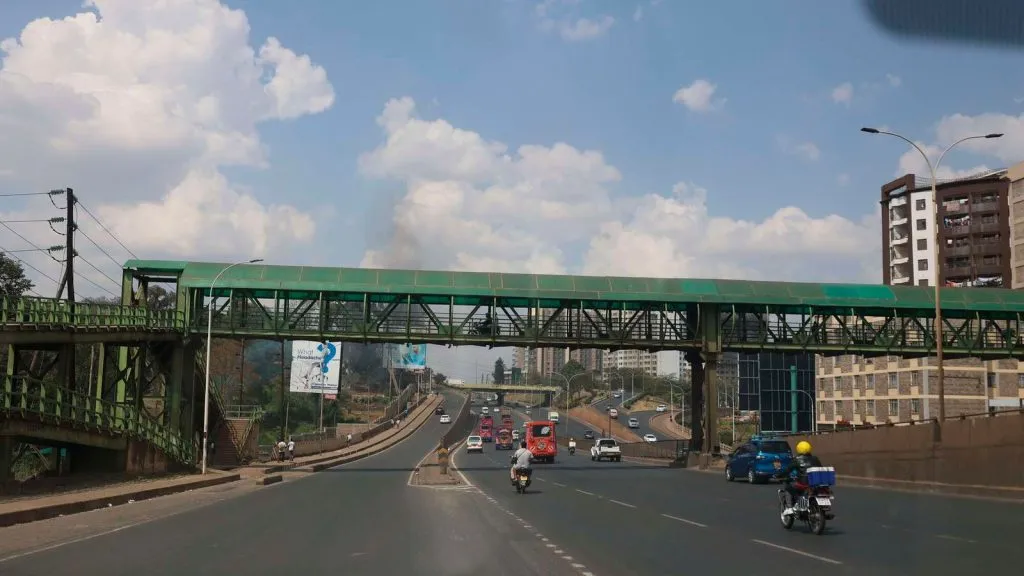
A Land Acquisition Tribunal has ruled that the Pangani footbridge on Thika Road must be demolished within 90 days because it encroaches on privately owned land. The tribunal found that the Sheikh Fazal Ilani Noordin Charitable Trust owns land that was never lawfully acquired but has been partly occupied by the footbridge. (Nation Africa)
Build the future you deserve. Get started with our top-tier Online courses: ACCA, HESI A2, ATI TEAS 7, HESI EXIT, NCLEX-RN, NCLEX-PN, and Financial Literacy. Let Serrari Ed guide your path to success. Enroll today.
Key orders include:
- Government to pay Sh1.2 billion in compensation for illegally acquired land. (Mwanaspoti report)
- Previous offer of Sh53.5 million in 2008 was never paid.
- Additional payments:
- Sh75 million disturbance allowance
- Sh300 million general trespass damages
- Sh5 million aggravated damages
- Sh50 million for encroachment of property entrance
- Annual compensation for trespass since 2009 of Sh15 million per year. (Mwanaspoti report)
- KeNHA (Kenya National Highways Authority) must remove soil and construction waste dumped on the property within three months and submit a compliance report within 100 days.
The tribunal’s chair, Dr Nabil Orina, described the footbridge’s presence on un‐acquired land as unlawful. He emphasized that proper procedure under the Compulsory Acquisition Act and relevant constitutional protections were not followed. (Eastleigh Voice)
Background: How did we get here?
The Nairobi-Thika Road Project & KeNHA’s Role
The Thika Road Superhighway project involved upgrading and expanding the major arterial route connecting Nairobi to Thika. KeNHA oversaw acquisition of required land, construction of carriageways, and associated infrastructure, which included footbridges to facilitate pedestrian crossings.
Land Ownership & Acquisition Dispute
- Part of the land used for the footbridge was originally acquired legally. However, the tribunal found that some of the area the footbridge occupies today was never included in the compulsory acquisition process. The land under dispute is owned by the Sheikh Fazal Ilani Noordin Charitable Trust. (Nation Africa)
- In 2008, gazette notices were published and a compensation schedule prepared, but the Trust claims it was not served properly or paid for the area beyond the legally acquired portion. There have been efforts to get clarification from KeNHA that reportedly went unanswered. (Mwanaspoti report)
Legal Framework & Rights Violations
- The tribunal found violations of property rights guaranteed under Article 40 of the Constitution, which protects the right to own property and requires that compulsory acquisition follow due process.
- The National Land Commission (NLC) acknowledged that the process was flawed. The tribunal also said prior acquisition actions by former agencies and predecessors must be audited and remedied.
Financial & Public Implications
Cost to Taxpayers
According to estimates, the full financial cost of compliance will exceed Sh1.4 billion, including compensation, demolition, disturbance and damages. This figure includes the initial compensation, plus the additional heads ordered by the tribunal. (Mwanaspoti report)
Access & Functionality
- The footbridge has likely impeded access to parts of the Trust’s property, causing loss of use or income.
- Demolition within 90 days may disrupt pedestrian traffic and accessibility for road users around that area, though alternatives may be considered.
Precedent & Government Accountability
- This ruling reinforces that acquiring land must follow the constitutional and statutory process; if government agencies (including KeNHA) overstep or fail to pay, affected parties can seek redress.
- It could lead to checks on other infrastructure projects to verify whether all land was properly acquired and owners compensated.
One decision can change your entire career. Take that step with our Online courses in ACCA, HESI A2, ATI TEAS 7, HESI EXIT, NCLEX-RN, NCLEX-PN, and Financial Literacy. Join Serrari Ed and start building your brighter future today.
Reactions & Stakeholder Responses
- The Sheikh Fazal Ilani Noordin Charitable Trust welcomed the tribunal’s decision, claiming long denied compensation and access rights.
- KeNHA’s response has not been fully detailed in public domain, but statements emphasize willingness to comply while perhaps considering appeals or implementation logistics.
- The National Land Commission admitted that earlier acquisition steps were invalid or improperly executed, worsening the rights of the property owner.
Key Issues to Monitor
| Issue | Why It Matters |
| Timeline for Demolition | 90 days is relatively short; removal must happen carefully, budgeted, and with respect to safety and access. |
| Payment of Awards | Will the Sh1.2 billion + damages + annual compensation be paid fully, promptly, and with interest? Past offers (e.g. Sh53.5 million) were not paid. |
| Alternative Access | After demolition, will there be alternatives for pedestrians? Are there plans to rebuild properly within acquired land? |
| Precedent for Other Projects | Many road/highway projects in Kenya involve footbridges and committees must ensure all land is properly acquired or avoid legal liability. |
| Audit & Institutional Changes | How will KeNHA and NLC improve processes to avoid similar encroachments and failures in compulsory acquisition? |
Broader Legal & Policy Context
Compulsory Acquisition Laws
Kenya’s Land Act and Land Acquisition Act (and antecedent laws) require that before land is acquired for public use:
- The owner must be notified
- Valuation/schedule prepared and published
- Compensation payable, adequate and fair
- Legal recourse available
When these are not followed, affected parties can challenge acquisition in tribunal or courts.
Constitutional Provisions
Article 40 of the Constitution protects property rights. It states that land may only be compulsorily acquired for a public purpose or in the public interest and with prompt payment of just compensation. Also requires that acquisition comply with the law.
This tribunal ruling highlights that government infrastructure projects, even when considered of public purpose, must respect constitutional protections or risk legal, financial, reputational costs.
Comparative Cases & Lessons
- Similar decisions have been made elsewhere: for example, in the Mombasa Southern Bypass case, where KeNHA was ordered to compensate landowners for lands acquired improperly. (Eastleigh Voice previous case)
- Prior rulings often involve two common issues: failure to adequately notify owners or include portions of land outside the gazetted area in acquisition.
Lessons include:
- Ensuring governments keep accurate records of property boundaries and acquisition maps.
- Carrying out proper engagement with landowners, giving full disclosure, negotiating compensation fairly and in timely fashion.
- Regular audits by NLC or independent bodies on land acquisition projects.
What This Means for Infrastructure Projects & Urban Planning
Risks for Future Projects
- Developers or public agencies may face increased legal risk if they build on land not properly acquired.
- Projects could be delayed, or costs increase due to compensation awards, legal fees, or demolition / rebuilding.
Importance of Due Diligence
- Agencies must map acquisition areas precisely, ensure ownership records are accurate, and avoid encroachment.
- During planning, geospatial mapping, land surveying, community engagement become critical.
Public Confidence & Trust
- Cases like this can erode public trust if infrastructure is seen as imposed without respect for property rights.
- Compensation delays or failure to follow due process feed perceptions of injustice.
Implications Moving Forward
- KeNHA Compliance Reporting: Must submit within 100 days per tribunal order. Their report will be closely watched.
- Budget Allocation: The government must allocate funds for the compensation, removal, clean-up, and possibly alternate infrastructure.
- Policy Reforms: Could lead to reforms in how compulsory acquisition is governed, how notices are made, how valuations are done, possibly more transparency.
- Urban Planning Adjustments: In Nairobi especially, alignment between highway expansion, footbridges, and property rights must be refined.
- Monitoring & Enforcement: The National Land Commission and judiciary may play bigger roles in ensuring past litigations are followed with implementation.
Summary
The Pangani footbridge ruling is a significant legal precedent: it confirms that public works cannot infringe on property without following law, paying just compensation, and respecting property boundaries. For affected parties, it provides compensation and restores rights. For the State, it serves as a warning that legal, financial, and reputational costs of overreach are concrete.
As the 90-day deadline for demolition approaches, all eyes will be on KeNHA, the National Land Commission, and government agencies to see if they act in compliance. If they do, this could improve acquisition practices, trust, and fairness in public infrastructure projects in Kenya.
Ready to take your career to the next level? Join our Online courses: ACCA, HESI A2, ATI TEAS 7 , HESI EXIT , NCLEX – RN and NCLEX – PN, Financial Literacy!🌟 Dive into a world of opportunities and empower yourself for success. Explore more at Serrari Ed and start your exciting journey today! ✨
Track GDP, Inflation and Central Bank rates for top African markets with Serrari’s comparator tool.
See today’s Treasury bonds and Money market funds movement across financial service providers in Kenya, using Serrari’s comparator tools.
photo source: Google
By: Montel Kamau
Serrari Financial Analyst
16th September, 2025