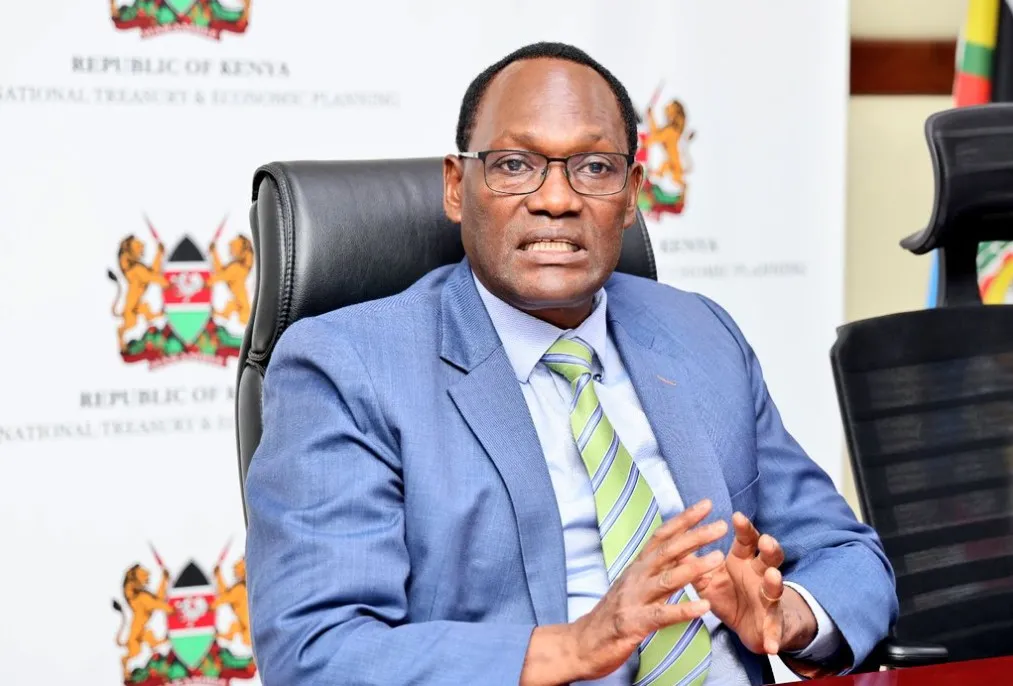
In a major shake-up for Kenya’s supplier community, the National Treasury has declared Sh270 billion of pending government bills ineligible for payment, according to a statement by Treasury Principal Secretary Chris Kiptoo. A special audit committee, chaired by former Auditor General Edward Ouko, vetted Sh665 billion in outstanding claims and cleared just Sh230 billion as legitimate, leaving nearly half of the total—Sh270 billion—hung out to dry for being irregular or lacking proper documentation (The Eastleigh Voice News).
This move has thrust thousands of businesses into financial uncertainty, as suppliers who have waited years for payment scramble to prove the validity of their invoices or prepare for protracted legal battles. With many small and medium enterprises (SMEs) dependent on prompt government remittances for their cash flow, the Treasury’s strict new stance marks a crucial pivot in Kenya’s ongoing fight against fiscal indiscipline and fraud.
Background: The Anatomy of Pending Bills
Pending bills—government invoices cleared for payment but yet to be settled—have long plagued Kenya’s public-finance ecosystem. Under the Public Finance Management Act, 2012, such bills are supposed to take priority in budget cycles, yet they have routinely been rolled over year after year.
- Auditor-General’s 2024 Snapshot: In November 2024, Auditor-General Nancy Gathungu flagged Sh194 billion in pending bills as of the close of the 2023/24 financial year, warning that they threatened both service delivery and the liquidity of local suppliers (Swala Nyeti).
- Swala Nyeti Report: A week before the Treasury’s announcement, the Swala Nyeti portal reported a backlog of Sh245.26 billion spanning Ministries, Departments and Agencies (MDAs), donor-backed projects and contingent liabilities—underscoring the systemic budgeting flaws that perpetuate the cycle of government arrears (Swala Nyeti).
By May 2025, these accumulated obligations had ballooned to an eye-watering Sh665 billion, encompassing debts owed by the national executive, Parliament, the Judiciary, state corporations and county governments.
The Ouko-Led Audit: A Two-Phase Review
In February 2025, the Treasury convened a Pending Bills Verification Committee, headed by Edward Ouko, to conduct a rigorous, evidence-based audit of all outstanding claims.
- Phase One (Technical Validation):
- Assessment of supporting documents contracts, delivery notes, payment vouchers.
- Cross-verification with procurement records and budget allocations.
- Assessment of supporting documents contracts, delivery notes, payment vouchers.
- Phase Two (Legitimacy Determination):
- Classification of claims as legitimate, irregular or fraudulent.
- Transfer of burden of proof to suppliers for any bill declared unpayable.
- Classification of claims as legitimate, irregular or fraudulent.
To date, the committee has reviewed 75 percent of all pending claims. Out of Sh665 billion, it validated Sh230 billion as payable, leaving Sh270 billion under a cloud of irregularity for lack of proper documentation or evidence of service delivery (The Eastleigh Voice News).
Kiptoo’s Warning: “Burden of Proof Shifts to Claimants”
Addressing the National Assembly’s Finance Committee, PS Kiptoo made it clear that the Treasury will not honor any invoice without irrefutable proof:
“If the audit team declares a bill unpayable, the burden of proof shifts to the claimant,” he said. “We are determined to stop fraudulent claims and protect public resources.” (The Eastleigh Voice News)
Kiptoo further announced that payment of the cleared Sh230 billion would be expedited:
- June 2025: Settlement of infrastructure-related claims (approximately Sh80 billion).
- Post-Budget Process: Disbursement of the remaining balance to ministries, agencies and verified suppliers.
However, he cautioned that no bill would be paid without adequate supporting documents, effectively placing SMEs on high alert to retrieve and authenticate years-old paperwork.
Ruto’s Pledge and Digital Procurement Reforms
Amid the supplier outcry, President William Ruto stepped in on 9 May 2025, assuring struggling businesses of the government’s commitment to clear verified debts before year-end. He pledged to disburse Sh150 billion of the audited Sh230 billion by December 2025, with 90 percent earmarked for micro, small and medium enterprises (Kenyans).
To prevent future arrears, Ruto also announced a digital procurement platform, effective 1 April 2025, mandating that all government tenders be bid and awarded online.
Impact on Suppliers: Stories from the Ground
For many Kenyan suppliers, the Treasury’s crackdown has transmogrified a long-delayed hope into genuine dread:
- Maasai Leatherworks (Nakuru): A family-run tannery owed Sh4.7 million for school-uniform shoes delivered in 2022. With documents misplaced during a move, the owners now face potential shutdown unless they can reconstruct proof of delivery.
- Safina Security Services (Mombasa): Contracted to guard public hospitals, the firm is owed Sh23 million. Its director, Ahmed Mwangi, warns of layoffs if payment is not received by June.
- Mwika Engineering (Eldoret): Despite completing a roadworks project in 2021, the company’s Sh38 million invoice was deemed “irregular” due to missing inspection certificates—sparking a dispute that could end in court.
These anecdotes encapsulate the wider economic squeeze: a cash-flow freeze for SMEs that support local employment, reduce poverty and contribute to tax revenues.
Sectoral Breakdown of Pending Bills
Auditor-General Gathungu’s November 2024 report highlighted the departments with the largest arrears:
| Public Entity | Pending Bills (Sh billion) |
| Ministry of Defence | 22.9 |
| Agriculture Department | 13.6 |
| National Police Service | 9.9 |
| Correctional Services | 5.2 |
| Office of the President | 14.0 |
| Medical Services Department | 41.0 → 4.9 (notable drop) |
| Teachers Service Commission | 3.3 |
| Total flagged by Gathungu | 194.0 |
Notably, the Medical Services Department saw its pending bills plummet from Sh41 billion to Sh4.9 billion, thanks to targeted interventions. Yet the continuing backlog across defence, agriculture and security underscores the scale of the structural challenge.
Economic and Fiscal Implications
The withholding of Sh270 billion has tangible macroeconomic consequences:
- GDP Impact: SMEs constitute 33 percent of Kenya’s GDP. A liquidity crunch among these enterprises risks slowing growth by 0.5–1.0 percentage point in FY2025/26.
- Tax Revenues: Delays in payment of pending bills result in reduced VAT and withholding-tax collections, squeezing the Kenya Revenue Authority’s fiscal targets.
- Credit Markets: Suppliers deprived of prompt payment may resort to high-interest loans, stoking household debt and elevating non-performing loans in the banking sector.
In her report, Gathungu warned that unaddressed arrears could force MDAs to “reallocate funds or stall critical services,” exacerbating public-service delivery gaps and eroding citizen trust (Swala Nyeti).
Regional Comparison: A Continental Challenge
Kenya’s pending-bills dilemma is not unique in Africa. Neighboring countries have grappled with similar issues:
- Uganda (2023): Annual pending bills peaked at UGX 500 billion (~US $135 million), prompting the government to establish a special clearance fund.
- Tanzania (2024): Official arrears reached TSh 450 billion (~US $190 million), leading to a moratorium on new procurement contracts until old debts were settled.
- Nigeria (2022): Federal government outstanding obligations exceeded ₦1.2 trillion, triggering lenders to demand higher yields on treasury bills.
These case studies highlight the imperative for robust public-financial management (PFM) reforms, including accrual accounting, real-time budget monitoring and independent audit-committee oversight.
Pathways to Resolution
To mitigate legal disputes and restore supplier confidence, stakeholders recommend:
- Fast-Track Dispute Resolution: Establish a special tribunal for pending-bills claims, with binding timelines and lower legal fees for SMEs.
- Digital Archive of Contracts: Institute a centralized e-repository for all government procurement documents, accessible to verified suppliers and auditors.
- Capacity Building: Train county-level procurement officers on PFM Act requirements to reduce future irregular claims.
- Performance-Linked Disbursements: Tie clearing of pending bills to service-delivery benchmarks, ensuring that funds go where they have demonstrable impact.
By combining technological, legal and operational reforms, Kenya can turn its pending-bills crisis into a blueprint for PFM excellence.
Moving Forward: A Test for Kenya’s Governance
As the Treasury prepares to finalize the review—expected by August 2025—the spotlight remains on both national and county governments to uphold transparency, honor legitimate claims and deter fraudulent practices.
For suppliers, the next few months will be decisive: they must either substantiate their invoices or face an abrupt cutoff of anticipated revenues. For the broader economy, the outcome will test Kenya’s ability to balance fiscal prudence with support for the backbone of its private sector.
In the words of PS Kiptoo, “We are changing the culture of impunity around pending bills. It will be a difficult journey, but it is necessary to protect public resources and uphold the rule of law.”
Ready to take your career to the next level? Join our dynamic courses: ACCA, HESI A2, ATI TEAS 7 , HESI EXIT , NCLEX – RN and NCLEX – PN, Financial Literacy!🌟 Dive into a world of opportunities and empower yourself for success. Explore more at Serrari Ed and start your exciting journey today! ✨
photo source: Google
By: Montel Kamau
Serrari Financial Analyst
21th May, 2025