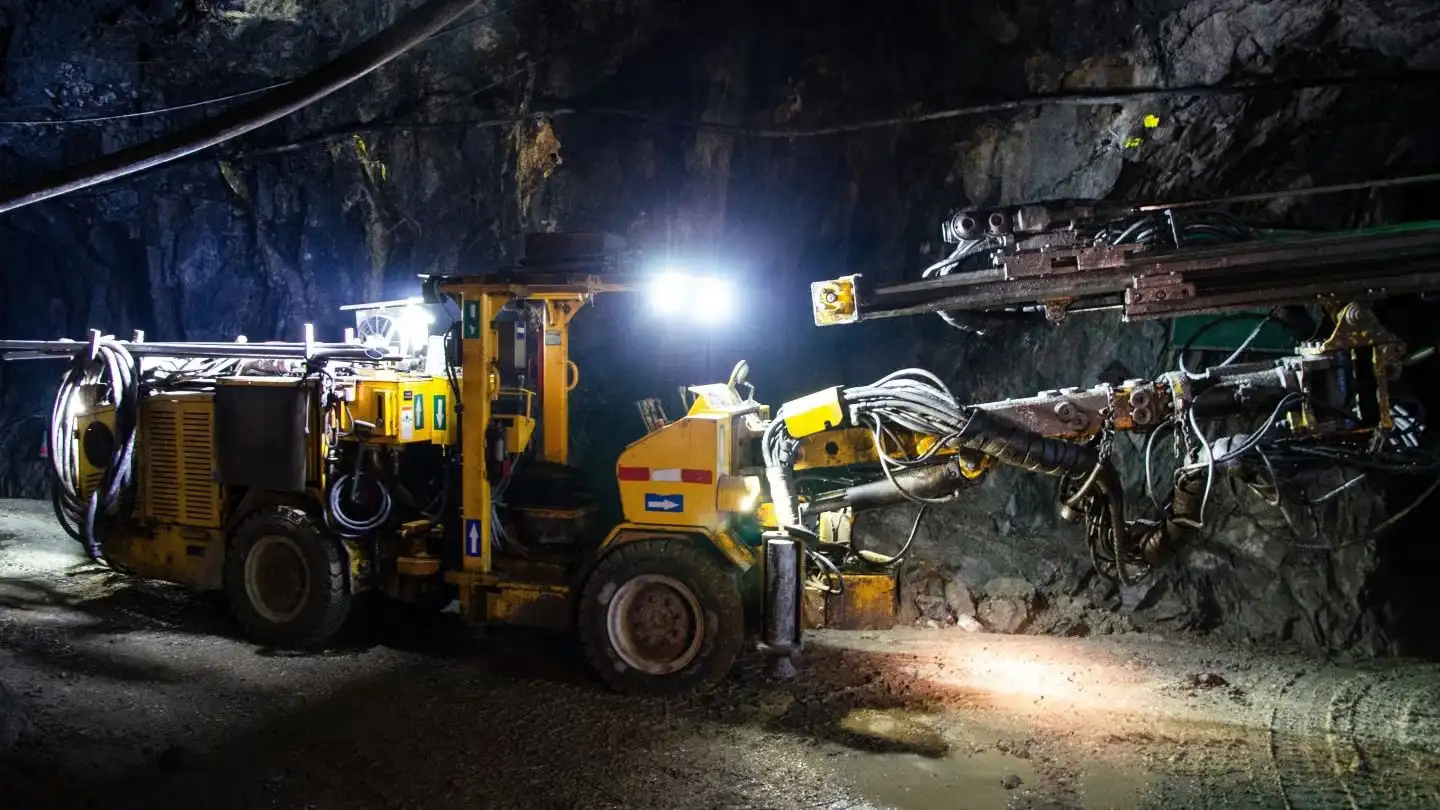
South African mining company Tharisa has unveiled ambitious plans to invest $547 million (R9.46 billion) in a transformative underground platinum group metals (PGM) mining project over the next decade. This substantial capital commitment marks a strategic pivot from traditional open-pit operations to advanced underground mining techniques, positioning the company to secure long-term access to one of the world’s most significant mineral deposits.
The investment will facilitate the transition of Tharisa’s current declining open-pit PGM and chrome co-producing mine, strategically located on the renowned Bushveld Complex, to sophisticated underground mining operations within the next ten years. This geological formation represents one of the largest known repositories of platinum group metals globally, making it a cornerstone of South Africa’s mining economy and a critical source of metals essential for modern industrial applications.
Build the future you deserve. Get started with our top-tier Online courses: ACCA, HESI A2, ATI TEAS 7, HESI EXIT, NCLEX-RN, NCLEX-PN, and Financial Literacy. Let Serrari Ed guide your path to success. Enroll today.
Strategic Vision and Long-Term Value Creation
Tharisa CEO Phoevos Pouroulis articulated the strategic rationale behind this major investment, emphasizing that the underground project represents a natural evolution for the company’s operations. “The underground project is the natural progression for our operations and has been established to increase the life-of-mine development to access the multigenerational mineral resource base, enhance operational efficiencies, while maintaining our world class standards of health, safety, environmental stewardship and further enhancing our track record of long-term value creation,” Pouroulis stated in the company’s official announcement.
The CEO’s comments underscore the project’s multifaceted objectives: extending the operational lifespan of the mine, improving productivity and cost-effectiveness, and maintaining the company’s commitment to sustainable mining practices. This holistic approach reflects evolving expectations within the global mining industry, where environmental, social, and governance (ESG) considerations have become integral to operational planning and investor relations.
Pouroulis further emphasized the enduring importance of platinum group metals in the global economy, noting that PGMs remain “critical metals and minerals that the world has realised are a necessity to transition to a future world.” This assertion comes at a time when the role of these precious metals is being reassessed in light of rapid technological changes, particularly the accelerating shift toward electric mobility and renewable energy systems.
Navigating Market Uncertainties and Emerging Opportunities
The platinum group metals sector faces a complex and evolving market landscape. Traditionally, PGMs—which include platinum, palladium, rhodium, ruthenium, iridium, and osmium—have been primarily utilized in automotive catalytic converters, where they play a crucial role in reducing harmful vehicle emissions. These autocatalysts represent the largest single application for PGMs, accounting for a substantial portion of global demand.
However, the rapid adoption of electric vehicles, which do not require traditional catalytic converters, has raised concerns about the long-term demand trajectory for these metals. Industry analysts have debated whether the transition to electric mobility could significantly erode PGM markets, potentially impacting mining operations and metal prices.
Despite these concerns, emerging applications are creating new demand streams for platinum group metals. These metals are increasingly recognized as essential components in fuel cell technologies, which convert hydrogen into electricity with water as the only byproduct. Fuel cells are gaining traction as a clean energy solution for heavy-duty transportation, industrial equipment, and stationary power generation—applications where battery-electric solutions face technical or economic limitations.
Additionally, PGMs play critical roles in the production and utilization of clean hydrogen, which is emerging as a cornerstone of decarbonization strategies worldwide. Platinum-based catalysts are essential for water electrolysis, the process of splitting water into hydrogen and oxygen using renewable electricity. As governments and industries invest billions in hydrogen infrastructure and production capacity, demand for PGMs in these applications is expected to grow substantially.
According to a Reuters report, while the automotive sector’s requirements may evolve, the diversification of PGM applications provides a buffer against market volatility and supports the long-term investment thesis underlying projects like Tharisa’s underground development.
Technical Specifications and Operational Enhancements
The new mechanized underground operations are designed to deliver significant improvements in operational efficiency, cost management, and production output compared to the aging open-pit configuration. Underground mining, when properly executed with modern equipment and techniques, can offer several advantages including more selective ore extraction, reduced surface footprint, enhanced safety protocols, and improved ore recovery rates.
Tharisa’s underground project will utilize state-of-the-art mining equipment and automation technologies to maximize productivity while minimizing operational risks. Mechanized underground mining employs continuous mining machines, load-haul-dump (LHD) vehicles, and advanced ventilation systems that collectively enhance efficiency and worker safety.
The project timeline indicates that ore delivery from the first of two planned shafts is expected to commence by the second quarter of 2026, representing a relatively rapid development schedule given the complexity of underground mine construction. This timeline suggests that significant planning, engineering, and early-stage development work has already been completed, positioning the company to execute efficiently on its capital deployment strategy.
Once fully operational and reaching steady-state production, the underground operations are projected to yield a minimum of 200,000 ounces of platinum group metals annually, alongside more than two million tonnes of chrome concentrate. This dual-product approach provides revenue diversification and helps mitigate commodity price volatility—a chronic challenge in the mining industry.
Chrome concentrate, primarily used in the production of ferrochrome and stainless steel, represents a substantial co-product revenue stream. The ability to economically extract both PGMs and chrome from the same ore body enhances the overall economics of the operation and provides operational flexibility in responding to changing market conditions.
Near-Term Production Outlook
For the current financial year 2025, Tharisa has provided production guidance projecting output of 140,000 to 160,000 ounces of platinum group metals and between 1.65 million and 1.8 million tonnes of chrome concentrates. These figures reflect the transitional nature of the company’s operations as it maintains production from existing open-pit operations while simultaneously advancing the underground development.
This production profile positions Tharisa as a significant mid-tier producer within the South African platinum mining sector, which collectively accounts for a dominant share of global PGM supply. South Africa’s geological endowments in platinum group metals are unmatched globally, making the country’s mining policies, infrastructure, and operational efficiency critical factors in global PGM markets.
The company’s ability to maintain stable production during this transitional period will be crucial for preserving revenue streams, managing stakeholder expectations, and ensuring adequate cash flow to fund the substantial underground development capital expenditure. Mining companies often face challenges during major operational transitions, making effective project management and operational discipline essential success factors.
One decision can change your entire career. Take that step with our Online courses in ACCA, HESI A2, ATI TEAS 7, HESI EXIT, NCLEX-RN, NCLEX-PN, and Financial Literacy. Join Serrari Ed and start building your brighter future today.
Regional Development and Strategic Assets
Beyond the core Tharisa mine transformation, the company is simultaneously advancing the development of the Karo platinum mine in Zimbabwe. This greenfield open-pit project is designed to produce 226,000 ounces of platinum annually once fully operational, representing a significant expansion of Tharisa’s production capacity and geographic footprint.
The Karo project holds particular significance within the broader platinum industry context. It is recognized as one of only two major greenfield mine development projects currently advancing within the global platinum sector. The other is Ivanhoe Mines’ Platreef project in South Africa, which is also progressing through development phases.
This scarcity of new platinum mine projects reflects several industry dynamics: the mature nature of existing platinum-producing regions, the substantial capital requirements for mine development, extended permitting and development timelines, and investor caution regarding long-term demand fundamentals. Against this backdrop, Tharisa’s willingness to commit significant capital to both underground development and greenfield expansion demonstrates confidence in the long-term value proposition of platinum group metals.
Zimbabwe has been working to revitalize its mining sector and attract foreign investment following years of economic challenges and policy uncertainty. The Karo project represents one of the country’s most significant recent mining investments and could catalyze additional development activity if successfully executed.
South Africa’s Mining Industry Context
South Africa’s mining industry has historically been a cornerstone of the national economy, providing substantial employment, export revenues, and economic activity. The country possesses world-class mineral endowments across multiple commodities, with platinum group metals representing one of its most significant competitive advantages globally.
However, the South African mining sector has faced persistent challenges in recent years, including electricity supply constraints, aging infrastructure, regulatory complexities, labor relations issues, and concerns about policy predictability. These challenges have deterred some investment and complicated operational planning for mining companies.
Tharisa’s substantial investment commitment sends a positive signal about the company’s confidence in South Africa’s long-term mining potential and its ability to navigate the operating environment effectively. The project’s emphasis on modern, efficient underground mining techniques also aligns with broader industry trends toward productivity enhancement and technological advancement.
The South African government has identified mining as a priority sector for economic development and has introduced various initiatives aimed at supporting the mining industry, improving regulatory efficiency, and attracting investment. The success of projects like Tharisa’s underground development could help demonstrate the viability of major mining investments in the country and potentially attract additional capital to the sector.
Environmental and Social Considerations
Modern mining projects face heightened scrutiny regarding their environmental footprint and social impact. Tharisa’s stated commitment to maintaining “world class standards of health, safety, environmental stewardship” reflects industry-wide recognition that sustainable practices are essential for securing social license to operate and meeting stakeholder expectations.
Underground mining, when properly managed, can offer certain environmental advantages compared to open-pit operations. The reduced surface footprint, lower volumes of waste rock generation, and decreased visual impact are among the potential benefits. However, underground operations also present distinct challenges, including groundwater management, subsidence risks, and the need for comprehensive mine closure planning.
The company’s emphasis on health and safety is particularly important given the inherent risks associated with underground mining. Modern mechanized operations incorporate numerous safety features, including real-time monitoring systems, automated equipment, improved ventilation, and comprehensive training programs. Nonetheless, maintaining exemplary safety performance requires continuous attention, investment, and cultural commitment throughout the organization.
Investment Implications and Industry Outlook
Tharisa’s $547 million investment represents a substantial capital commitment by the company’s standards and reflects confidence in several key assumptions: the long-term viability of PGM demand, the quality and accessibility of the mineral resource, the company’s ability to execute the underground development efficiently, and the overall operating environment in South Africa.
For investors and industry observers, the project provides insights into management’s strategic thinking and risk appetite. Major capital projects of this nature carry execution risks, potential cost overruns, and market uncertainties. However, they also offer the potential for enhanced production, improved margins, and extended mine life—attributes that can create substantial shareholder value when successfully delivered.
The broader platinum group metals market continues to evolve in response to technological change, environmental policy, and economic cycles. While automotive demand faces potential headwinds from electric vehicle adoption, emerging applications in hydrogen economy and industrial processes provide new growth vectors. Supply-side dynamics, including the scarcity of new projects and potential production constraints at aging operations, add additional complexity to market forecasting.
Conclusion: Positioning for a Changing Future
Tharisa’s decision to invest $547 million in transitioning to underground platinum group metals mining represents more than a technical operational change—it embodies a strategic bet on the enduring value of these critical metals and the company’s ability to access and produce them efficiently over multiple decades.
By committing to modern, mechanized underground mining techniques, Tharisa is positioning itself to extend the productive life of its core South African asset while improving operational efficiency and maintaining high standards of safety and environmental performance. The parallel development of the Karo project in Zimbabwe further diversifies the company’s production base and growth profile.
As the global economy navigates the complex transition toward lower-carbon energy systems, the role of platinum group metals continues to evolve. While traditional applications face disruption, new opportunities in fuel cells, clean hydrogen, and industrial processes are emerging. Tharisa’s substantial investment suggests confidence that these metals will remain essential components of the global materials economy for generations to come.
The success of this underground development project will be closely monitored by industry participants, investors, and policymakers alike. It represents a test case for major mining investment in South Africa and could influence future capital allocation decisions across the sector. For Tharisa, the project is nothing less than the foundation for the company’s long-term future and its ability to deliver sustainable value creation in an evolving market landscape.
Ready to take your career to the next level? Join our Online courses: ACCA, HESI A2, ATI TEAS 7 , HESI EXIT , NCLEX – RN and NCLEX – PN, Financial Literacy!🌟 Dive into a world of opportunities and empower yourself for success. Explore more at Serrari Ed and start your exciting journey today! ✨
Track GDP, Inflation and Central Bank rates for top African markets with Serrari’s comparator tool.
See today’s Treasury bonds and Money market funds movement across financial service providers in Kenya, using Serrari’s comparator tools.
photo source: Google
By: Montel Kamau
Serrari Financial Analyst
7th October, 2025