The Federal Government of Somalia has distributed $3.88 million in drought insurance payouts to thousands of pastoralist households affected by severe rainfall failure, marking a significant milestone in the country’s efforts to protect vulnerable communities from climate-related disasters.
The payments were delivered to 17,734 pastoralists who had enrolled in the DRIVE livestock insurance program, an innovative climate-risk protection initiative designed to support livestock-dependent households across the Horn of Africa.
The insurance payout was triggered after satellite-based drought monitoring confirmed that rainfall during the Deyr season (October–December 2025) fell far below normal levels, severely damaging grazing lands across multiple regions of Somalia.
The program operates under an index-based livestock Takaful insurance model, a form of Islamic insurance designed to comply with Sharia principles while providing financial protection against environmental shocks.
For Somalia, a country where livestock is a cornerstone of both economic activity and household livelihoods, the initiative represents an important step toward building resilience against increasingly frequent climate disasters.
Understanding the DRIVE Livestock Insurance Program
The drought insurance payments were made under the De-risking, Inclusion and Value Enhancement of Pastoral Economies (DRIVE) initiative, a regional program supported by international partners and implemented across the Horn of Africa.
The DRIVE program was created to address one of the most persistent challenges facing pastoral communities: the economic devastation caused by drought.
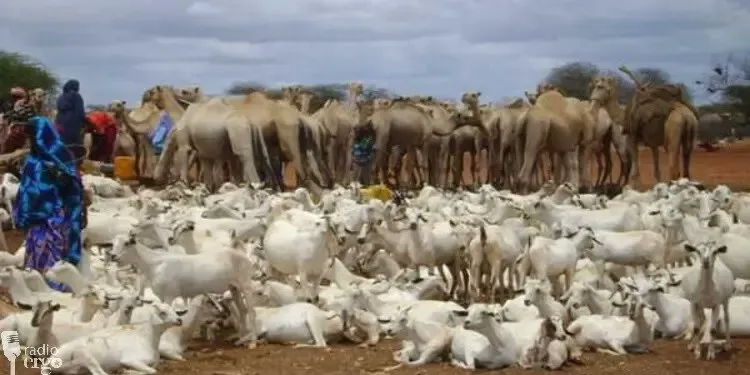
In pastoral economies, livestock such as cattle, camels, sheep, and goats are not only a source of food but also serve as a primary store of wealth and income. When drought conditions destroy grazing land and water sources, livestock mortality can increase rapidly, leading to severe financial hardship for pastoral households.
Traditional disaster relief efforts often arrive too late to prevent these losses. The DRIVE program seeks to change this dynamic by providing insurance-based financial protection that activates automatically when drought conditions reach critical thresholds.
Through this system, pastoralists can receive cash payouts that help them sustain their livelihoods during periods of extreme climate stress.
How Index-Based Livestock Insurance Works
Unlike traditional insurance products that require individual claims assessments, index-based insurance relies on measurable environmental indicators to determine when payouts should be triggered.
In Somalia’s case, the insurance program uses satellite data to monitor vegetation and rainfall levels across grazing regions.
If the satellite-based index detects conditions indicating severe drought—such as prolonged rainfall deficits or reduced vegetation cover—the system automatically activates payouts for insured households.
This approach offers several advantages:
Faster Payouts
Because the system relies on objective satellite data rather than field assessments, payouts can be processed much more quickly.
Reduced Administrative Costs
Index-based insurance eliminates the need for individual damage assessments, lowering operational costs.
Greater Transparency
Satellite data provides a clear and verifiable basis for triggering payouts.
Scalability
The model can be applied across large geographic regions with minimal infrastructure.
These features make index-based insurance particularly suitable for remote pastoral regions where traditional insurance systems are difficult to implement.
The Role of Takaful Insurance
The livestock insurance scheme is structured as a Takaful program, a form of Islamic insurance that operates under principles consistent with Sharia law.
Unlike conventional insurance models, which involve transferring risk to a commercial insurer, Takaful is based on a system of mutual cooperation and shared responsibility among participants.
Participants contribute to a pooled fund that is used to support members who experience losses due to covered events, such as drought.
Key principles of Takaful include:
- Risk sharing rather than risk transfer
- Ethical investment of funds
- Transparency and fairness among participants
- Avoidance of interest-based financial practices
In predominantly Muslim regions such as Somalia, Takaful-based insurance products can increase participation by aligning financial services with cultural and religious norms.
Details of the Recent Insurance Payout
The latest drought insurance payout was triggered by the failure of rainfall during the 2025 Deyr season, one of Somalia’s key rainy periods.
The Deyr season typically occurs between October and December and is essential for replenishing water sources and regenerating grazing land used by pastoral communities.
However, satellite monitoring confirmed that rainfall during the 2025 Deyr season fell significantly below normal levels across large parts of the country.
As a result:
- Grazing land deteriorated rapidly
- Livestock feeding conditions worsened
- Pastoral households faced heightened economic risk
Once the drought index crossed the predetermined threshold, the insurance program automatically triggered payouts.
The $3.88 million in compensation payments were distributed directly to 17,734 registered pastoralists who had enrolled in the program during the Gu season (April 2025) and the Deyr season (October 2025).
These funds are intended to help families purchase livestock feed, access water, and maintain their herds during difficult climatic conditions.
Importance of Livestock to Somalia’s Economy
Livestock plays an essential role in Somalia’s economic and social structure.
According to development organizations, the livestock sector accounts for:
- A large share of Somalia’s gross domestic product
- A major portion of export revenues
- The primary source of income for millions of households
Common livestock raised in Somalia include:
- Camels
- Goats
- Sheep
- Cattle
Pastoralism has long been a central part of Somali culture and economic activity. However, climate change has intensified the risks faced by pastoral communities.
Recurring droughts have become more frequent and severe over the past two decades, threatening both livelihoods and food security.
Historical Context: Somalia’s Recurring Climate Crises
Somalia has experienced multiple devastating droughts over the past several decades.
One of the most severe occurred in 2011, when a prolonged drought contributed to a famine that affected millions of people across the Horn of Africa.
More recently, the country faced another major drought between 2020 and 2023, during which several consecutive rainy seasons failed.
These events caused widespread livestock losses and increased food insecurity across the region.
Climate scientists warn that climate change is likely to intensify drought cycles in East Africa, making climate adaptation strategies increasingly important.
Programs such as the DRIVE livestock insurance initiative aim to help communities better manage these growing risks.
Why This Development Matters
The successful delivery of drought insurance payouts represents an important step toward building climate resilience in Somalia and across the Horn of Africa.
Strengthening Financial Resilience
Insurance payouts provide pastoral households with financial resources during periods of environmental stress, helping them avoid selling livestock at distressed prices.
This helps families preserve their long-term livelihoods.
Reducing Dependence on Emergency Aid
Traditional disaster response often relies on humanitarian assistance delivered after a crisis has already caused significant damage.
Insurance programs provide pre-arranged financial protection, allowing communities to respond more quickly to climate shocks.
Encouraging Climate Adaptation
Access to financial protection encourages pastoralists to adopt better risk management practices and invest in livestock health.
Supporting Regional Stability
Climate shocks and food insecurity can contribute to migration and social instability.
Programs that help communities cope with environmental risks can therefore play an important role in promoting regional stability.
Risks and Considerations
While the livestock insurance program represents a promising innovation, several challenges remain.
Coverage Limitations
Although nearly 18,000 pastoralists received payouts, many more households across Somalia remain uninsured.
Expanding coverage will require additional funding, outreach, and infrastructure.
Data Accuracy Challenges
Index-based insurance depends heavily on the accuracy of satellite data and environmental models.
If the index fails to fully capture localized conditions, some households may experience losses without triggering payouts.
Financial Sustainability
Insurance programs must maintain sufficient financial reserves to ensure long-term sustainability, particularly as climate shocks become more frequent.
Climate Change Intensification
As climate change accelerates, drought events may become more severe, potentially increasing the financial burden on insurance systems.
Looking Ahead
The success of Somalia’s livestock insurance payouts could serve as a model for other climate-vulnerable regions.
Several developments are likely to shape the future of climate-risk insurance in Africa.
Expansion of Index-Based Insurance
Development organizations and governments are exploring ways to expand index-based insurance programs across additional regions and agricultural sectors.
Integration with Digital Financial Services
Mobile payment systems can make it easier to distribute insurance payouts quickly and efficiently.
Increased Climate Finance
International climate finance initiatives may provide additional resources to support risk insurance programs.
Regional Collaboration
Programs like the DRIVE initiative demonstrate the importance of regional cooperation in addressing shared climate risks.
Conclusion
Somalia’s successful distribution of $3.88 million in drought insurance payouts highlights the growing role of climate-risk financial instruments in protecting vulnerable communities.
By combining satellite-based monitoring, index insurance, and Islamic Takaful principles, the livestock insurance program provides a practical solution to one of the most pressing challenges facing pastoral economies.
As climate change continues to reshape environmental conditions across the Horn of Africa, innovative financial tools such as drought insurance may become an essential component of long-term resilience strategies.
For Somalia’s pastoralists, the program offers more than financial assistance—it represents a pathway toward greater economic security in an increasingly uncertain climate future.
Track GDP, Inflation and Central Bank rates for top African markets with Serrari’s comparator tool.
See today’s Treasury bonds and Money market funds movement across financial service providers in Kenya, using Serrari’s comparator tools.
Photo Source: Google
By: Elsie Njenga
10th March,2026