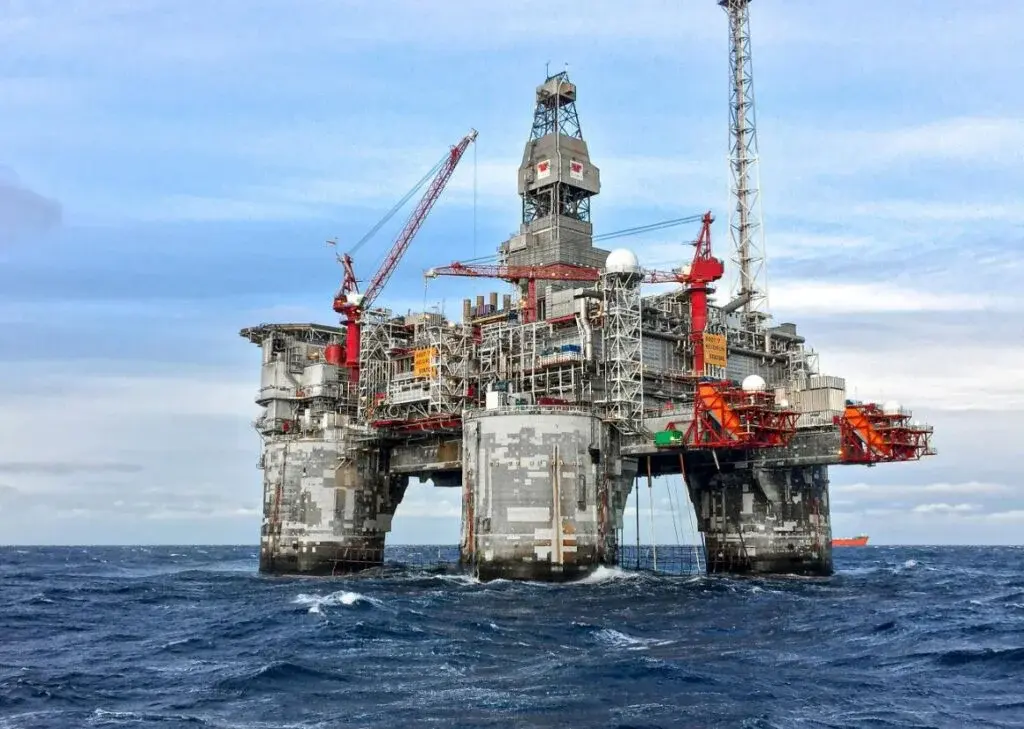
In a move set to ignite both economic hopes and fierce environmental debate, global energy giant Shell has announced it has been granted crucial environmental authorization to proceed with drilling up to five deep-water wells off South Africa’s pristine west coast. This decision marks a pivotal moment for the nation’s energy future, potentially ushering in a new era of domestic oil and gas production, or, conversely, deepening the existing chasm between economic development and environmental protection.
The announcement, confirmed by Shell, comes after a rigorous application process initiated last year. The company’s ambitious plans target the Northern Cape Ultra Deep Block within the highly prospective Orange Basin, with proposed drilling operations at staggering water depths ranging between 2,500 meters and 3,200 meters. This deep-water frontier holds the promise of significant hydrocarbon discoveries, mirroring the recent successes in neighboring Namibia that have captivated the global oil and gas industry.
The Orange Basin: Africa’s New Energy Frontier
The Orange Basin, a vast geological formation stretching across the maritime boundaries of Namibia and South Africa, has recently emerged as one of the world’s most exciting new oil and gas provinces. For decades, its potential remained largely untapped due to the technical challenges of ultra-deepwater exploration. However, advancements in drilling technology and a renewed global appetite for secure energy supplies have transformed its prospects.
The excitement surrounding the Orange Basin intensified dramatically with a series of significant discoveries in Namibian waters. Companies like TotalEnergies and Shell itself have reported major finds, including the Venus-1 and Graff-1 discoveries, which are estimated to hold billions of barrels of oil equivalent. These successes have not only put Namibia on the map as a burgeoning energy player but have also sent ripples of anticipation through South Africa, as the same geological structures extend southwards into its exclusive economic zone.
“The Orange Basin is a game-changer for the region,” notes Dr. Anya Sharma, a senior energy analyst at the African Energy Chamber. “Namibia’s discoveries have de-risked the basin significantly, making the South African side incredibly attractive for majors looking to replicate that success. Shell’s move is a direct response to this proven potential.”
Shell’s Ambitious Plans: Unlocking South Africa’s Deepwater Potential
Shell’s newly granted environmental authorization permits the drilling of up to five exploration or appraisal wells. Exploration wells aim to confirm the presence of hydrocarbons, while appraisal wells further delineate the size and commercial viability of a discovery. The Northern Cape Ultra Deep Block is located in an area characterized by extreme water depths, presenting significant technical challenges that only a few global energy companies possess the expertise to tackle.
The company has emphasized the potential benefits of these operations for South Africa. In a statement, Shell highlighted: “Should viable resources be found offshore, this could significantly contribute to South Africa’s energy security and the government’s economic development programmes.” While no specific timelines for drilling commencement were provided, the authorization marks a critical step forward for the project.
For South Africa, a country grappling with persistent energy supply issues and a heavy reliance on imported refined petroleum products, unlocking domestic oil and gas reserves is seen by many as a vital component of its long-term energy strategy. The potential for substantial finds could reduce import dependency, stabilize fuel prices, and generate significant revenue through royalties and taxes, which could then be reinvested into public services and infrastructure.
Economic Imperatives: Energy Security and Development Programs
South Africa, as Africa’s most industrialized economy, faces a unique set of energy challenges. Its aging coal-fired power plants frequently struggle to meet demand, leading to debilitating load shedding (scheduled power cuts) that cripple industries and disrupt daily life. Furthermore, the country has seen a drastic reduction in its domestic refining capacity over recent years, losing approximately half of its capability. This decline has made South Africa increasingly dependent on imports of refined petroleum products to meet its rising demand for fuel, exposing it to volatile global oil prices and supply chain disruptions.
The prospect of a major offshore oil or gas discovery offers a compelling solution to these vulnerabilities. Domestic production could provide a more stable and cost-effective supply of hydrocarbons, bolstering the nation’s energy security. Beyond direct energy supply, the economic ripple effects could be substantial. Large-scale exploration and production projects typically lead to significant foreign direct investment, job creation (both direct and indirect in supporting industries), and the development of specialized skills and infrastructure. The government views these potential benefits as crucial for its broader economic development programs aimed at stimulating growth, reducing unemployment, and attracting further investment.
“The economic stakes are incredibly high,” explains Professor Thuli Ndlovu, an economist specializing in natural resources at the University of Cape Town. “A significant discovery could transform South Africa’s fiscal landscape, providing the capital needed for critical social and economic reforms. It’s not just about fuel; it’s about national development.”
The Shadow of Litigation: Environmental Concerns and Public Consultation
Shell’s journey in South Africa has been anything but smooth, particularly on the environmental front. The company’s previous exploration program along South Africa’s east coast, specifically involving seismic surveys, faced widespread opposition and was ultimately disrupted by a series of protracted court litigations.
These legal challenges were primarily driven by concerns over a perceived lack of adequate public consultation with affected communities, particularly indigenous groups whose livelihoods are intrinsically linked to the ocean. Activists and local communities argued that their voices were not sufficiently heard or considered in the environmental authorization process. Furthermore, significant concerns were raised about the potential harm that seismic surveys – which involve firing powerful airgun blasts into the ocean to map geological structures beneath the seabed – could inflict on marine life. Scientists and environmental organizations warned of potential impacts on whales, dolphins, fish, and other marine organisms, disrupting their migration patterns, feeding behaviors, and breeding cycles.
The legal battles have been a testament to the growing power of environmental advocacy and community activism in South Africa. Groups like the Wild Coast communities, represented by legal organizations such as the Legal Resources Centre and Natural Justice, have successfully challenged corporate and governmental decisions, emphasizing the importance of environmental justice and the rights of local populations. These cases have set important precedents regarding environmental impact assessments and the duty to consult.
The Looming Legal Showdown: A Test Case for South Africa’s Energy Future
The long-running legal dispute stemming from Shell’s east coast activities is now poised for a decisive moment. The case is expected to be heard in South Africa’s highest court, the Constitutional Court, later this year. The outcome of this landmark case carries immense weight, as it could either pave the way for a new exploration boom across the country’s vast coastline or, conversely, significantly dampen expectations for future oil and gas development.
A ruling in favor of environmental groups could establish stricter requirements for public consultation and environmental impact assessments, making it more challenging and time-consuming for companies to secure drilling permits. Such an outcome would empower communities and environmental organizations, potentially leading to more legal challenges and delays for future projects. Conversely, a ruling in favor of Shell and the government could provide greater legal certainty for energy companies, encouraging further investment and accelerating exploration activities.
“This Constitutional Court case is not just about Shell; it’s about the future of South Africa’s entire upstream oil and gas industry,” states environmental lawyer Michelle Wylie. “It will define the balance between economic development and environmental protection, and how the rights of communities are weighed against national energy needs.”
Mounting Pressures and Bureaucratic Hurdles
Beyond the direct legal challenges, South Africa’s ambitions to fully develop its oil and gas potential have been stifled by a confluence of factors. Mounting environmental pressures from a vocal and well-organized civil society, coupled with a bevvy of court actions aimed at halting drilling and seismic activities, have created a challenging operating environment for energy companies.
Furthermore, cumbersome bureaucracy and regulatory uncertainties have added layers of complexity. Navigating South Africa’s regulatory framework, which involves multiple government departments and often lengthy approval processes, can be a significant deterrent for investors. The lack of a clear, consistent, and streamlined regulatory pathway has contributed to delays and increased the cost of doing business in the sector. These administrative hurdles, combined with the legal risks, have made South Africa a less attractive destination for some international oil companies, despite its promising geological potential.
Global Context: The Energy Transition and Fossil Fuel Debates
Shell’s decision to press ahead with deep-water drilling in South Africa also plays out against a backdrop of intense global debate about the future of fossil fuels and the accelerating energy transition. While many nations are committed to phasing out coal, oil, and gas to combat climate change, the reality of global energy demand, geopolitical instability, and the need for energy security means that fossil fuels will continue to play a role for decades to come.
Oil majors like Shell are navigating this complex landscape by investing in both renewable energy and strategic fossil fuel projects. While Shell has set ambitious targets for reducing its carbon footprint and investing in green technologies, it also recognizes the continued global demand for oil and gas, particularly in developing economies. Projects like the Orange Basin exploration are seen as crucial for maintaining a diversified energy portfolio and ensuring energy supply during the transition period. However, these investments are increasingly scrutinized by environmental activists, shareholders, and governments committed to climate action.
Other Players in the Orange Basin Race
Shell is not alone in its interest in the Orange Basin. Other major oil companies, including French energy giant TotalEnergies, are also actively pursuing exploration opportunities off South Africa’s west coast. TotalEnergies has been a significant player in the Namibian discoveries and is keen to extend its exploration success into South African waters. The presence of multiple international players underscores the perceived high potential of the basin and the competitive nature of deep-water exploration. These companies often collaborate through joint ventures to share the substantial financial and technical risks associated with such projects.
The Road Ahead: High Stakes and Uncertain Outcomes
The granting of environmental authorization to Shell for its west coast drilling program marks a significant step, but it is by no means the final word. The impending Constitutional Court case on the east coast seismic survey will cast a long shadow over all future oil and gas activities in South Africa. Its outcome will set a precedent for public consultation, environmental safeguards, and the overall legal framework governing energy projects.
For South Africa, the stakes are incredibly high. Success in the Orange Basin could provide a much-needed economic boost, enhance energy security, and create thousands of jobs. Failure, whether due to unsuccessful drilling or insurmountable legal and environmental hurdles, could leave the nation even more reliant on imports and further delay its journey towards energy independence. The coming months will be critical in determining whether South Africa can unlock its deep-water potential and navigate the complex balance between economic aspirations and environmental responsibilities in a rapidly changing global energy landscape. The world will be watching closely to see how this high-stakes bet ultimately plays out.
Ready to take your career to the next level? Join our dynamic courses: ACCA, HESI A2, ATI TEAS 7 , HESI EXIT , NCLEX – RN and NCLEX – PN, Financial Literacy!🌟 Dive into a world of opportunities and empower yourself for success. Explore more at Serrari Ed and start your exciting journey today! ✨
photo source: Google
By: Montel Kamau
Serrari Financial Analyst
17th July, 2025