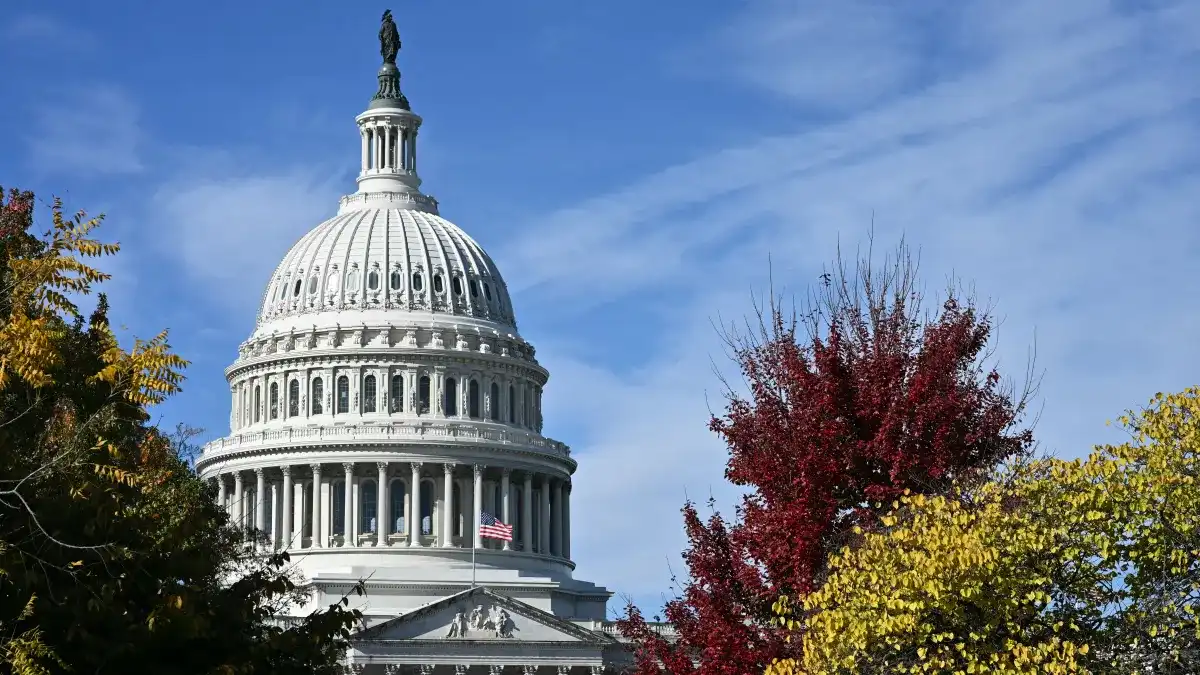
The U.S. Senate has approved a new funding bill aimed at ending the ongoing government shutdown, advancing the measure to the House of Representatives in what could mark the conclusion of a politically contentious and economically disruptive standoff. The bill, backed by President Donald Trump on Monday afternoon, appears to have garnered bipartisan support, increasing the likelihood that it could reach the president’s desk for final approval in the coming days.
Build the future you deserve. Get started with our top-tier Online courses: ACCA, HESI A2, ATI TEAS 7, HESI EXIT, NCLEX-RN, NCLEX-PN, and Financial Literacy. Let Serrari Ed guide your path to success. Enroll today.
This latest development comes after weeks of political gridlock that have closed federal agencies, strained public services, and impacted millions of Americans. Shutdowns not only halt government operations but ripple across the economy — affecting transportation, food assistance, healthcare administration, and core public safety infrastructure. According to data on government closure impacts provided through economic policy analysis and shutdown financial assessments, the associated costs compound the longer the impasse continues, affecting both private and public sectors.
The Senate’s approval of the bill signals a shift in momentum following intense negotiations and mounting pressure from business leaders, transportation officials, and constituents. President Trump’s endorsement further accelerated the legislative effort, suggesting a shared urgency to restore government operations.
Speaking to reporters, the president said:
“We have support from enough Democrats, and we’re going to be opening up our country.”
The bill must now pass the House of Representatives, where Speaker Mike Johnson has expressed cautious confidence. Johnson stated that he believes he has the votes necessary to pass the legislation, although the House has been out of session since mid-September. He urged lawmakers to return to Washington immediately, stating that “you need to begin right now in returning to the hill.”
If the House proceeds quickly, consideration on the bill could begin as early as Wednesday.
Economic and Public Service Strain Mounts
The shutdown has already triggered significant disruptions, especially in the transportation sector. Thousands of flights were canceled on Monday and Tuesday due to employee shortages among air traffic controllers and aviation safety staff. Flight tracking and delay data monitored according to aviation operations services and national flight monitoring systems reflect substantial strain across major airports.
Air traffic controllers, working without pay throughout the shutdown, began taking time off in growing numbers to address personal financial challenges — resulting in staffing shortages. President Trump criticized the work stoppages, suggesting that air controllers who do not return to work immediately “will be substantially ‘docked.'”
However, labor advocates and workforce analysts have noted that extended unpaid work during a shutdown places undue hardship on federal personnel, many of whom live paycheck-to-paycheck. Research published according to public sector labor policy analysis institutes has found that prolonged shutdowns create instability not just for workers but for regulatory environments and national safety standards as well.
The new bill includes provisions that would guarantee back pay to these workers. It also proposes to keep the federal government open until January 30 of the following year, fund agencies such as the Department of Agriculture and Department of Veterans Affairs for the full year, and restrict the president’s authority to unilaterally fire federal workers during the interim period. The Department of Agriculture has been particularly critical during this shutdown due to its oversight of essential nutrition services, including the Supplemental Nutrition Assistance Program (SNAP).
Travel and Aviation Disruptions
At major transportation hubs across the country, travelers continued to experience cancellations and delays as the shutdown impacted airport staffing and scheduling. Scenes from John F. Kennedy International Airport in New York showed long lines, stranded passengers, and confusion as airlines struggled to adjust operational plans. Reports from aviation oversight bodies and airline operations coordination networks observed that national flight delays increased substantially.
The airline industry has emphasized that even short-term disruptions in air traffic control staffing can have cascading national effects. Unlike many industries where workflow can pause and resume, aviation is a real-time system where even a modest staffing drop can reduce runway throughput capacity, slow flight clearances, and force rerouting across entire regions.
This means that even if government operations resume soon, restoring pre-shutdown scheduling efficiency could take days or even weeks. Airlines also face increased operational costs as delayed aircraft miss subsequent scheduling slots, crews hit federally regulated maximum duty hours, and maintenance cycles are pushed off their regular timing windows.
One decision can change your entire career. Take that step with our Online courses in ACCA, HESI A2, ATI TEAS 7, HESI EXIT, NCLEX-RN, NCLEX-PN, and Financial Literacy. Join Serrari Ed and start building your brighter future today.
Federal Programs and Public Welfare Impact
One of the major complications of the shutdown has been uncertainty around federal food assistance benefits. Over the weekend, certain states began issuing early SNAP payments in anticipation of continued delays. However, the Trump administration soon directed states to reverse those issuances.
The SNAP program provides food benefits to millions of low-income households nationwide and is overseen according to official USDA Food and Nutrition Service administration guidelines. Interruptions to SNAP not only affect household food access but also create structural financial strain for local grocery and retail systems that rely on consistent consumer purchasing power.
Public health policy organizations have cautioned that even temporary benefit disruptions can lead to nutrition and medical complications, especially among children, seniors, and disabled individuals. In addition, food banks and community meal programs have reported surges in demand as households attempt to compensate for delayed federal support.
The shutdown has also impacted federal healthcare services, administrative processing for veterans’ benefits, the issuance of federal loans, national parks operations, and ongoing projects funded through multi-year government contracts. Economic impact analysis provided according to nonpartisan budget and fiscal policy evaluation groups indicates that prolonged shutdowns can depress quarterly GDP growth, especially when they disrupt consumer spending and business investment cycles.
Healthcare Policy Negotiations at the Center of the Deal
The newly approved measure is only part of a broader agreement between congressional leaders. Another key component is Senate Majority Leader John Thune’s commitment to hold a separate vote on major healthcare reform before the end of the year.
Democratic negotiators have argued that the terms of this deal allow them to shape the forthcoming healthcare legislation more effectively. They believe the structure ensures their party “control” over the composition of the healthcare bill. However, the lack of a guaranteed immediate vote sparked criticism from progressive lawmakers.
Senator Bernie Sanders sharply condemned the compromise, calling it a “horrific mistake” and arguing that delaying the healthcare vote weakens the negotiating leverage of those seeking more ambitious reforms.
The healthcare debate remains one of the most contentious political issues in the United States. Policy research has indicated that any restructuring will influence insurance markets, hospital funding models, and consumer health outcomes, as tracked according to health policy research institutes and medical economics data sources.
What Happens Next
The path toward ending the shutdown is now in the hands of the House of Representatives. Speaker Johnson has suggested there is sufficient support for passage, but the final outcome will depend on attendance, caucus alignment, and floor negotiations.
If the House passes the bill, it will move to the president for signature, formally reopening the government.
If the vote falters, the shutdown could continue — extending disruptions to travel, public services, and essential federal programs. Economists warn that the longer the shutdown persists, the more recovery time will be required to restore operational normalcy across major industries and government agencies.
At the same time, public pressure is intensifying. Residents, businesses, and transportation networks are already feeling the effects, and lawmakers face mounting scrutiny.
Conclusion
The Senate’s approval of the funding bill marks a significant step toward ending the government shutdown. Bipartisan support and presidential backing suggest a resolution is close, but the House vote remains a critical hurdle. The shutdown has highlighted vulnerabilities in federal workforce dependency, infrastructure coordination, and public service continuity, raising broader questions about the long-term sustainability of shutdown-based political strategy.
As the House prepares for debate, the outcome will affect not only political dynamics in Washington but also the daily lives of millions of Americans.
Ready to take your career to the next level? Join our Online courses: ACCA, HESI A2, ATI TEAS 7 , HESI EXIT , NCLEX – RN and NCLEX – PN, Financial Literacy!🌟 Dive into a world of opportunities and empower yourself for success. Explore more at Serrari Ed and start your exciting journey today! ✨
Track GDP, Inflation and Central Bank rates for top African markets with Serrari’s comparator tool.
See today’s Treasury bonds and Money market funds movement across financial service providers in Kenya, using Serrari’s comparator tools.
photo source: Google
By: Montel Kamau
Serrari Financial Analyst
11th November, 2025