
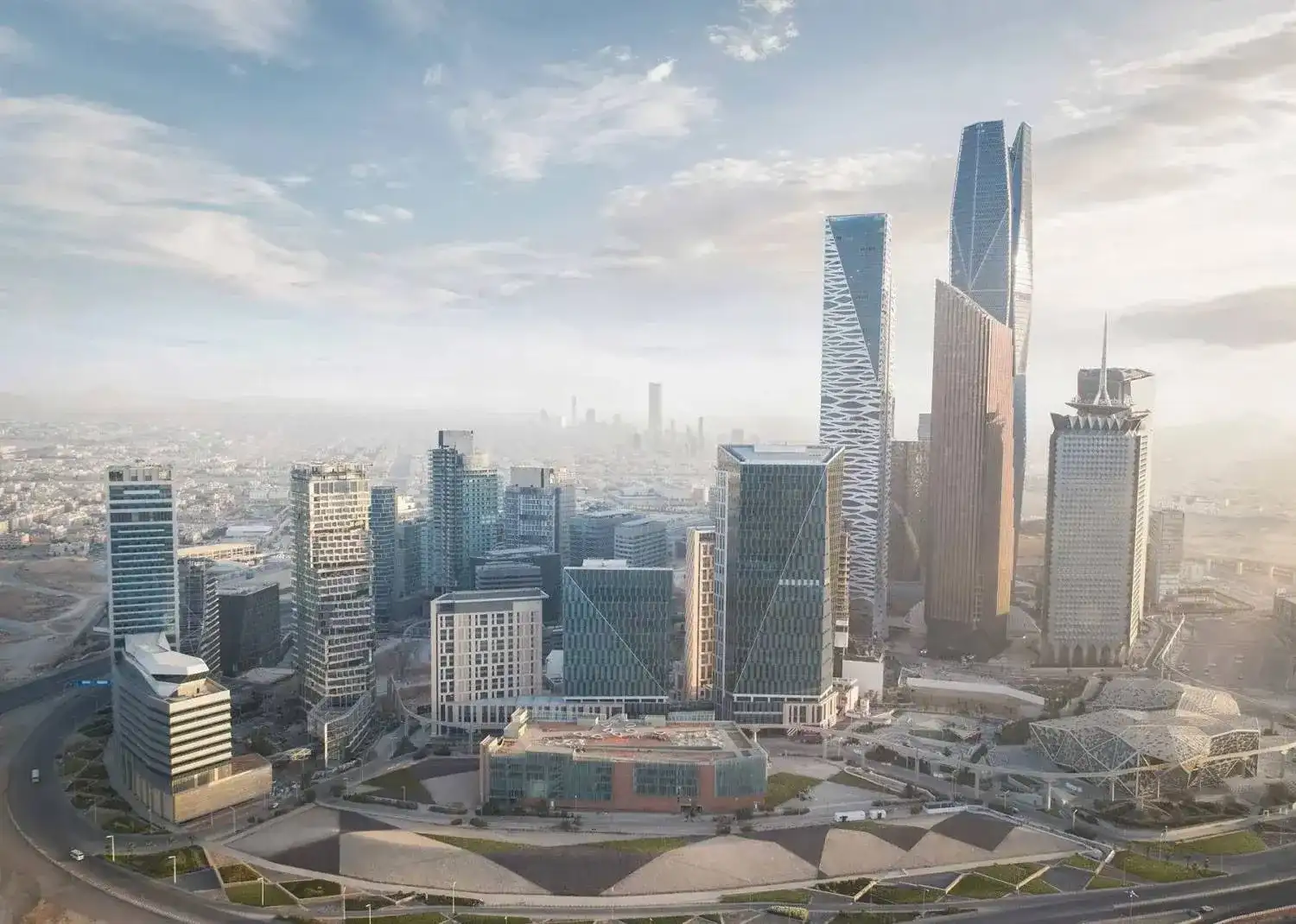
Saudi Arabia granted 34 licenses for regional headquarters in the second quarter of the year as part of its ongoing push to position itself as the Middle East’s leading business hub, according to the Ministry of Investment’s Economic and Investment Monitor for Q2 2025. This latest milestone underscores the Kingdom’s accelerating transformation under Vision 2030, even as global foreign direct investment flows face headwinds.
The licensing surge represents a critical component of Saudi Arabia’s ambitious economic diversification strategy, with nearly 600 international companies, including Northern Trust, IHG Hotels & Resorts, and Deloitte, have established bases in Saudi Arabia since 2021. The momentum demonstrates the effectiveness of the government-backed Riyadh Regional Headquarters Program, which launched with mandatory requirements in January 2024.
Build the future you deserve. Get started with our top-tier Online courses: ACCA, HESI A2, ATI TEAS 7, HESI EXIT, NCLEX-RN, NCLEX-PN, and Financial Literacy. Let Serrari Ed guide your path to success. Enroll today.
Comprehensive Service Delivery Ecosystem
The Q2 2025 report reveals the scope of Saudi Arabia’s investor support infrastructure. More than 125,000 services were delivered through investor outreach centers, 59,000 online services via the ministry’s website, and 34,000 in-person services through comprehensive service centers during the same period. This multi-channel approach reflects the Kingdom’s commitment to creating a seamless business environment for international investors.
The regional headquarters program has evolved into a cornerstone of Saudi Arabia’s economic transformation. Companies that participate in the program will, under current rules, enjoy a zero percent corporate income tax and withholding tax rate for 30 years after the RHQ licence is issued, making it one of the world’s most attractive corporate tax environments.
Understanding the Regional Headquarters Requirements
The program’s structure reflects sophisticated economic policy design. The organisation’s regional headquarters in Saudi Arabia must have a minimum of 15 full-time employees, including at least three C-suite executives, within one year after the RHQ licence is issued. Additionally, the organisation’s global headquarters must have at least two subsidiaries reporting to it.
These requirements ensure that relocated headquarters represent genuine operational centers rather than nominal offices. The RHQ must be established either as a registered branch or as a subsidiary as it is not possible to conduct RHQ functions from an (existing) operational entity in KSA, forcing companies to create dedicated structures for their regional operations.
The compliance framework extends beyond basic staffing requirements. The RHQ and its employees can benefit from the following non-tax incentives: Exemption from Saudization: RHQs enjoy a 10-year exemption from the Saudization requirements. Unlimited employee visas: RHQs can obtain an unlimited number of visas for their employees.
Strategic Global Investment Context
Saudi Arabia’s success in attracting regional headquarters occurs against a challenging global backdrop. The ministry’s continued push to attract foreign direct investment comes as global FDI inflows declined 4.3 percent year on year in the first quarter of the year, according to the Organization for Economic Co-operation and Development. However, inflows to G20 countries increased by 33.5 percent, driven by key developing economies such as China and India.
This context makes Saudi Arabia’s achievement more remarkable. The Kingdom is effectively capturing market share in a declining global FDI environment, suggesting that its economic reforms and investment incentives are resonating with international businesses seeking regional expansion opportunities.
International Engagement and Diplomatic Investment Promotion
The Ministry of Investment’s approach extends beyond domestic policy implementation to active international engagement. “MISA seeks to promote local investment and attract foreign investment. It also organizes and participates in a variety of events. In Q2 2025, MISA took part and organized seven local and international events in different fields,” the ministry said.
These included high-level forums and roundtable meetings with countries including the US, Kuwait, and Azerbaijan, as well as participation in the VivaTech conference in Paris and the St. Petersburg International Economic Forum in Russia. This diplomatic investment promotion represents a sophisticated understanding of how international business relationships develop through sustained engagement.
Vision 2030: The Driving Force Behind Economic Transformation
The regional headquarters program operates within Saudi Arabia’s broader Vision 2030 framework, which aims to fundamentally restructure the Kingdom’s economy. Non-oil revenues reached $137.29 billion, a 113% increase on the 2016 baseline. Unemployment dropped to 7% in Q4 2024, achieving the Vision 2030 target five years early.
The private sector’s contribution to GDP has reached 47% PiF assets reached $941.3 billion in 2024, with the revised 2030 target increased to $2.67 trillion. These metrics demonstrate that Vision 2030 is producing measurable economic transformation beyond simply attracting corporate headquarters.
The program’s ultimate objectives remain ambitious. Saudi Arabia has enacted over 600 economic reforms since the launch of the Vision 2030 blueprint in a bid to attract SR12.4 trillion ($3.3 trillion) of cumulative investment and SR1.8 trillion in foreign direct investment inflows between 2021 and 2030 as part of the National Investment Strategy.
Regulatory Innovation and Legal Framework Evolution
The Ministry of Investment has also been instrumental in introducing new legislation to bolster investor confidence. Key regulatory developments include the establishment of the Saudi Investment Promotion Authority and updates to laws concerning civil aviation, food security, and real estate.
These regulatory reforms create what officials describe as a more competitive investment environment. The legal framework evolution reflects recognition that attracting international businesses requires not just financial incentives but also predictable, transparent regulatory systems that align with international best practices.
Ready to level up your career? Join our expert-led Online courses in ACCA, HESI A2, ATI TEAS 7, HESI EXIT, NCLEX-RN, NCLEX-PN, and Financial Literacy. At Serrari Ed, we turn potential into achievement. Start your journey today!
Global Competitiveness Rankings and International Recognition
The Kingdom’s efforts are receiving international recognition. Saudi Arabia ranked third among emerging markets in the 2025 FDI Confidence Index and maintained a top global position in several international indicators related to investment climate, entrepreneurship, and digital infrastructure.
This ranking reflects comprehensive reforms across multiple dimensions of business environment quality. International ranking improvements suggest that Saudi Arabia’s transformation extends beyond energy sector diversification to fundamental improvements in institutional capacity and business climate competitiveness.
Megaprojects: The Physical Infrastructure of Economic Transformation
Saudi Arabia’s regional headquarters strategy operates alongside massive infrastructure development. NEOM could add $48 billion to GDP, Qiddiya $36 billion annually, and the Red Sea Project boosts luxury tourism. They create jobs in construction, tourism, and services, reducing oil dependency.
Saudi officials have described Neom as “the world’s most ambitious project”. They expect to welcome around one million visitors by 2025 and five million by 2030. These megaprojects create physical destinations that international businesses can use to anchor their regional operations, complementing the headquarters program’s tax incentives with world-class infrastructure.
Since the unveiling of Vision 2030 in 2016, Saudi Arabia has awarded construction contracts worth $250 billion and initiated around $1.25 trillion in real estate and infrastructure projects, according to 2023 Saudi Arabia giga projects report. This construction activity creates immediate economic momentum while building long-term infrastructure capacity.
Employment and Social Transformation Metrics
The economic transformation includes significant social dimensions. Female labour force participation has beaten the target of 35.5%, reaching 36.2% in Q3 2024. This social transformation creates human capital development that supports the broader economic diversification strategy.
Regional headquarters contribute to this employment transformation by creating high-skill job opportunities that align with Vision 2030’s human development objectives. The combination of international business presence and domestic employment growth creates a multiplier effect that extends beyond immediate job creation.
Sector-Specific Investment Opportunities
The regional headquarters program intersects with specific sector development priorities. Renewable Energy: Solar and wind energy projects aligned with Saudi Green Initiative goals. Industrial Manufacturing: Opportunities in automotive, aerospace, and medical equipment.
These sectoral priorities reflect strategic economic diversification that goes beyond attracting any international business to focusing on industries that align with long-term competitive advantages and sustainability objectives.
Financial Services and Capital Markets Development
The broader economic transformation includes financial market development. Since June 2015, international equity investors with assets under management of more than $5bn have been able to access the Saudi exchange by applying to become Qualified Foreign Investors (QFIs).
This capital markets development complements the regional headquarters strategy by creating financial infrastructure that international businesses require for regional operations. The combination of operational headquarters and capital markets access creates a comprehensive business environment.
Economic Targets and Long-term Objectives
According to the ministry, such strides contribute to the Kingdom’s long-term investment targets, including attracting SR388 billion in FDI by 2030, raising the private sector’s contribution to gross domestic product to 65 percent, and achieving a 7 percent unemployment rate.
These targets represent comprehensive economic transformation rather than incremental change. The regional headquarters program serves as one mechanism among many for achieving these ambitious objectives, demonstrating integrated policy design that addresses multiple economic development challenges simultaneously.
Challenges and Global Investment Environment
Despite success metrics, challenges remain. Increasing FDI, however, is a challenging task given the deterioration in the global direct investment environment over the past decade. Global FDI flows have been on a marked downward trend, dropping from over $2.1 trillion in 2015 to $1.4 trillion in 2023.
This global context means that Saudi Arabia is therefore seeking a larger share of a shrinking pie at a time when many other countries are also seeking increased foreign investment to meet their development needs. Success in this environment requires exceptional policy innovation and execution.
Future Outlook and Strategic Implications
The Q2 2025 regional headquarters licensing results suggest that Saudi Arabia’s economic transformation strategy is generating measurable momentum. The combination of tax incentives, regulatory reform, infrastructure development, and diplomatic engagement appears to be creating competitive advantages that resonate with international businesses.
Looking ahead, the sustainability of this momentum will depend on continued policy innovation, megaproject execution, and the broader success of Vision 2030’s economic diversification objectives. The regional headquarters program represents one component of a comprehensive transformation that aims to position Saudi Arabia as a leading global economy by 2030.
The Kingdom’s ability to attract international businesses during a period of declining global FDI flows demonstrates policy effectiveness and suggests that Saudi Arabia’s economic transformation is moving from aspiration to measurable achievement. As the Vision 2030 timeline advances toward its conclusion, the regional headquarters program provides concrete evidence that Saudi Arabia’s ambitious economic diversification strategy is producing tangible results.
Ready to take your career to the next level? Join our Online courses: ACCA, HESI A2, ATI TEAS 7 , HESI EXIT , NCLEX – RN and NCLEX – PN, Financial Literacy!🌟 Dive into a world of opportunities and empower yourself for success. Explore more at Serrari Ed and start your exciting journey today! ✨
Track GDP, Inflation and Central Bank rates for top African markets with Serrari’s comparator tool.
See today’s Treasury bonds and Money market funds movement across financial service providers in Kenya, using Serrari’s comparator tools.
photo source: Google
By: Montel Kamau
Serrari Financial Analyst
25th August, 2025