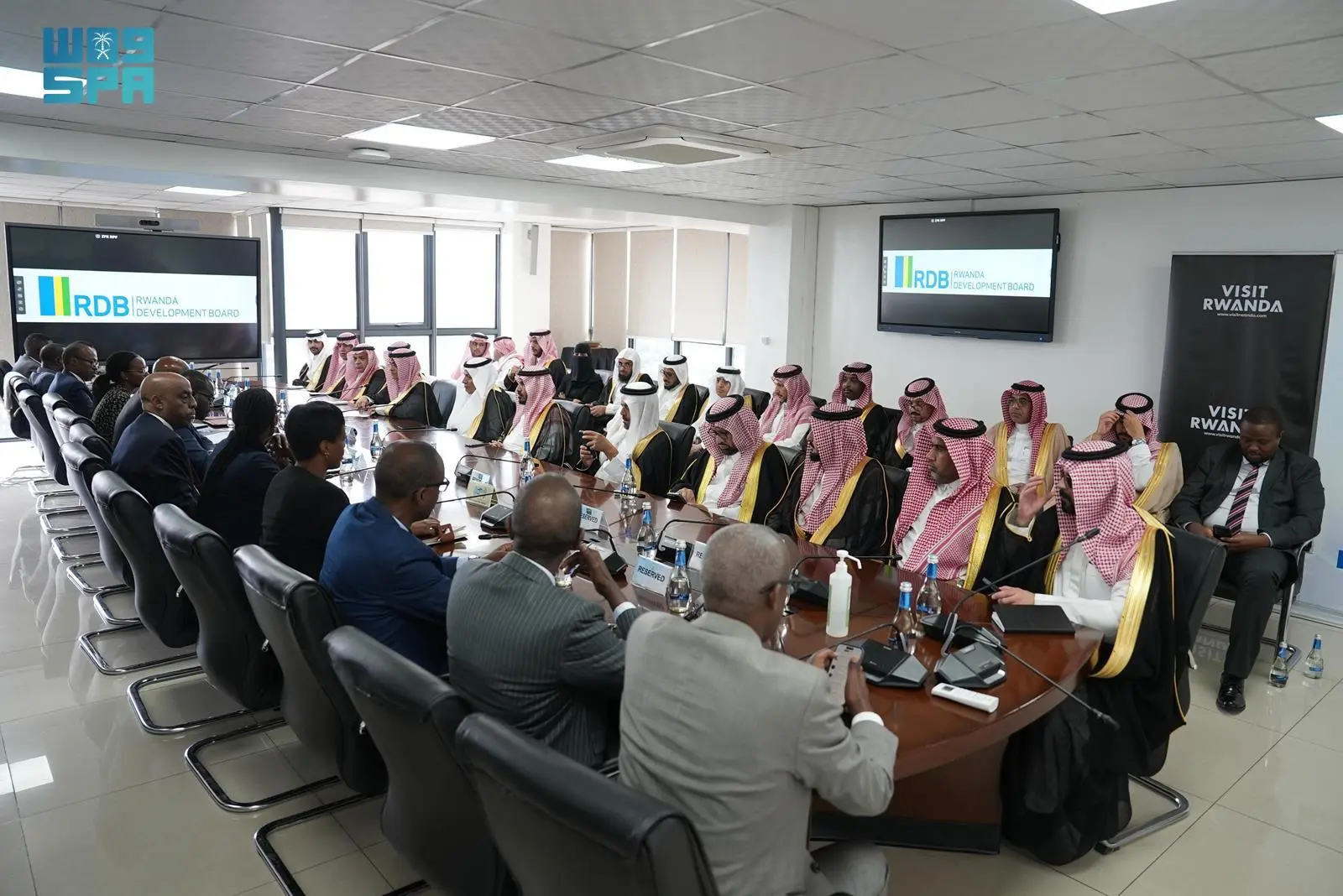
Saudi Arabia and Rwanda have taken a significant step toward enhancing their economic partnership by establishing a joint business council aimed at fostering bilateral trade and investment. The agreement was formalized during the Saudi-Rwandan Business Forum held in Kigali, Rwanda’s capital. The event saw the participation of a high-level delegation from the Federation of Saudi Chambers (FSC), led by Chairman Hassan bin Moejeb Al-Huwaizi, alongside representatives from the Rwanda Private Sector Federation (PSF), as well as 60 Saudi and Rwandan officials and investors.
The establishment of the Saudi-Rwandan Business Council marks a milestone in the economic relations between the two nations, signaling a commitment to deeper collaboration across key sectors. This move is expected to significantly enhance trade and investment ties, building on the momentum of previous engagements between Saudi Arabia and Rwanda.
Key Objectives of the Joint Business Council
The newly formed Saudi-Rwandan Business Council is designed to achieve several strategic objectives that will serve as the foundation for a stronger economic alliance:
- Investment Promotion – The council aims to identify and promote investment opportunities in key sectors, including tourism, mining, real estate, construction, and agriculture. Saudi investors have shown increasing interest in Rwanda’s emerging industries, particularly in sustainable urban development projects such as Kigali Green City, valued at $150 million.
- Trade Expansion – Currently, trade between Saudi Arabia and Rwanda remains limited. The council is expected to facilitate mechanisms for increased trade exchanges by identifying priority products and services that could benefit both nations.
- Business Delegation Exchanges – Saudi and Rwandan business delegations will participate in regular trade missions and investment summits to explore new opportunities. A planned visit by a Rwandan business delegation to Saudi Arabia will further strengthen commercial partnerships.
- Knowledge and Technology Transfer – Rwanda has been a leader in digital transformation in Africa, and the council will facilitate knowledge-sharing in areas such as smart cities, fintech, and agribusiness innovation.
- Regulatory and Policy Cooperation – The business council will work closely with policymakers to create an investor-friendly environment that encourages private sector growth and reduces bureaucratic barriers.
Saudi-Rwandan Business Forum Highlights
The Saudi-Rwandan Business Forum, which served as the backdrop for the agreement, was attended by key government officials, private sector leaders, and policymakers from both nations. The forum explored various investment opportunities in Rwanda, with a special focus on high-potential sectors.
Saudi investors expressed particular interest in Rwanda’s tourism industry, given its rapid growth and government incentives designed to attract foreign direct investment. The country’s national carrier, RwandAir, has expanded its route network, connecting Kigali to major international destinations, including the Middle East. This improved connectivity presents a viable pathway for increased tourist arrivals from Saudi Arabia and the Gulf region.
Rwanda’s mining industry also received considerable attention during the forum. The country is rich in critical minerals such as tin, tantalum, and tungsten—often referred to as the 3Ts—along with gold. The Saudi delegation highlighted the potential for collaboration in mineral processing, as Saudi Arabia has been investing heavily in mining technologies and exploration.
Another key area of discussion was the agriculture sector, particularly investments in large-scale commercial farming. Rwanda’s strategic vision for agricultural modernization includes partnerships that leverage advanced irrigation, mechanized farming, and agribusiness innovation. With Saudi Arabia’s experience in large-scale agricultural projects and food security initiatives, collaboration in this field could yield mutual benefits.
During the forum, the FSC delegation met with four Rwandan ministers, including the Minister of Finance and Economic Planning, the Minister of Agriculture and Animal Resources, the Minister of Trade and Industry, and the Minister of Education. Discussions revolved around strengthening economic cooperation, particularly in areas that align with Rwanda’s Vision 2050 development plan.
Saudi Arabia’s Economic Interests in Africa
Saudi Arabia has been actively expanding its economic presence across Africa as part of its Vision 2030 diversification strategy, which seeks to reduce reliance on oil revenues by investing in non-oil industries. This broader strategy has led to increased Saudi investments in African markets, particularly in infrastructure, energy, and agriculture.
The Kingdom has shown interest in establishing long-term economic partnerships with African nations that have demonstrated political stability and economic growth potential. Rwanda, known for its business-friendly policies, transparent governance, and consistent economic expansion, has become an attractive destination for Saudi investors looking to enter the African market.
Saudi investment in Africa has been largely driven by sovereign wealth funds, including the Public Investment Fund (PIF), which has made significant commitments to infrastructure projects on the continent. By formalizing trade and investment frameworks with countries like Rwanda, Saudi Arabia aims to strengthen its footprint in Africa while simultaneously supporting the continent’s economic transformation.
Rwanda’s Economic Landscape and Investment Potential
Rwanda has consistently ranked among the top African countries in ease of doing business, according to international financial institutions. The government has prioritized economic reforms that foster an enabling environment for investors, including streamlined business registration processes, tax incentives, and infrastructure development.
One of the most ambitious projects currently underway in Rwanda is the Kigali Green City initiative, which aims to develop Africa’s first sustainable urban development model. The $150 million project is expected to serve as a model for environmentally friendly city planning across the continent. Saudi investors have expressed keen interest in exploring joint ventures related to renewable energy, water management, and green building technologies.
The country’s focus on digital transformation has also drawn interest from Saudi tech firms, particularly in fintech and e-governance solutions. With a young and rapidly growing population, Rwanda presents an opportunity for Saudi companies looking to invest in ICT infrastructure, digital banking, and mobile financial services.
Implications for Bilateral Trade Growth
The establishment of the Saudi-Rwandan Business Council is expected to accelerate bilateral trade, which has remained relatively low despite both countries’ economic ambitions. Currently, Saudi Arabia imports limited quantities of agricultural produce from Rwanda, while Rwanda relies on Saudi Arabia for petroleum-based products. The business council’s efforts to facilitate direct investment and trade agreements could help expand the range of goods and services exchanged between the two nations.
One potential area for immediate trade expansion is halal-certified products. With a growing demand for halal food and cosmetics in the Middle East, Rwandan agribusiness firms could tap into the Saudi market by meeting certification requirements. Similarly, Saudi firms specializing in halal tourism and hospitality services could explore opportunities in Rwanda’s fast-growing tourism industry.
Beyond traditional trade, the council is expected to explore opportunities in education and workforce development. Saudi Arabia has been investing in higher education partnerships with African universities, and Rwanda’s focus on science, technology, engineering, and mathematics (STEM) education aligns with Saudi Arabia’s long-term workforce development goals.
Future Prospects and Strategic Outlook
With the launch of the Saudi-Rwandan Business Council, both countries have positioned themselves for deeper economic engagement that goes beyond trade and investment. The council will serve as a platform for continued dialogue, ensuring that businesses from both nations have the necessary support to succeed.
Looking ahead, the next steps for the council include setting up working groups to focus on industry-specific opportunities, organizing follow-up trade missions, and developing a roadmap for joint ventures in priority sectors. The anticipated visit of a Rwandan business delegation to Saudi Arabia will provide further momentum for these initiatives.
As Saudi Arabia continues its economic diversification journey and Rwanda advances its Vision 2050 goals, the partnership between the two nations is expected to yield long-term benefits. The establishment of the Saudi-Rwandan Business Council is not just a milestone in bilateral relations—it is a strategic move that aligns with the broader global trends of economic cooperation between Africa and the Gulf region.
With both countries demonstrating commitment to economic transformation and private sector-led growth, the future of Saudi-Rwandan economic collaboration looks promising.
Ready to take your career to the next level? Join our dynamic courses: ACCA, HESI A2, ATI TEAS 7 , HESI EXIT , NCLEX – RN and NCLEX – PN, Financial Literacy!🌟 Dive into a world of opportunities and empower yourself for success. Explore more at Serrari Ed and start your exciting journey today! ✨
photo source: Google
By: Montel Kamau
Serrari Financial Analyst
14th February, 2025