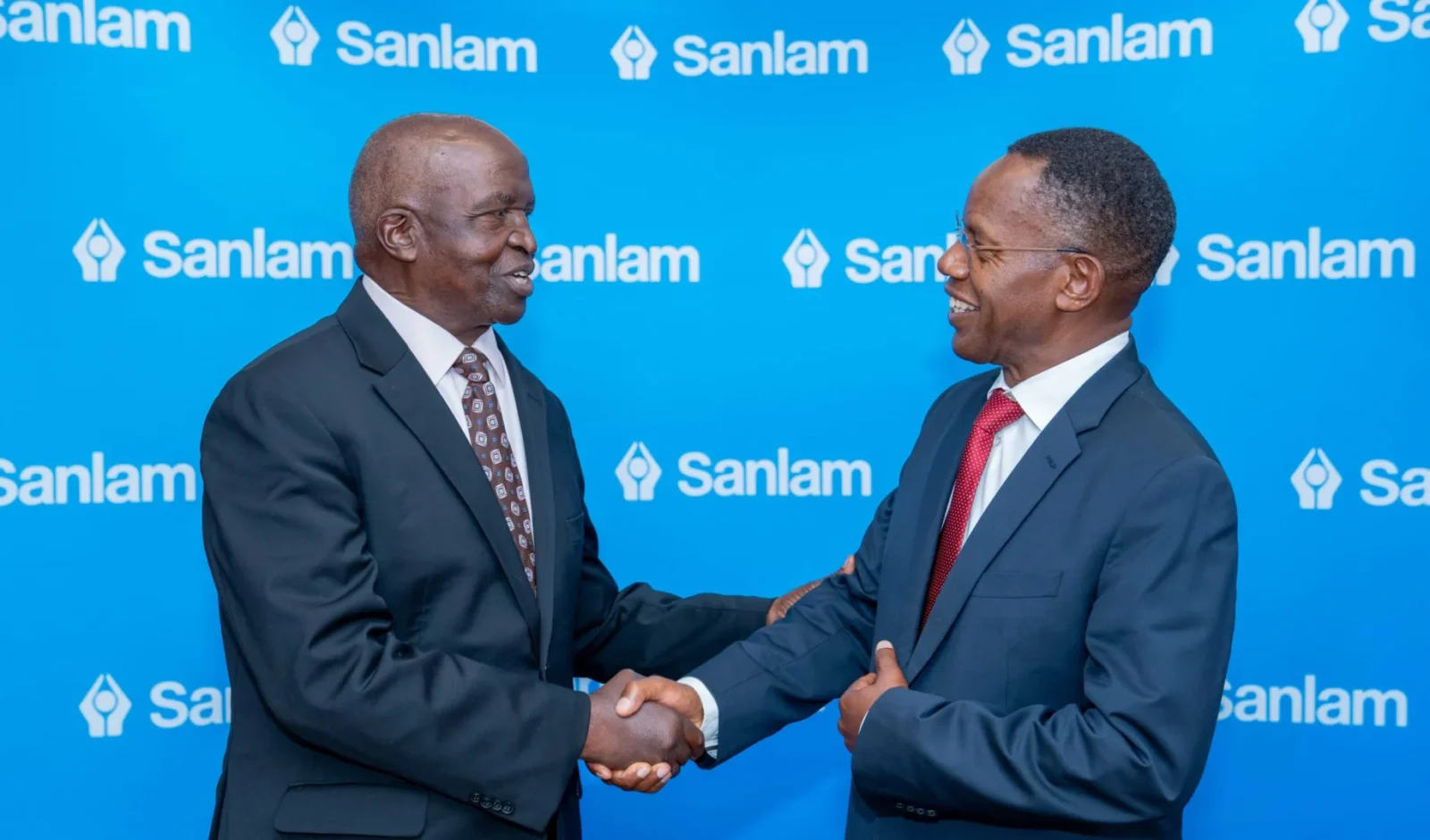
When Sanlam Kenya Plc unveiled plans on April 3, 2025 to raise KSh 2.5 billion via a rights issue, the share price initially jumped to KSh 10.35—an unexpected reaction to what investors usually see as dilutive. Yet by May 9, the stock had retraced sharply, trading at KSh 5.88, a 43% plunge that brought it dangerously close to the offer price of KSh 5.00. That whirlwind swing underscores how quickly market sentiment can shift once dilution realities set in—and spotlights broader challenges for both Sanlam Kenya and its shareholders as the offer closes on May 12.
Among airlines or banks, it’s rare to see such drama over a capital raise. But Sanlam Kenya’s rights issue isn’t business as usual. The firm seeks fresh equity to retire a KSh 3 billion loan from Stanbic Bank Kenya—downscaled from an earlier target—for balance-sheet resilience in a tough macroeconomic climate Kenyan Wall Street. With only 144 million shares outstanding, the proposed issuance of 500 million new shares would swell the register to 644 million, diluting non-participating investors by more than 77%.
From regulatory green lights to underwriters’ safety net
Sanlam secured unanimous clearance from Kenya’s Capital Markets Authority, the Nairobi Securities Exchange, the Insurance Regulatory Authority and the South African Reserve Bank. That full regulatory blessing, coupled with Sanlam Allianz Africa underwriting the issue, initially reassured investors that the raise would succeed regardless of take-up levels Business Now. The underwriting commitment meant no shares would go unsold, protecting the company’s funding goals—but it did little to calm nerves over the cost of dilution for existing shareholders.
Understanding the dilution and repricing
At the KSh 5.00 offer price, shareholders receive one new share for every 0.288 existing shares. With the share price already sliding below KSh 6.00, many now see a modest 15% discount as insufficient to compensate for a 77% plunge in ownership if they abstain AFX. The theoretical ex-rights price (TERP) of approximately KSh 5.20 paints a stark picture: even if every shareholder participated, the post-issue share value sits roughly 50% below the April rally peak.
Sanlam Kenya’s modest market cap—just KSh 847 million before the announcement—exacerbates volatility. A low-liquidity listing (average daily volume around 76,800 shares) means relatively small trades can sway prices dramatically Barron’s. Momentum traders who piled in on early enthusiasm quickly reversed their positions once the dilution math became clear, accelerating the drop.
Macro headwinds compound the pain
Beyond dilution, Sanlam operates in an economy grappling with high inflation (averaging nearly 24% in 2024) and a weakening naira against major currencies. Those pressures inflate operational costs—fuel for generators, transport and imported equipment—and squeeze consumer wallets, slowing premium growth in both life and general insurance lines . Servicing the Stanbic loan, originally drawn at interest linked to the 182-day Treasury Bill rate plus a margin, has weighed on earnings. The rights issue aims to replace costly debt with equity, trimming finance expenses and shoring up capital adequacy ratios.
A reprioritization of strategy and resources
Sanlam Kenya’s leadership insists the recapitalization is part of a broader financial restructure. Under Chairman John Simba and CEO Patrick Tumbo, the group has divested non-core real estate, wound down dormant subsidiaries and sharpened focus on insurance underwriting and asset management. Proceeds from the rights issue will enable the company to resume targeted investments in digital distribution channels, agency training and risk-based pricing tools—initiatives paused amid tighter liquidity Kenyan Wall Street.
The path to a higher market cap—and why it matters
If fully subscribed, Sanlam Kenya’s market capitalization would jump to about KSh 3.35 billion (644 million shares × TERP KSh 5.20). That four-fold increase on pre-announcement value looks attractive on paper. But turning that inflated headline into genuine shareholder wealth demands rigorous execution. Sanlam must deploy the fresh capital to generate returns exceeding its new cost of equity, rebuild confidence among institutional and retail investors, and sustain premium growth through product innovation.
Investor psychology and communication
The stock’s roller-coaster ride also reflects the power of perception. Many shareholders initially mistook the rights issue for a sign of growth or regulatory endorsement rather than a corrective balance-sheet measure. Only when analysts and advisors recalculated dilution impact did enthusiasm evaporate. The episode highlights the importance of clear, proactive communication: timely Q&A sessions, scenario analyses and online town halls could have tempered speculation and anchored expectations.
Lessons for the Nairobi Securities Exchange
Sanlam Kenya’s experience offers broader takeaways for issuers on the NSE. Rights issues can be vital tools for capital-raising, but they carry reputational risk if pricing, documentation and investor outreach fall short. Smaller, less liquid stocks are especially vulnerable. According to NSE data, across top 20 by market cap, traded volumes and free float percentages correlate strongly with post-issue price stability Business Now. Issuers and sponsors must design structures—such as rights-trading periods or back-stop facilities—that match the nuances of Kenya’s market depth.
What’s next on the timetable?
With the offer closing May 12, attention turns to participation levels and the underwriter’s role. Key dates include the final payment of irrevocable bank guarantees on May 21, Sanlam Allianz Africa’s subscription for untaken rights by May 27, and the announcement of results on May 29. Share allocation statements and any refunds follow on May 30, with new shares credited on June 3 and trading commencing June 4 Nairobi Securities Exchange PLC.
Beyond the mechanics, stakeholders will watch two critical metrics: actual take-up (which signals confidence in management’s strategy) and subsequent share-price performance (an indicator of market reception to the enlarged equity base). A robust subscription rate above 70% could reassure investors, while tepid demand would place pressure on Sanlam Allianz Africa to absorb a larger tranche—and potentially weigh on broader capital markets reputation.
Balancing immediate relief against long-term value creation
Ultimately, rights issues are double-edged swords. They infuse capital and lower leverage, yet they also redistribute value among existing and new shareholders. For Sanlam Kenya, the challenge lies in converting a debt-to-equity swap into enhanced profitability, efficient underwriting and customer growth. Success hinges on disciplined capital allocation—targeting digital transformation, agency force expansion and venture partnerships that accelerate premium income and policy retention beyond the cyclical downturn.
For Kenya’s insurance sector, Sanlam’s outcome carries symbolic weight. A well-executed rights issue could embolden other mid-caps to shore up balance sheets in preparation for new IFRS standards, regulator-mandated solvency requirements and intensifying competition from bancassurance players. Conversely, a bungled raise risks undermining issuer credibility, dissuading future capital-market activations.
A pivotal moment for Sanlam Kenya’s shareholders
As the offer window narrows, shareholders must decide: top up holdings at a deep discount to prior peaks, step aside and accept dilution, or reallocate capital to other emerging opportunities on the NSE. Their choice will not only shape Sanlam’s capital base but also signal broader confidence—whether in the firm’s strategic pivot, in Kenya’s macroeconomic resilience or in the NSE’s capacity to support growth through equitable, transparent rights-issue frameworks.
Whatever the outcome, the Sanlam saga vividly illustrates the intricate interplay between corporate finance, market dynamics and investor psychology. Rights issues may be technical exercises in balance-sheet repair—but in practice, they become high-stakes tests of communication, valuation and the capacity to convert fresh equity into enduring shareholder value. As Sanlam Kenya closes this chapter on May 12, all eyes will be on the subscription figures. But the real story will unfold over the subsequent months: in how Sanlam deploys the proceeds, restores underwriting profitability and cements its role as a bellwether for Kenya’s insurance industry.
Ready to take your career to the next level? Join our dynamic courses: ACCA, HESI A2, ATI TEAS 7 , HESI EXIT , NCLEX – RN and NCLEX – PN, Financial Literacy!🌟 Dive into a world of opportunities and empower yourself for success. Explore more at Serrari Ed and start your exciting journey today! ✨
Photo source: Google
By: Montel Kamau
Serrari Financial Analyst
12th May, 2025