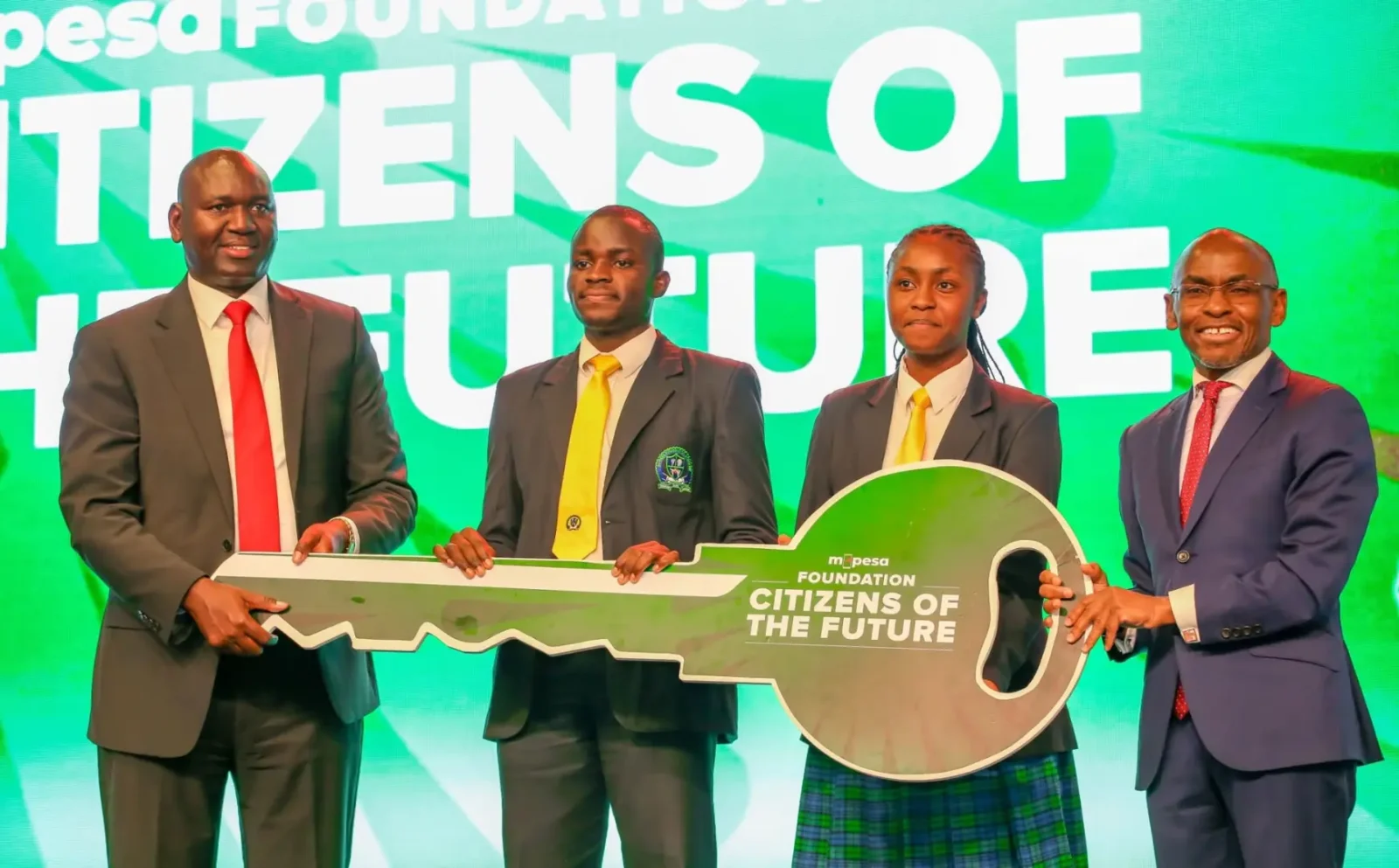
The telecommunications giant Safaricom PLC, under the leadership of its Chief Executive Officer Peter Ndegwa, has publicly committed to an ambitious KSh 30 billion (approximately US $232 million) education-investment plan that spans the next five years in Kenya. This wide-ranging initiative, branded “Citizens of the Future”, will seek to modernise infrastructure, integrate digital technologies into classrooms, train teachers, provide scholarships and underpin Kenya’s evolution into a knowledge-economy region. (See The Standard’s reporting) (The Standard)
Build the future you deserve. Get started with our top-tier Online courses: ACCA, HESI A2, ATI TEAS 7, HESI EXIT, NCLEX-RN, NCLEX-PN, and Financial Literacy. Let Serrari Ed guide your path to success. Enroll today.
Strategic intent and scale
Safaricom describes the initiative as a response to some of the most persistent pain-points in Kenyan education: outdated facilities, limited access to digital-ready environments, weak teacher-training in ICT, and financing barriers for learners especially at senior-secondary and tertiary levels. According to one summary, “over 10,000 scholarships will target senior secondary and tertiary students” and more than 600 institutions will be upgraded across Kenya under the programme. (billionaires.africa)
In his own words, Ndegwa said: “We are consolidating our interventions to ease access to education from early learning to technical and vocational training. This first KSh30 billion investment will run over five years.” (billionaires.africa)
Programmatic pillars: infrastructure, digital readiness & human capital
The “Citizens of the Future” initiative is built on several mutually-reinforcing pillars:
1. Infrastructure modernisation
The initiative will support what Safaricom describes as model “Schools of the Future” — institutions purpose-built or upgraded with sustainable design, robust digital infrastructure, inclusive programmes for learners with special needs, and modern classrooms, labs and ICT facilities. For example, recent projects by Safaricom’s foundation include multi-million-shilling investments in school infrastructure across counties. (Safaricom)
2. Digital integration and teacher capacity-building
Safaricom emphasises that hardware alone is not sufficient: teachers must be skilled, students must become digital literate, and the curriculum must align with a rapidly changing labour market. The media coverage notes that the programme will equip teachers with digital and ICT skills to improve delivery. (The Standard)
3. Scholarships and access to tertiary/technical education
The plan includes scholarships for over 10,000 senior-secondary and tertiary students, aiming to reduce financing hurdles for learners and open pathways into technical and vocational training (TVET), where skills-gaps are most acute. (Bizna Kenya)
4. Private-sector leadership and scale across regions
Safaricom emphasises that the initiative will cover all 47 counties in Kenya, demonstrating the company’s ambition to operate at national scale rather than just in a few urban centres. The move reflects a pivot towards the private sector taking a more active role in supporting national human-capital development. (Techish Kenya)
Why the timing matters
The timing of this investment is significant for several reasons:
- Kenya’s public education budget remains large but still faces structural gaps. For example, the 2023/24 allocation was KSh 628.6 billion (4.7 % of GDP) but commentators argue the quality of infrastructure, digital readiness and teaching remains behind. (Techish Kenya)
- The global economy is rapidly shifting toward digital skills, automation, and lifelong learning. Safaricom frames its intervention as preparing Kenya’s learners for that “digital economy” and “future-ready” employment.
- Private-sector engagement in education is gaining traction across Africa, with companies complementing public spending through infrastructure, technology and training partnerships. Safaricom’s initiative positions it as a national development partner, not just a telecom operator.
- Safaricom is celebrating its 25th anniversary and the investment also serves as part of its corporate purpose and social-impact strategy. As one summary put it, “This does indeed come at a defining moment… our objective under the Citizens of the Future programme is to enable every region have a model institution that not only trains for academic excellence but moulds future-ready learners through digital integration.” (Techish Kenya)
Implications for the Kenya education system
The scale of Safaricom’s pledge carries a number of implications for Kenya’s education ecosystem, which span opportunity, risk and policy-integration.
Opportunities
- Improved infrastructure and digital access could reduce the digital-divide between urban and rural schools, improving equity.
- Better teacher-training and digital literacy may help align Kenya more closely with labour-market demands (especially in tech, digital services, and global value-chains).
- Private investment of this magnitude may encourage further partnerships in TVET, lifelong learning and industry-academy linkages.
- Scholarships may ease access to tertiary education and TVET for students from underserved backgrounds, improving social mobility.
Potential risks and caveats
- Implementation at scale across 600+ institutions is complex: logistics, regional disparities, procurement, maintenance and sustainability will challenge even well-resourced programmes.
- The programme must align with national curricula, regulatory frameworks and county-level education authorities — coordination is essential.
- Infrastructure alone is insufficient: value will depend on sustained teacher support, curriculum reform, student engagement and measuring learning outcomes (not just inputs).
- Private-sector initiatives may raise expectations of rapid transformation; if results lag, there is reputational risk for Safaricom and questions about long-term maintenance, upgrade-cycles or reliance on donor-style funding.
- Equity concerns remain: will the “model institutions” serve rural and marginalised learners as much as more accessible schools? Will support reach informal or under-resourced centres equally?
Safaricom’s role in Kenya’s wider economy
Safaricom is not just a telecom provider; its economic footprint is substantial. The company has reported revenues of KSh 388.7 billion (~USD 3 billion) for the year ended March 2025, and claims to support more than 1.2 million jobs in its ecosystem (dealers, agents, developers). It accounts for a meaningful share of Kenya’s GDP and digital economy. (The Star)
The company’s shift into education investment is consistent with its repositioning as a “purpose-led tech company” rather than simply a telecom operator. For policy-makers and investors, this signals three things: major corporate players see private-sector human-capital investment as part of their sustainable growth strategy; education is increasingly viewed through a digital-skills, future-economy lens; and large-scale private initiatives may alter how national education systems partner and deliver at scale.
How the initiative might unfold
Safaricom has intimated that selection of beneficiary institutions will follow a phased process. Some key steps:
- Public nominations: For example, the “Schools of the Future” concept has an online nomination portal through which schools or stakeholders can apply or be proposed. (Techish Kenya)
- Infrastructure roll-out: Upgrades across regions including ICT labs, sustainable buildings, digital-enabled classrooms, water harvesting and inclusive design. Previous foundation projects provide a blueprint. (Safaricom)
- Teacher-training and digital skills programmes: Preparing educators, equipping them with ICT tools and shifting pedagogy toward blended learning, digital platforms and future-oriented curricula.
- Scholarship delivery and access pathways: Distribution of scholarships for senior secondary and tertiary education, possibly linked to TVET institutions, digital skills hubs and industry-partner programmes.
- Monitoring, evaluation and scale-up: To ensure outcomes matter, Safaricom (via its M-PESA Foundation) will likely publish progress data, track improvements in infrastructure, teacher capability, student digital-skills, and longer-term employment outcomes.
One decision can change your entire career. Take that step with our Online courses in ACCA, HESI A2, ATI TEAS 7, HESI EXIT, NCLEX-RN, NCLEX-PN, and Financial Literacy. Join Serrari Ed and start building your brighter future today.
Reactions and commentary
Initial coverage of the plan has been broadly positive, with media highlighting the ambition and the private-sector scale of the investment. For example, coverage notes that the programme addresses a “defining moment” in Kenya’s education transformation. (Techish Kenya)
Education analysts have noted the significance of private-sector contributions especially when combined with public funding: the Kenyan education sector received around KSh 702.7 billion in the FY2025/26 budget, accounting for 28 % of total expenditure. (The Star)
That said, some commentators caution that private-sector investments must be aligned with national systems to ensure sustainability and avoid duplication; infrastructure without teacher capacity or curriculum relevance will not by itself deliver improved outcomes.
Strategic alignment with national priorities
The “Citizens of the Future” initiative aligns well with several national education and development priorities:
- The Government of Kenya emphasises improved human-capital, increased digital literacy, more robust TVET pathways, and greater inclusion.
- Safaricom’s intervention dovetails with the broader agenda of digital transformation across sectors including telecommunications, financial services (via M-PESA), enterprise, and public-service delivery.
- By targeting infrastructure and skills, the initiative supports Kenya’s ambition to grow its knowledge economy, increase productivity and better integrate with global technological trends.
Potential ripple-effects across the ecosystem
The significance of the initiative goes beyond the direct beneficiaries. Some potential ripple-effects include:
- Private-sector investment in education may spur other corporations to commit to large-scale regional human-capital programmes, shifting the funding model for key sectors.
- Enhanced digital readiness and infrastructure could enable subsequent upgrades in other sectors: telemedicine, digital public services, entrepreneurship, innovation hubs.
- A more digitally skilled workforce may attract higher-value foreign investment into Kenya, especially in tech and services that rely on human-capital and connectivity.
- Greater participation of rural and marginalised regions could reduce regional disparities in education outcomes, thereby improving inclusive growth and social mobility.
Measuring success and the challenge of accountability
Given the scale and ambition of the initiative, measuring success will be central. Some key metrics to watch will include:
- Number of institutions upgraded and fully operational as “Schools of the Future”
- Number of teachers retrained and using digital tools effectively
- Scholarship recipients and their subsequent retention, completion and employment outcomes
- Improvement in student digital-skills, ICT competency, and readiness for TVET or tertiary education
- Equity metrics: proportion of rural counties, marginalised learners, girls and learners with special needs served
- Sustainability: maintenance of infrastructure, recurrent costs, technology refresh cycles, connectivity uptime
Safaricom will need to work closely with the Ministry of Education, County Governments, and school boards to ensure ownership, maintenance and alignment with national standards.
The broader African context: why this matters beyond Kenya
While this initiative is Kenya-centric, it has broader significance for Sub-Saharan Africa:
- It demonstrates a major corporation committing hundreds of millions of dollars to education, which could set a benchmark for private investment in the sector across the continent.
- The focus on digital transformation, future-skills and infrastructure is highly relevant as African nations aim to leapfrog legacy systems and build knowledge economies.
- A successful model in Kenya may encourage cross-border or regional educational-digital initiatives, especially within East Africa’s integration frameworks.
- It signals that telecom and technology companies in Africa are seeing education and human-capital as strategic to their business model and the broader economy.
Risks, the unknowns and questions ahead
Even the best-intentioned programmes face real hazards:
- Will the infrastructure rollout achieve the desired uniformity and quality across both urban and remote/rural schools? Differences in connectivity, power supply, teacher retention and local logistics could hamper scale.
- Technology becomes obsolete quickly; without ongoing refresh, teacher support and curriculum updates, early gains risk decay.
- Scholarships are excellent, but the broader systemic issues (teacher-student ratios, textbook availability, classroom size, curriculum relevance) remain — the initiative must complement not replace government reform.
- Maintenance of the upgraded institutions may fall to schools or counties ill-equipped to take on long-term servicing, connectivity costs, IT support or educator training.
- Data on outcomes will matter: without transparent monitoring and public reporting, the initiative risks becoming another large headline without evidence of improved learning outcomes.
Conclusion
Safaricom’s KSh 30 billion “Citizens of the Future” programme is one of the most ambitious private-sector education investments in Kenya’s history. It signals not only financial commitment but a strategic shift: education is now being framed less as a purely public-sector responsibility and more as a collaborative arena where private-sector, government and communities jointly build human-capital for the digital age.
If executed well, this initiative could help Kenya narrow the digital-skills divide, create model institutions of learning, and align education more closely with future labour-market demands. It offers hope for learners, educators and communities across Kenya’s 47 counties. However, execution will matter enormously: what looks good on paper must translate into upgraded classrooms, digitally-skilled teachers, empowered students and measurable improvement in learning outcomes.
For Safaricom, success could strengthen its position as a national development partner and deepen its ecosystem influence; for Kenya, success could mark a meaningful step toward becoming a knowledge-economy region in an era of rapid disruption.
Ready to take your career to the next level? Join our Online courses: ACCA, HESI A2, ATI TEAS 7 , HESI EXIT , NCLEX – RN and NCLEX – PN, Financial Literacy!🌟 Dive into a world of opportunities and empower yourself for success. Explore more at Serrari Ed and start your exciting journey today! ✨
Track GDP, Inflation and Central Bank rates for top African markets with Serrari’s comparator tool.
See today’s Treasury bonds and Money market funds movement across financial service providers in Kenya, using Serrari’s comparator tools.
Photo source: Google
By: Montel Kamau
Serrari Financial Analyst
4th November, 2025