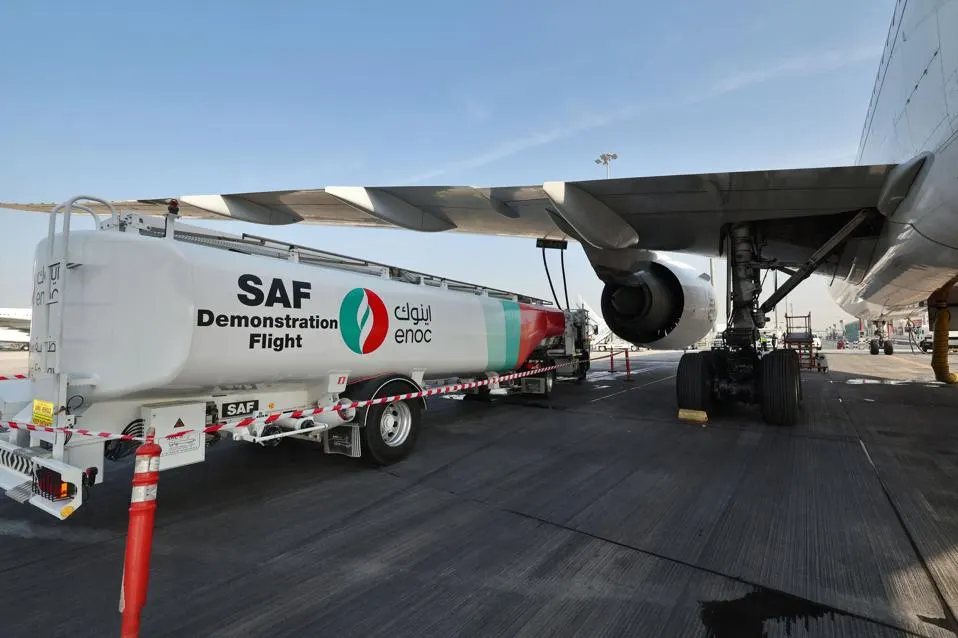
New insights into the rapidly growing Sustainable Aviation Fuel (SAF) industry highlight a record-breaking global investment of £14.7 billion (€17.4 billion), marking a critical step toward decarbonizing the aviation sector. The analysis, titled The Sustainable Aviation Fuel: Global Investment Analysis, was developed by Innovate UK Business Connect to examine the sources of private investment, national policies, production pathways, and feedstock availability shaping the SAF sector.
UK Among Global Leaders in SAF Investment
Ranked fourth globally, the UK has drawn £180 million (€213 million) in private SAF investment, a figure that reflects confidence in the nation’s supportive policies and advanced technological initiatives. Key international investors include the US, Saudi Arabia, and Canada, demonstrating strong cross-border collaboration in addressing aviation emissions.
In the UK, technological innovation is a focal point, with Power-to-Liquids (PtL), Fischer-Tropsch (FT), and Alcohol-to-Jet (ATJ) processes dominating investment portfolios. These technologies, designed to convert renewable resources or waste products into sustainable aviation fuel, are seen as critical to reducing the carbon intensity of aviation fuel and achieving long-term net-zero targets.
Government Policies Driving SAF Growth
The UK government has introduced several policies to stimulate SAF industry growth. A pivotal development is the SAF mandate, effective from January 1, 2025, which targets a 10% SAF blend in aviation fuel by 2030. This mandate aligns with global commitments to transition to greener fuels and reduce the aviation sector’s carbon footprint, which accounts for 2-3% of global CO2 emissions annually.
The announcement of a Revenue Certainty Mechanism (RCM), set to launch in 2026, adds another layer of investor confidence. This mechanism is designed to mitigate risks associated with non-HEFA (Hydroprocessed Esters and Fatty Acids) based SAF plants, which rely on innovative but unproven technologies. By ensuring a stable revenue stream for SAF producers, the RCM is expected to attract further private investment and expedite commercial-scale production.
Michelle Carter, Head of Transport and Sustainable Aviation Fuel Innovation Programme Lead at Innovate UK Business Connect, emphasized the importance of collaboration:
“This initial analysis offers some insight into the evolving global SAF landscape. What is clear is the growing development of national policies or instruments is stimulating a positive investment ecosystem and strengthening the international effort to grow the SAF industry. Collaboration is part of the mix, and that is why the SAF Innovation Programme exists—to help mobilize and connect the supply chain to help the industry get to scale faster.”
Global Trends in SAF Investment
While the UK has demonstrated leadership in SAF innovation, other regions have also made significant contributions.
- United States: The US remains the largest investor in SAF projects globally, bolstered by the Inflation Reduction Act (IRA), which offers substantial tax incentives for clean energy initiatives. Federal and state-level policies have created a favorable environment for SAF producers, with many projects focused on utilizing agricultural residues, municipal waste, and algae as feedstocks.
- European Union: The EU has implemented the ReFuelEU Aviation initiative, mandating a minimum SAF blend of 6% by 2030 and 37% by 2040. Countries like Germany and the Netherlands are leading in SAF production, leveraging advanced technologies such as FT synthesis and ATJ pathways.
- Asia-Pacific: In Asia, countries such as Japan and Singapore have made strides in SAF development. Singapore’s partnership with Neste, a leader in renewable fuel production, has positioned the country as a hub for SAF exports.
Technological Innovations in SAF Production
The SAF industry’s growth is closely tied to advancements in production technologies and feedstock diversification. The most promising pathways include:
- Power-to-Liquids (PtL): Converts renewable electricity and captured CO2 into synthetic fuel, offering a near-zero emissions lifecycle.
- Fischer-Tropsch (FT): Utilizes biomass or waste gasification to produce liquid fuels.
- Alcohol-to-Jet (ATJ): Converts ethanol or other alcohols into jet fuel through catalytic processes.
- Hydroprocessed Esters and Fatty Acids (HEFA): Relies on plant oils or animal fats, the most commercially mature SAF pathway to date.
Feedstock availability plays a critical role in SAF scalability. While HEFA SAF currently dominates, the industry is pivoting toward non-food-based feedstocks like agricultural residues, municipal solid waste, and algae to reduce competition with food resources and enhance sustainability.
Environmental and Economic Impacts
SAF is a cornerstone of aviation’s decarbonization strategy, offering up to 80% lower lifecycle carbon emissions compared to traditional jet fuel. The shift toward sustainable fuels also brings economic benefits:
- Job Creation: Scaling SAF production supports job growth across the supply chain, from feedstock collection to fuel processing and distribution.
- Energy Security: By diversifying energy sources, countries reduce reliance on fossil fuel imports, enhancing national energy security.
- Rural Development: Many SAF feedstocks, such as agricultural residues, are sourced from rural areas, driving economic activity in these regions.
Challenges and the Path Ahead
Despite significant progress, the SAF industry faces several challenges:
- High Production Costs: SAF remains more expensive than conventional jet fuel, requiring continued policy support and technological advancements to achieve cost parity.
- Feedstock Limitations: Ensuring sustainable feedstock availability without competing with food production is a critical challenge.
- Infrastructure Development: Scaling SAF production requires substantial investments in refining and distribution infrastructure.
- Regulatory Harmonization: Variations in SAF mandates and certifications across regions complicate global adoption.
Conclusion
The £14.7 billion global investment in SAF marks a turning point in the aviation sector’s transition to sustainability. With robust private and public support, the industry is poised to scale rapidly, delivering environmental benefits while driving economic growth.
The UK’s proactive approach, characterized by technological innovation and supportive policies, serves as a model for other nations aiming to lead in SAF development. As the industry evolves, collaboration across stakeholders—governments, investors, producers, and researchers—will be essential to overcoming challenges and achieving long-term sustainability.
By accelerating SAF adoption, the aviation industry can take a significant step toward its net-zero goals, ensuring a greener future for air travel and global connectivity.
Ready to take your career to the next level? Join our dynamic courses: ACCA, HESI A2, ATI TEAS 7 , HESI EXIT , NCLEX – RN and NCLEX – PN!🌟 Dive into a world of opportunities and empower yourself for success. Explore more at Serrari Ed and start your exciting journey today! ✨
photo source: Google
By: Montel Kamau
Serrari Financial Analyst
17th January, 2024