
President William Ruto has unveiled an ambitious infrastructure development plan that will see the Nairobi-Nakuru-Mau Summit Highway extended to cover major towns in western Kenya, including Kericho, Kisumu, Eldoret, and Busia. The announcement comes amid intensifying public discourse over the Public-Private Partnership (PPP) model being employed to finance what is set to become one of Kenya’s most transformative road infrastructure projects in recent years.
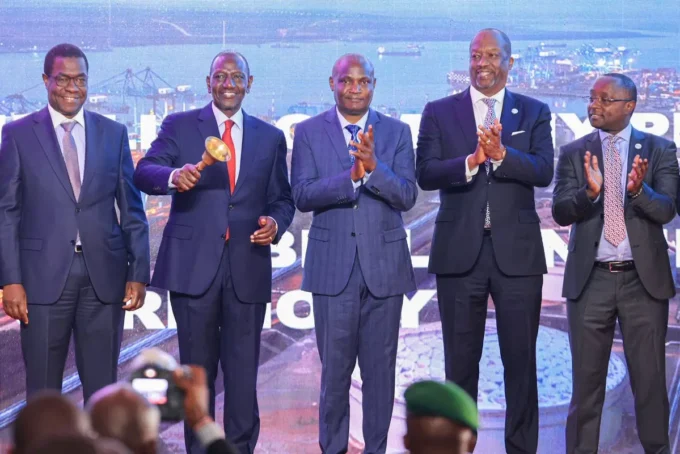
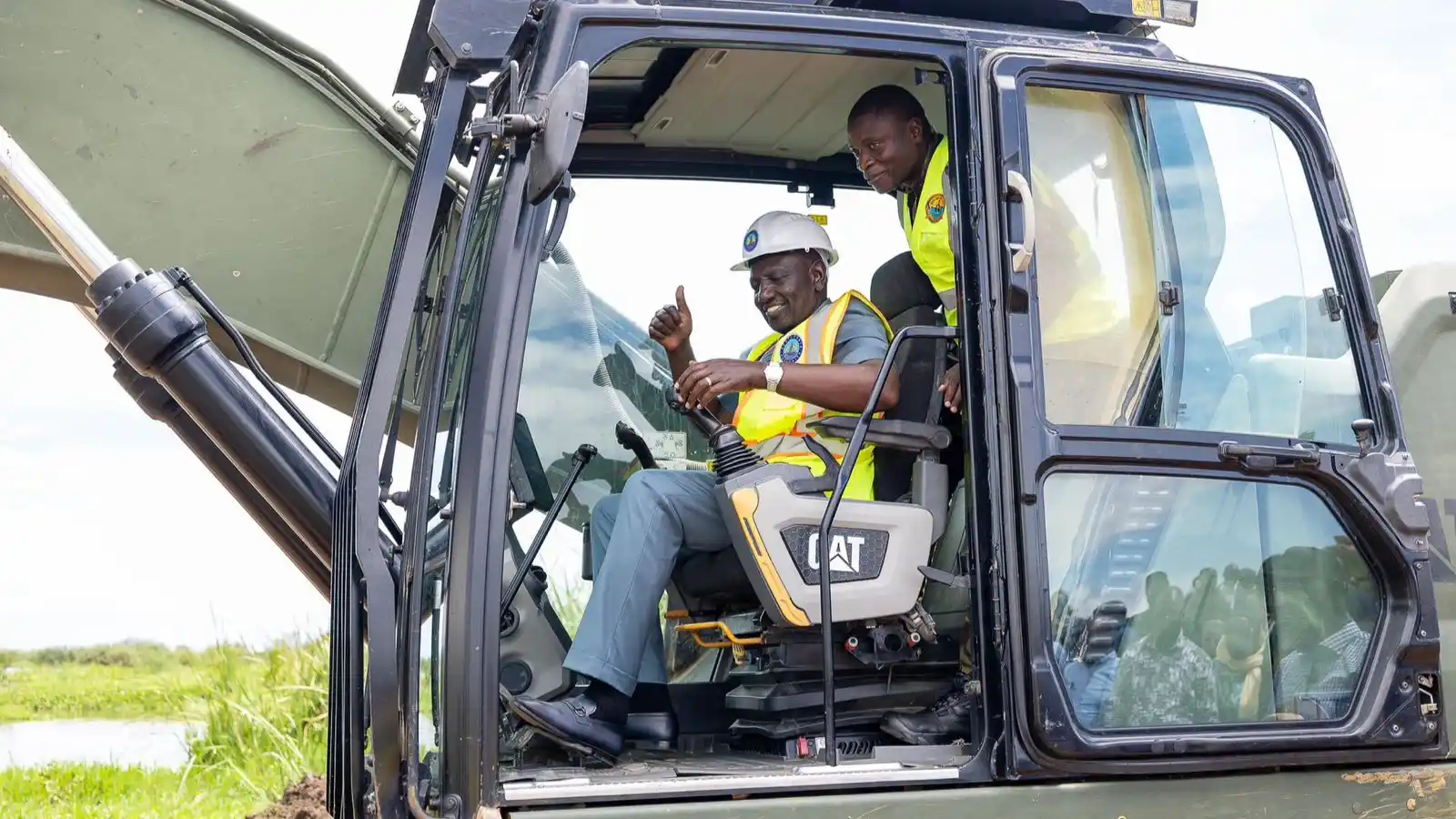
The President made the declaration during the official launch of the Mau Forest Complex Integrated Conservation and Livelihood Improvement Programme in Nakuru County on Monday. This ambitious environmental restoration initiative aims to restore 33,000 degraded hectares in the Mau Forest, Kenya’s largest water tower, over a 10-year period.
Build the future you deserve. Get started with our top-tier Online courses: ACCA, HESI A2, ATI TEAS 7, HESI EXIT, NCLEX-RN, NCLEX-PN, and Financial Literacy. Let Serrari Ed guide your path to success. Enroll today.
Expanding Beyond Initial Plans
“Next month, the Nairobi–Nakuru–Mau Summit road will begin. I do not want the road to end at Mau Summit but to extend to Kericho, Kisumu, Eldoret, and Malaba,” President Ruto announced, underscoring his administration’s commitment to improving regional connectivity and boosting trade across the critical Northern Corridor.
The expanded highway project represents a significant departure from the original scope, which was limited to the Nairobi-Mau Summit section. By extending the dual carriageway to major urban centers in western Kenya, the government aims to create a seamless, high-capacity transportation artery that will facilitate the movement of goods and people between Nairobi and Kenya’s border towns with Uganda.
The announcement demonstrates the administration’s recognition that infrastructure development must extend beyond the capital region to drive balanced economic growth across the country. Kisumu, as a major lakeside city and regional economic hub, Eldoret as the agricultural heartland of the Rift Valley, and Busia as a critical border crossing point with Uganda, all stand to benefit significantly from improved road connectivity.
Defending the PPP Model
President Ruto mounted a spirited defense of the Public-Private Partnership financing model, arguing that it represents the most sustainable path forward for delivering major infrastructure projects without overwhelming the national budget. His position comes as the government faces mounting criticism over its decision to hand over the construction and management of key national highways to private consortiums.
“We cannot continue as usual if we want to hit great development milestones. That is why we found it important to bring in the private sector,” the President stated, emphasizing that traditional budgetary allocations could not accommodate such large-scale projects given the country’s current fiscal constraints.
According to the Head of State, the government’s current fiscal space cannot support the massive capital outlays required for transformative infrastructure development. Instead, the administration is exploring innovative financing mechanisms, including the establishment of a special Infrastructure Fund designed to mobilize resources from capital markets without adding to the country’s already substantial debt burden.
The President called on Members of Parliament to expedite the legislative process for entrenching the Infrastructure Bond into law, arguing that this financial instrument would enable the government to deliver on its development agenda in a timely manner while maintaining fiscal prudence.
Technical Specifications and Design Features
The Nairobi–Nakuru–Mau Summit highway will feature state-of-the-art design specifications aimed at addressing the chronic traffic congestion that has plagued the corridor for years. The section from Nairobi to Naivasha will be expanded into a four-lane dual carriageway, passing through Mai Mahiu, with a major interchange planned at Naivasha to facilitate smooth traffic flow.
The Naivasha to Nakuru segment, which experiences some of the highest traffic volumes on the corridor, will be upgraded to a six-lane dual carriageway. This expanded capacity is expected to significantly reduce travel times for both private motorists and commercial cargo transporters who use this critical route to move goods between Mombasa port and landlocked countries in the East African region.
President Ruto emphasized that the modernized highway will play a vital role in decongesting traffic on the busy Nairobi–Nakuru corridor, which has become increasingly congested in recent years due to rising vehicle ownership and expanded regional trade. The project aligns with the government’s broader agenda of modernizing transport infrastructure and promoting regional economic integration within the East African Community.
Construction Approval and Consortium Selection
The National Treasury has given the green light for the construction of the Rironi-Mau Summit highway, following thorough evaluation and approval of the project proposal by the National Treasury’s Public-Private Partnership (PPP) Committee. The approval came after the PPP Committee established that the feasibility report submitted by China Road and Bridge Corporation (CRBC) and National Social Security Fund Trustees (NSSF) met all the requisite technical, financial, environmental, and social conditions outlined in the evaluation framework.
The Chinese construction firm, which has an extensive track record in Kenya’s infrastructure sector including the construction of the Standard Gauge Railway, will partner with NSSF, Kenya’s national pension fund, in what is being described as one of Africa’s largest infrastructure PPPs. The consortium beat other international bidders to win the multi-billion shilling tender, which is estimated to cost between Ksh170 billion and Ksh200 billion depending on the final scope of works.
CRBC brings significant technical expertise and experience in large-scale highway construction, having successfully delivered numerous road and bridge projects across Africa, Asia, and Europe. The involvement of NSSF as a co-investor represents an important milestone in Kenya’s infrastructure financing landscape, demonstrating how local pension funds can be leveraged to support national development priorities while potentially generating returns for their beneficiaries.
One decision can change your entire career. Take that step with our Online courses in ACCA, HESI A2, ATI TEAS 7, HESI EXIT, NCLEX-RN, NCLEX-PN, and Financial Literacy. Join Serrari Ed and start building your brighter future today.
The Toll Road Controversy
However, the PPP financing model has sparked considerable controversy, with stakeholders raising concerns about the potential impact on road users. Motorists using the upcoming Rironi–Mau Summit Expressway will pay a toll rate of at least Ksh8 per kilometer, according to disclosures by the Kenya National Highways Authority (KeNHA). The authority has indicated that this toll rate will be subject to an annual adjustment of one percent to cater for inflation and exchange rate fluctuations.
For a motorist traveling the entire length of the Rironi-Mau Summit highway, this could translate to toll fees exceeding Ksh1,000 per trip, depending on the final distance covered. Commercial vehicle operators have expressed particular concern about how these charges will affect their operating costs and ultimately the prices consumers pay for goods and services.
The Motorists Association of Kenya (MAK) has emerged as one of the most vocal critics of the tolling plan. The association has described the government’s decision to hand over the construction and management of the highway to a private consortium as discriminatory and a potential threat to Kenya’s economic sovereignty.
In a strongly worded statement, MAK questioned the transparency of the PPP process and argued that Kenyans should not be subjected to toll fees on roads that have already been built using public funds collected through fuel levies and vehicle taxes. The association contends that the introduction of tolls amounts to double taxation, forcing motorists to pay twice for the same infrastructure.
“Kenyans are already struggling with high fuel prices and multiple road-related levies, and this tolling plan will only worsen the cost of living,” MAK stated, warning that toll charges will not only affect private car owners but also increase transport costs for passengers and goods throughout the economy.
The association has further cautioned that once foreign concessionaires gain control of these strategic highways, toll rates could be adjusted without meaningful public input, potentially making transport unaffordable for ordinary Kenyans. They have called for the government to disclose the full details of the tolling contracts before implementation, including any clauses that might restrict the development of alternative free roads.
Government’s Counter-Narrative
In response to these concerns, government officials have sought to reassure Kenyans that the PPP model does not constitute privatization of national assets. The Director-General of the PPP Directorate, Eng. Kefa Seda, has emphasized that the highway will remain under full state ownership and that tolling will be tightly regulated to safeguard public interests.
“This highway is a strategic national asset and remains under full ownership and jurisdiction of the Government of Kenya,” Eng. Seda clarified. “The PPP model allows private players to finance and maintain infrastructure for a defined period, but overall control, regulation, and policy direction remain with the State.”
According to the government’s explanation, the involvement of CRBC and NSSF represents a financing framework designed to ease pressure on the national budget and limit additional debt exposure, rather than a transfer of ownership. Officials have pointed to the success of similar PPP arrangements, including the Nairobi Expressway, as evidence that the model can deliver quality infrastructure while protecting public interests.
The draft National Tolling Policy 2025 includes provisions for ring-fencing toll revenues collected from road users, ensuring that funds are reinvested in the same corridor for maintenance, safety patrols, lighting, and emergency response. The framework also includes a revenue-sharing clause requiring that any earnings above projected traffic levels revert to the government for reinvestment in other national road projects.
Broader Infrastructure Vision
The Rironi-Mau Summit highway project represents just one component of the government’s broader infrastructure modernization agenda. President Ruto has consistently emphasized that Kenya must pursue alternative sources of infrastructure funding to accelerate development without compromising fiscal sustainability.
The administration’s approach reflects a global trend toward greater private sector participation in infrastructure financing, particularly in developing countries where public budgets are constrained by competing priorities including healthcare, education, and social protection. Proponents argue that PPPs can bring not only capital but also technical expertise, operational efficiency, and innovation to infrastructure projects.
However, critics maintain that the long-term costs of PPPs, including guaranteed returns to private investors and currency risks, often exceed the costs of traditional public procurement. They argue that the government should instead focus on improving the efficiency of existing road maintenance funds and cracking down on corruption in the roads sector.
Regional Economic Impact
The expansion of the highway to Kisumu, Eldoret, Kericho, and Busia is expected to have far-reaching economic implications for western Kenya. Improved connectivity will reduce transport costs, facilitate market access for agricultural producers, and potentially attract new investments to the region.
Eldoret, which serves as the commercial hub of the North Rift region, stands to benefit significantly from enhanced road infrastructure. The town is a major agricultural center, and improved transport links will enable farmers to move their produce to urban markets more efficiently and at lower cost.
Kisumu, as Kenya’s third-largest city and a key port on Lake Victoria, will gain improved connectivity to Nairobi and the coast. This could boost the city’s manufacturing sector and enhance its role as a regional trade gateway connecting Kenya with Uganda, Tanzania, and beyond.
Busia and Malaba, as border towns with Uganda, will benefit from reduced congestion and improved customs processing capabilities. The enhanced highway is expected to facilitate cross-border trade and strengthen Kenya’s position as a regional logistics hub.
The Road Ahead
As construction of the Nairobi-Mau Summit highway approaches its commencement date next month, the debate over PPPs and road tolling is likely to intensify. Parliament will play a crucial role in scrutinizing the terms of these agreements and ensuring they protect public interests while delivering the infrastructure Kenya needs.
The success or failure of this ambitious project will have significant implications for the government’s broader infrastructure agenda. If the PPP model delivers quality roads at reasonable cost to users, it could pave the way for similar arrangements on other national highways. However, if implementation challenges arise or toll charges prove too burdensome for motorists, it could fuel public backlash against privatization of public infrastructure.
For President Ruto, the highway project represents a test of his administration’s economic management approach. His promise to extend the road to major western Kenya towns demonstrates political ambition, but delivering on that vision while maintaining public confidence will require careful balancing of fiscal constraints, private sector interests, and public expectations.
As Kenya continues to grapple with the challenge of financing its infrastructure needs in an era of constrained public budgets, the Nairobi-Mau Summit highway project will serve as a crucial case study in the potential and pitfalls of public-private partnerships. The coming months will reveal whether this ambitious approach can deliver the transformative infrastructure Kenya needs while protecting the interests of ordinary citizens who will ultimately pay for these roads, whether through taxes, tolls, or both.
Ready to take your career to the next level? Join our Online courses: ACCA, HESI A2, ATI TEAS 7 , HESI EXIT , NCLEX – RN and NCLEX – PN, Financial Literacy!🌟 Dive into a world of opportunities and empower yourself for success. Explore more at Serrari Ed and start your exciting journey today! ✨
Track GDP, Inflation and Central Bank rates for top African markets with Serrari’s comparator tool.
See today’s Treasury bonds and Money market funds movement across financial service providers in Kenya, using Serrari’s comparator tools.
photo source: Google
By: Montel Kamau
Serrari Financial Analyst
29th October, 2025