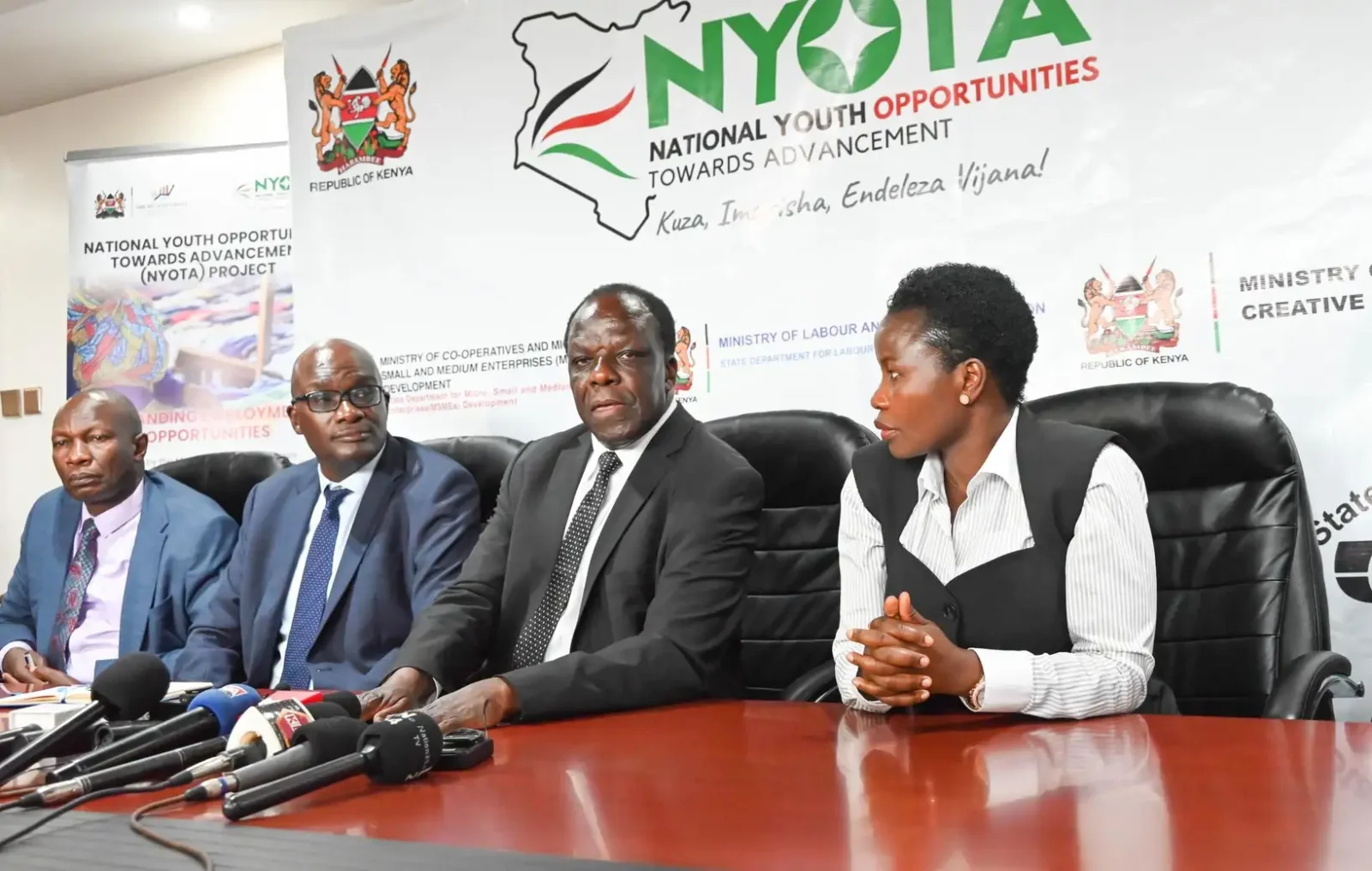
President William Ruto’s administration has rolled out the National Youth Opportunities Towards Advancement (NYOTA) fund, a KSh 33 billion program designed to provide seed capital to young entrepreneurs. Under the plan, 110,000 youths across Kenya will each receive KSh 50,000 to launch income-generating ventures.
The initiative was unveiled by Co-operatives and MSMEs Cabinet Secretary Wycliffe Oparanya at the Kakamega Youth Polytechnic, where he emphasized that Kenya’s informal economy employs 17 million people and contributes nearly 40% of GDP, underscoring the urgency of spurring youth entrepreneurship.
According to Tuko News, the program attracted 1.4 million applicants, but after screening, only 110,000 were selected — roughly 70 beneficiaries per ward across the country.
Build the future you deserve. Get started with our top-tier Online courses: ACCA, HESI A2, ATI TEAS 7, HESI EXIT, NCLEX-RN, NCLEX-PN, and Financial Literacy. Let Serrari Ed guide your path to success. Enroll today.
Key Features of NYOTA
Scale and structure
The government has partnered with the World Bank to fund NYOTA over five years, channeling money into small businesses led by youth aged 18–29, and up to 35 for persons with disabilities. Beneficiaries will not only receive capital but also training, mentorship, and business development services.
A MyGov briefing outlined that disbursements will be made in phases, ensuring accountability and sustainability. Beneficiaries are expected to undergo continuous monitoring to track how funds are used and how businesses grow.
Integration with AGPO
The program also ties into the Access to Government Procurement Opportunities (AGPO) framework, which reserves 30% of contracts for youth, women, and persons with disabilities. By forming registered groups and cooperatives, young entrepreneurs will be better positioned to secure tenders from government and county entities.
Why NYOTA Matters
Youth employment crisis
Kenya’s labour market faces chronic challenges. A Federation of Kenya Employers (FKE) report found that the youth unemployment rate stands at 67%, far higher than the national average.
Moreover, the International Labour Organisation (ILO) recently revealed that 80% of Kenyans in employment are still trapped in poverty due to low wages, with 26% classified as extremely poor. This highlights the need for programs that go beyond job creation to enable sustainable livelihoods.
Informal sector dominance
According to the Labour Market Profile 2024/25, about 81% of non-agricultural employment in Kenya occurs in the informal sector. While vibrant, the sector is marked by instability, lack of capital, and limited scalability. NYOTA’s targeted funding is designed to help informal workers formalize and grow their ventures.
Potential Benefits
- Capital access: Providing KSh 50,000 in seed money reduces entry barriers for micro-entrepreneurs.
- Business resilience: With mentorship and monitoring, NYOTA seeks to increase survival rates of startups, which historically face high failure rates within their first two years.
- Decentralized opportunity: By spreading beneficiaries across all 1,450 wards, the program avoids over-concentration in Nairobi or major cities, instead stimulating local economies.
- Procurement integration: By aligning with AGPO, the program could create stable demand for youth businesses through government tenders.
- Poverty alleviation: By helping young people transition from underemployment or joblessness into entrepreneurship, NYOTA may reduce working poverty.
One decision can change your entire career. Take that step with our Online courses in ACCA, HESI A2, ATI TEAS 7, HESI EXIT, NCLEX-RN, NCLEX-PN, and Financial Literacy. Join Serrari Ed and start building your brighter future today.
Risks and Challenges
Selection and transparency
The fact that only 110,000 out of 1.4 million applicants were chosen raises concerns about fairness. Business Daily reports that questions remain on the vetting criteria and whether political or regional biases might influence allocation.
Capital adequacy
While KSh 50,000 is significant for micro-enterprises, it may not be enough for more capital-intensive sectors like agribusiness, technology, or manufacturing. Critics warn it risks being “too little to grow, too much to waste.”
Sustainability
Past initiatives such as the Youth Enterprise Development Fund (YEDF) struggled with repayment issues and weak oversight. Without strong governance, NYOTA risks becoming another short-lived intervention.
Dependency culture
Some economists argue that handouts risk creating dependency if not tied to repayment or accountability. Linking capital to measurable business growth will be key.
Global and Local Comparisons
Similar youth programs have emerged across Africa:
- In South Africa, the National Youth Development Agency provides grants but has struggled with low business survival rates.
- In Ghana, the NABCO scheme placed youth in internships but faced criticism for failing to create sustainable jobs.
- Kenya’s own YEDF launched in 2006 disbursed billions but was plagued by governance failures, as noted in a Parliamentary Report.
NYOTA’s success will depend on whether it avoids these pitfalls by emphasizing mentorship, accountability, and linkage to procurement.
Indicators of Success
Key metrics to watch include:
- Business survival rates after 1–3 years
- Revenue growth of funded startups
- Jobs created by NYOTA-funded enterprises
- Access to larger financing after graduation from the program
- Beneficiary diversity across gender, regions, and marginalized groups
Broader Economic Implications
Kenya’s youth bulge is both an opportunity and a challenge. By 2030, nearly 75% of the population will be under 35. Harnessing this demographic dividend requires sustained investments in entrepreneurship, skills, and innovation.
If successful, NYOTA could:
- Reduce unemployment and underemployment,
- Create a culture of youth-driven enterprise,
- Strengthen the MSME sector’s contribution to GDP beyond the current 40%, and
- Position Kenya as a leader in inclusive youth financing in Africa.
However, without strong monitoring, transparency, and post-grant support, the initiative risks repeating past mistakes.
Conclusion
The launch of the KSh 33 billion NYOTA youth startup fund is one of the most ambitious efforts yet to tackle Kenya’s unemployment crisis. With 110,000 beneficiaries each receiving KSh 50,000 and mentorship, the program could reshape the informal economy and elevate young people into entrepreneurship.
But the stakes are high: effective implementation, accountability, and integration into broader economic systems will determine whether NYOTA is a true game-changer or just another well-intentioned but poorly executed government fund.
Ready to take your career to the next level? Join our Online courses: ACCA, HESI A2, ATI TEAS 7 , HESI EXIT , NCLEX – RN and NCLEX – PN, Financial Literacy!🌟 Dive into a world of opportunities and empower yourself for success. Explore more at Serrari Ed and start your exciting journey today! ✨
Track GDP, Inflation and Central Bank rates for top African markets with Serrari’s comparator tool.
See today’s Treasury bonds and Money market funds movement across financial service providers in Kenya, using Serrari’s comparator tools.
Photo source: Google
By: Montel Kamau
Serrari Financial Analyst
2nd October, 2025