KwaZulu-Natal’s automotive components manufacturing sector is set to receive a significant boost, thanks to a R1.1 billion investment through a joint venture involving Toyota Motors South Africa, Toyota Tsusho Africa, and Ogihara Thailand Corporation. This collaboration, marked by the establishment of Ogihara South Africa in 2023, is aimed at enhancing the localisation efforts of Toyota South Africa’s next-generation Hilux model production.
Strategic Localisation and Economic Growth
The newly established company, Ogihara SA, will occupy a 32,000-square-meter site within Dube TradePort’s TradeZone 2. This state-of-the-art facility will house a manufacturing and assembly plant that has been relocated from Thailand, dedicated to producing pressed steel components specifically for Toyota SA’s manufacturing plant in Prospecton. This strategic move will gradually phase in the sourcing of additional local press parts, reducing the dependency on imports and significantly boosting the local industry.
This venture is one of Toyota SA’s largest localisation projects, representing a significant commitment to the South African automotive sector. The localisation effort is expected to increase the procurement of locally sourced steel by 25,000 tons annually, providing a much-needed lifeline to South Africa’s struggling steel sector. This move is particularly critical as the future of ArcelorMittal’s steel plant in KwaZulu-Natal remains uncertain.
A Benchmark for Future Investments
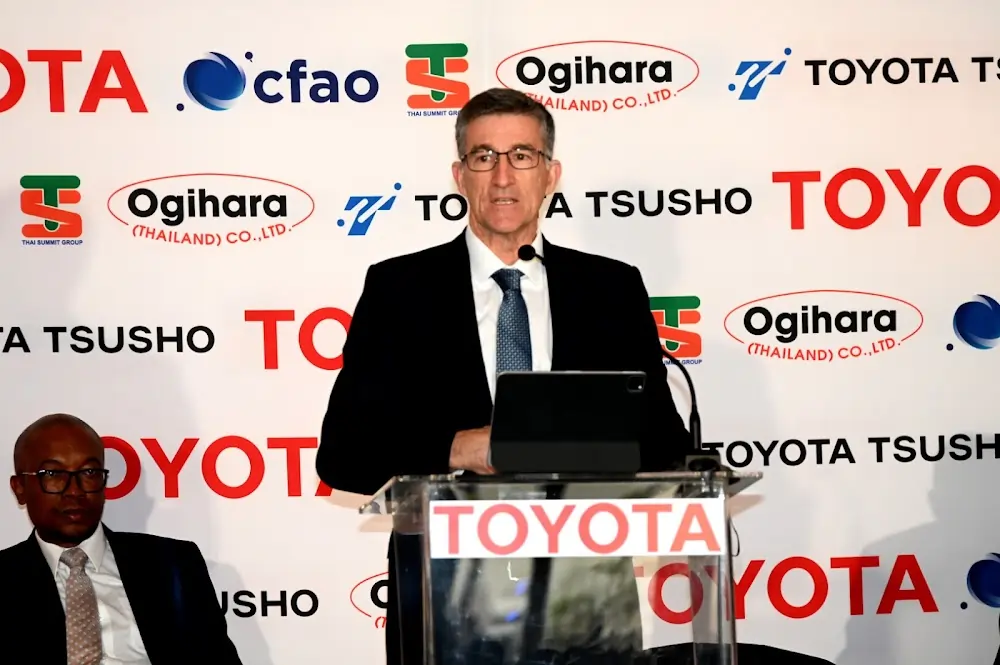
Toyota SA’s President and CEO, Andrew Kirby, highlighted the importance of this joint venture during the launch event, describing it as a critical step in the company’s Local Value Addition (LVA) improvement strategy. By localising the production of essential automotive components, Toyota is not only creating new job opportunities but also enhancing its capacity to produce high-quality body parts within South Africa.
“This collaboration exemplifies our commitment to localisation and underscores the possibilities for growth and development in the KZN province,” Kirby said, emphasizing Toyota’s dedication to contributing to the local economy.
The investment is expected to have a ripple effect on the local economy, particularly within the automotive sector, which is the largest manufacturing industry in South Africa. Currently, KwaZulu-Natal’s automotive manufacturing is concentrated in the southern region of Durban, contributing approximately R21 billion annually to the local economy and employing around 20,000 people.
Impact on the Steel Industry
Ogihara SA’s commitment to sourcing 90% of its steel sheets locally is seen as a significant boost for South Africa’s steel manufacturing sector. This initiative aligns with the country’s broader industrialisation objectives, which seek to enhance local production capabilities and reduce reliance on imports. The involvement of Ogihara SA in this localisation drive is particularly timely, given the challenges facing South Africa’s steel industry.
Rev Musa Zondi, KwaZulu-Natal’s MEC for Economic Development, lauded the initiative, noting that it would help stabilize and strengthen the local steel manufacturing sector. This move is crucial as the industry has been under pressure due to various global and domestic challenges, including fluctuating steel prices and the threat of plant closures.
The Role of Dube TradePort
The Dube TradePort Special Economic Zone (SEZ), where Ogihara SA’s new facility is located, plays a pivotal role in attracting investments to KwaZulu-Natal. The 45-hectare TradeZone 2, part of the broader SEZ, has been a key factor in drawing investors to the region, particularly in the manufacturing, assembly, and logistics sectors. This SEZ offers several incentives, including tax breaks and streamlined customs procedures, making it an attractive destination for businesses looking to establish a foothold in the region.
As construction of the new Ogihara SA facility continues, the company aims to commence manufacturing operations by June 2025. The long-term impact of this investment is expected to be substantial, not only in terms of job creation but also in enhancing the competitiveness of South Africa’s automotive industry on the global stage.
Broader Implications for the Automotive Industry
The automotive industry is a cornerstone of South Africa’s economy, contributing significantly to GDP and employment. The investment by Toyota and its partners is expected to set a benchmark for future localisation projects in the sector. With global supply chains becoming increasingly complex and competitive, the ability to produce critical components locally is seen as a strategic advantage.
Moreover, this investment aligns with South Africa’s broader industrial policy goals, which include increasing the local content of manufactured goods, enhancing value addition, and promoting exports. By supporting the local steel and automotive components industries, the joint venture will help to solidify South Africa’s position as a key player in the global automotive supply chain.
Conclusion
The R1.1 billion investment by Toyota Motors South Africa, Toyota Tsusho Africa, and Ogihara Thailand Corporation in KwaZulu-Natal marks a significant milestone for the region’s automotive and steel industries. By localising the production of critical components and increasing the procurement of locally sourced steel, this joint venture is expected to create jobs, stimulate economic growth, and set a precedent for future investments in South Africa’s manufacturing sector.
As construction of the new Ogihara SA facility progresses, the automotive industry in KwaZulu-Natal and the broader South African economy stand to benefit immensely from this strategic investment. The initiative underscores the importance of localisation in enhancing industrial capacity and resilience, particularly in the face of global economic challenges. The success of this project will likely encourage further investments and collaborations in the region, solidifying KwaZulu-Natal’s status as a key hub for automotive manufacturing in South Africa.
photo source: Google
By: Montel Kamau
Serrari Financial Analyst
23rd August, 2024