

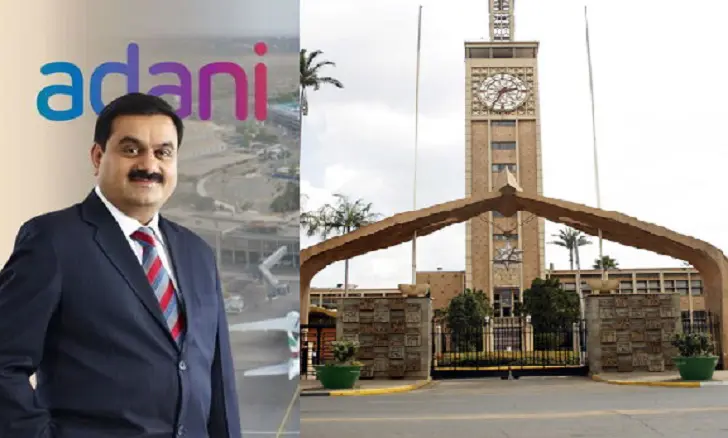
In a significant development concerning Kenya’s infrastructure and investment policies, the National Assembly’s Public Investments Committee on Commercial Affairs & Energy has ordered the Kenya Airports Authority (KAA) to suspend all dealings with India’s Adani Group. This comes amid growing concerns about the transparency of the $1.84 billion deal involving the proposed management and expansion of Jomo Kenyatta International Airport (JKIA) by the Adani Group. The move by the committee mandates a forensic audit before any further engagements proceed.
Forensic Audit and Key Areas of Scrutiny
The decision to halt the deal follows a call for a special audit by the Office of the Auditor General, aimed at scrutinizing various facets of the project. The Public Investments Committee, led by Chairman David Pkosing, outlined several key areas for the forensic audit, emphasizing the need for greater accountability and transparency. These areas include:
- Procurement Process: A detailed review of how Adani Group was selected, with questions surrounding the legitimacy and competitiveness of the bidding process.
- Project Estimates and Scope: The committee seeks to evaluate whether the financial estimates for the project and its overall scope align with Kenya’s broader infrastructure goals.
- Effectiveness of Investment Plan: An assessment of whether Adani’s proposed Investment Plan (PIP) is the most efficient and effective way to utilize public resources, and whether alternative strategies could offer better outcomes.
Chairman Pkosing emphasized the importance of public participation in the decision-making process, in line with Kenya’s 2010 Constitution. He argued that the deal could potentially undermine public trust if due process is not followed. “There is a high level of distrust in this country. As implementers of government policy, you must recognize this reality. If you continue down this path, JKIA will suffer,” Pkosing noted during a parliamentary session.
Concerns Over Public Participation
One of the main points of contention surrounding the deal is the perceived lack of public participation. According to Kenya’s Constitution, all major public projects must undergo rigorous consultation with citizens. Pkosing raised concerns about the speed at which the report on the Adani deal was concluded, asking how such a significant decision could be made in just one week. “How can Kenyans trust a report concluded in just one week?” he asked, highlighting that transparency and public engagement are crucial for projects of this magnitude.
Public involvement is seen as essential to ensure that the interests of the Kenyan people are safeguarded, especially in the case of large-scale projects that involve public assets like JKIA, one of Africa’s busiest airports. Given the significant public distrust in governmental processes, the committee stressed that any future actions related to the Adani deal should adhere to constitutional guidelines, and the public should be properly informed and consulted.
KAA Faces Tough Questions
KAA’s Acting Chief Executive Officer, Henry Ogoye, appeared before the parliamentary committee to respond to tough questions regarding the Adani Group’s involvement. He faced scrutiny over how the tender was awarded, with some members of the committee questioning the integrity of the procurement process. Ogoye explained that the KAA infrastructure, including JKIA, is outdated, and two feasibility studies were commissioned in 2021, with results delivered in December 2022.
These studies, focused on the National Aviation Policy and a Medium-Term Investment Plan, highlighted the need for significant upgrades to Kenya’s airport infrastructure. According to Ogoye, a more detailed feasibility study specifically for JKIA was completed on February 16, 2024, leading to Adani Airport Holdings of India submitting their PIP. The plan was subsequently evaluated and approved by the relevant committee, and negotiations began on June 4, 2024.
Despite these explanations, Ogoye confirmed that no formal agreement had been signed with Adani. He added that the process is currently stalled due to three ongoing lawsuits that have been filed against the deal, further complicating the situation.
Alternative Bidders Ignored?
A significant twist emerged when Kisii Senator Richard Onyonka introduced new evidence during the committee hearing, presenting letters from three companies that had expressed interest in KAA’s privatization efforts. These companies were reportedly ignored in favor of Adani Group, raising further concerns about the transparency of the selection process. Senator Onyonka contended that KAA insisted only Adani had shown interest, and that their proposal was the only one processed, casting doubt on whether the deal was truly open to competition.
This revelation has prompted calls for the special audit to also include an investigation into why these companies were sidelined, and whether there were any irregularities or biases in the decision-making process.
Broader Implications for Kenya’s Infrastructure Development
The controversy surrounding the Adani deal raises broader questions about Kenya’s infrastructure strategy, particularly its efforts to attract foreign investment for major projects. JKIA is a critical asset for Kenya, serving as a hub for East Africa and contributing significantly to the country’s economy. The airport plays a vital role in tourism, trade, and regional connectivity, and its modernization is essential for Kenya to remain competitive in the global market.
However, the handling of the Adani deal has put a spotlight on the challenges Kenya faces in balancing the need for foreign investment with ensuring transparency, accountability, and public participation. The government’s focus on privatization as a means to upgrade the country’s infrastructure is not new, but the Adani controversy underscores the need for a more robust and transparent framework to manage these deals.
The Role of Adani Group in Africa
The Adani Group’s interest in managing JKIA is part of its broader strategy to expand its global presence. Adani, one of India’s largest conglomerates, has diversified interests ranging from energy and infrastructure to logistics and airports. The company’s foray into Africa is not surprising, given the continent’s growing demand for infrastructure development and its potential as a new frontier for investment.
Adani’s involvement in JKIA could bring much-needed expertise and capital to modernize the airport. However, the controversy surrounding the deal could damage the company’s reputation in Kenya, especially if the forensic audit uncovers any irregularities. For Adani, the outcome of the special audit could either cement its role as a key player in Africa’s infrastructure development or force it to reconsider its approach to the continent.
Future of KAA and Its Employees
Another critical area of concern is the future of KAA employees. With the potential privatization of the airport’s management, there are fears about job security and the impact on staff. The parliamentary committee has highlighted the need for clarification on how Adani’s management would affect KAA’s workforce and whether their rights and employment terms would be protected under the new arrangement.
Additionally, questions have been raised about how the privatization of KAA’s operations would impact its collaboration with the national airline, Kenya Airways, and other airport operators. The committee has called for a clear plan that outlines how these partnerships would be managed under private ownership, to ensure that Kenya’s aviation sector remains competitive and efficient.
Conclusion: Awaiting the Special Audit
As the Public Investments Committee prepares to reconvene in 14 days to review the special audit report, all eyes are on the findings from the Office of the Auditor General. The audit is expected to shed light on the procurement process, the fairness of Adani’s selection, and whether the proposed investment plan is in Kenya’s best interest.
For the Kenyan public, the outcome of the audit will be crucial in determining whether the government can be trusted to handle major infrastructure deals with transparency and accountability. The suspension of the Adani deal underscores the need for vigilance in managing public resources and ensuring that Kenya’s infrastructure development aligns with the broader interests of its people.
photo source: Google
By: Montel Kamau
Serrari Financial Analyst
26th September, 2024