In a move that underscores the relentless acceleration of the artificial intelligence arms race, OpenAI and Oracle have announced a significant deepening of their collaboration, committing to develop an additional 4.5 gigawatts of data center capacity. This staggering expansion builds upon the already ambitious “Project Stargate” initiative, a colossal undertaking poised to reshape the global AI infrastructure landscape and solidify the United States’ position at the forefront of AI innovation.
The announcement, made on Tuesday, sees the ChatGPT maker and the enterprise software giant extending a partnership that has already earmarked hundreds of billions of dollars for infrastructure investment. While specific locations and funding details for these new facilities remain undisclosed, the sheer scale of the commitment signals an unprecedented push to meet the insatiable computational demands of generative AI.
The Genesis of Stargate: A Half-Trillion Dollar Vision
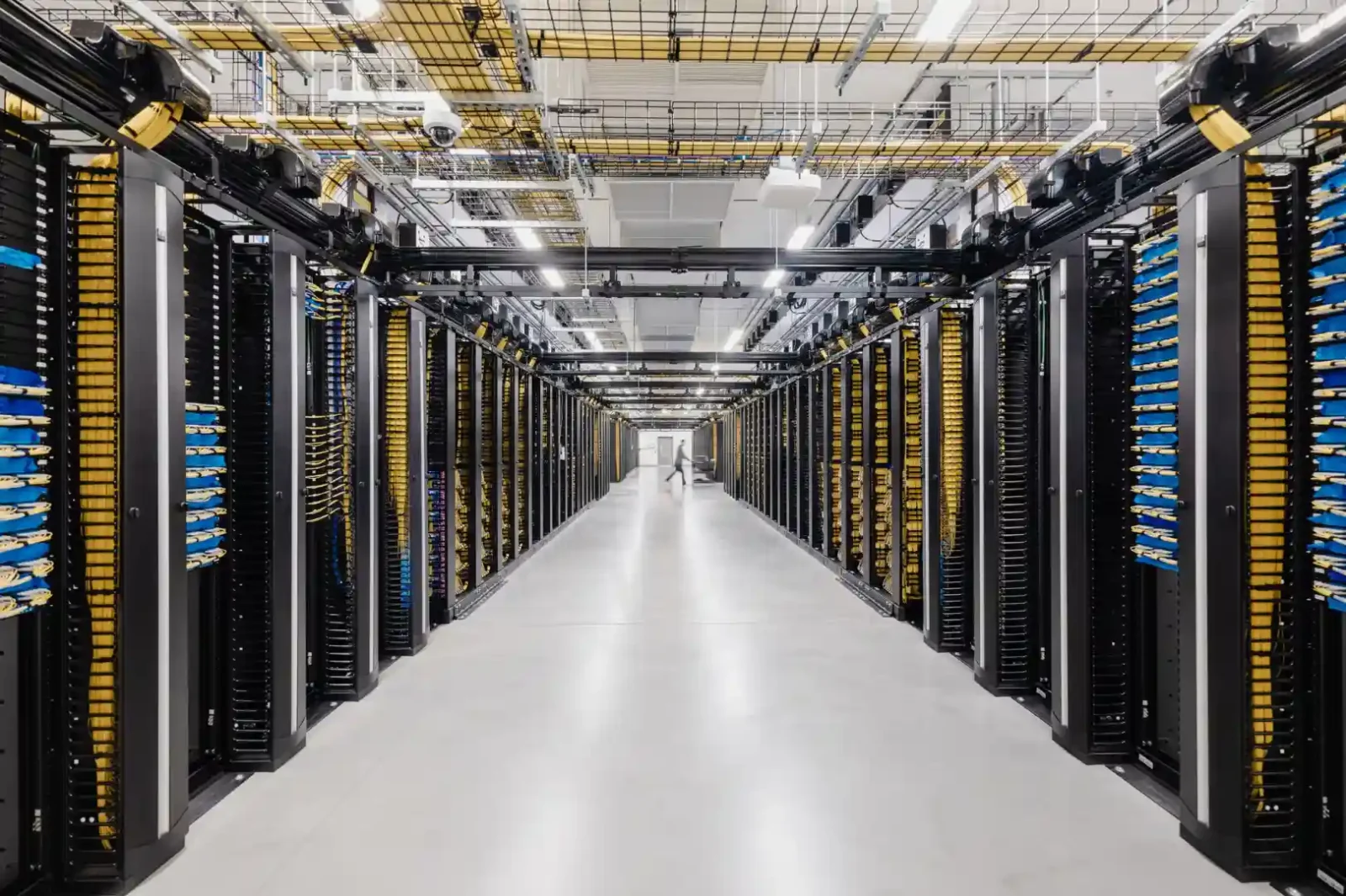
Project Stargate first burst onto the scene with an audacious vision: an up to $500 billion, 10-gigawatt project designed to power the next generation of AI. This monumental endeavor isn’t just a two-player game; it also prominently features Japanese technology investment behemoth SoftBank Group. The initial phase of this groundbreaking collaboration is already taking shape, with its inaugural AI data center under construction in Abilene, Texas. An aerial view from April 23, 2025, captured the early stages of this massive site, hinting at the scale of the ambition.
The very name “Stargate” evokes a sense of monumental portals to new dimensions, and in the context of AI, it’s fitting. This project is envisioned as a gateway to unprecedented computational power, essential for training and deploying the increasingly complex large language models (LLMs) and other AI applications that are rapidly transforming industries worldwide. The initial 10-gigawatt target was already a staggering figure, dwarfing many existing data center complexes. To put it in perspective, a single gigawatt can power hundreds of thousands of homes, illustrating the immense energy footprint these AI factories will command.
Doubling Down: The 4.5 Gigawatt Leap and Its Implications
The latest announcement of an additional 4.5 gigawatts of data center capacity represents a significant escalation of the Stargate initiative. This new commitment brings Stargate’s total capacity under active development to more than 5 gigawatts – a figure that OpenAI, in a recent blog post, suggested is just the beginning, indicating that the tie-up now expects to exceed its initial commitment.
What does 5 gigawatts of AI computing power truly mean? OpenAI’s blog post further clarified that this capacity will run on “over 2 million chips.” While the specific type of chips wasn’t detailed, it’s widely understood that the backbone of modern generative AI is high-performance Graphics Processing Units (GPUs), predominantly from NVIDIA. These are not your average consumer-grade GPUs; they are specialized, enterprise-grade accelerators like the NVIDIA H100 or the newer Blackwell B200, designed for parallel processing and handling the massive matrix multiplications inherent in AI model training and inference.
The sheer volume of 2 million such chips implies a colossal investment not just in data center infrastructure but in the most advanced semiconductor technology available. Securing such a vast quantity of cutting-edge chips in a highly competitive global market is a logistical and financial challenge in itself, highlighting the deep pockets and strategic foresight of the companies involved.
The Unseen Locations: Where Will the Power Go?
The lack of disclosure regarding the locations for these new 4.5 gigawatts of capacity is notable. However, the selection of data center sites is a complex process driven by several critical factors:
- Power Availability and Cost: AI data centers are energy hogs. Proximity to reliable, affordable, and ideally renewable energy sources is paramount. Areas with abundant wind, solar, or hydroelectric power are highly attractive. The ability to secure long-term power purchase agreements (PPAs) at favorable rates is a key differentiator.
- Land Availability and Cost: Building facilities of this magnitude requires vast tracts of land, often hundreds of acres, away from densely populated areas due to noise, heat, and security considerations.
- Fiber Connectivity: High-speed, low-latency network connectivity is crucial for data transfer between data centers and to end-users. Proximity to major fiber optic backbone routes is essential.
- Water for Cooling: Modern data centers, especially those housing high-density AI clusters, rely heavily on water-based cooling systems to dissipate the immense heat generated by GPUs. Access to sustainable water sources is becoming an increasingly critical factor and a point of environmental concern.
- Skilled Workforce: While highly automated, these facilities still require a skilled workforce for construction, operation, and maintenance.
Given these factors, it’s plausible that future Stargate sites could emerge in regions with burgeoning renewable energy projects, existing robust power grids, and ample, affordable land, potentially expanding beyond traditional tech hubs to more rural areas.
The Insatiable Appetite of Generative AI
The driving force behind this unprecedented data center build-out is the explosive growth and computational intensity of generative AI. Services like OpenAI’s ChatGPT and Microsoft’s Copilot have captivated the world, demonstrating the power of AI to generate human-like text, create images, write code, and much more. But behind every seemingly effortless AI interaction lies a monumental computational effort.
Training the Titans: The LLM Challenge
Training a large language model like GPT-4 involves feeding it petabytes of text and code data, allowing it to learn patterns, grammar, and context. This process, known as “pre-training,” can take months, consuming thousands of GPUs running continuously. The sheer number of parameters in these models (GPT-3 had 175 billion, GPT-4 is rumored to have trillions) means that every calculation requires immense processing power. The energy consumed during the training phase of a single large model can be equivalent to the annual energy consumption of a small town.
Inference at Scale: Serving Billions of Queries
Beyond training, “inference” – the process of using a trained model to generate responses to user queries – also demands significant compute, especially when scaled to billions of users worldwide. Each time you ask ChatGPT a question, a complex series of calculations occurs in a data center somewhere. The need for low latency and high throughput for these real-time interactions necessitates geographically distributed, powerful data centers.
The Geopolitical Undercurrents: AI as a National Priority
The Stargate initiative is not merely a commercial venture; it carries significant geopolitical weight. Its unveiling at the White House in January by U.S. President Donald Trump underscored the nascent technology’s status as a top national priority. The growing use of AI in sensitive sectors such as defense, coupled with China’s determined push to catch up in the AI race, has transformed AI leadership into a critical component of national security and economic competitiveness.
The “AI arms race” is a term frequently used to describe the global competition for dominance in artificial intelligence. This competition extends beyond military applications to economic productivity, scientific discovery, and societal influence. The U.S. aims to maintain its technological edge, particularly in foundational AI models and the infrastructure required to run them. China, with its vast data resources and significant government investment, is a formidable competitor, leading to concerns in Washington about technological parity and potential vulnerabilities.
This strategic imperative informs the scale and urgency of projects like Stargate. Securing domestic AI compute capacity reduces reliance on foreign infrastructure and strengthens the U.S.’s ability to innovate and deploy AI solutions across various sectors, from healthcare to defense.
The Titans Behind Stargate: Roles and Strategies
Project Stargate is a testament to the power of strategic alliances in the tech world. Each of the primary players brings unique strengths to the table.
OpenAI: The AI Innovator
OpenAI, the creator of ChatGPT, is at the heart of the generative AI revolution. Their core business relies on developing increasingly powerful and sophisticated AI models. This requires an unparalleled amount of computational resources. While backed by Microsoft, OpenAI’s decision to partner with Oracle for Stargate highlights a strategic diversification of its compute infrastructure. This could be driven by a desire for greater control over specialized hardware configurations, or to leverage Oracle’s unique cloud offerings that might provide cost or performance advantages for specific AI workloads. OpenAI’s commitment of $19 billion to fund Stargate underscores its existential need for compute power to achieve its mission of building artificial general intelligence (AGI).
Oracle: The Cloud Challenger
Oracle’s participation in Stargate is a significant coup for its Oracle Cloud Infrastructure (OCI) division. OCI has been aggressively trying to gain market share against cloud giants like Amazon Web Services (AWS), Microsoft Azure, and Google Cloud Platform (GCP). Oracle’s strategy often involves offering bare-metal instances and specialized hardware configurations that appeal to high-performance computing (HPC) and AI workloads, where direct access to underlying hardware can provide performance benefits.
Partnering with OpenAI, a leading AI innovator, provides Oracle with a marquee customer and a powerful validation of its cloud capabilities for demanding AI applications. This collaboration positions Oracle as a critical enabler of the AI boom, potentially attracting other AI companies seeking similar infrastructure solutions. Oracle’s long history in enterprise software and databases also gives it a unique perspective on managing and securing the vast datasets that feed AI models.
SoftBank Group: The Visionary Investor
SoftBank Group, led by its charismatic founder Masayoshi Son, has long been a major player in the global technology investment landscape. Son has been a vocal proponent of AI’s transformative potential, often speaking about his vision for a future driven by artificial superintelligence. SoftBank’s involvement, including a reported $19 billion commitment, reflects its strategic bet on the foundational infrastructure required for this future.
SoftBank’s investment history, particularly through its Vision Funds, has seen it pour billions into various tech startups, often with a long-term view on disruptive technologies. Their participation in Stargate aligns with Son’s belief that AI will be the most significant technological shift in human history, requiring unprecedented investment in compute. Their role is likely to be primarily financial and strategic, leveraging their vast capital and network to facilitate the project’s ambitious scale.
Microsoft: The AI Ecosystem Enabler
While not a direct partner in the Stargate data center build-out with Oracle, Microsoft remains OpenAI’s primary backer and a colossal force in the AI ecosystem. Microsoft has invested billions in OpenAI and has integrated OpenAI’s models deeply into its own products and services, most notably through Azure OpenAI Service and Copilot. Microsoft itself is pouring tens of billions into building its own vast network of data centers globally to power its cloud services and AI initiatives.
The Stargate partnership with Oracle could be seen in a few ways:
- Diversification: OpenAI might be diversifying its compute providers to ensure redundancy, optimize costs, or access specialized hardware that Oracle can offer.
- Strategic Alliance: It could represent a strategic alliance to collectively build infrastructure that even Microsoft’s immense resources might struggle to deliver alone at the required speed and scale.
- Competitive Dynamics: It also introduces a fascinating competitive dynamic, as Oracle’s OCI directly competes with Microsoft Azure. This suggests that OpenAI is prioritizing its compute needs above exclusive cloud vendor relationships.
The Elephant in the Room: Funding Doubts and Realities
The sheer scale of Stargate’s funding requirements has naturally drawn skepticism. Analysts have raised doubts about the venture’s ability to secure the stated funding, including the initial $100 billion for immediate deployment. Perhaps the most prominent voice of skepticism came from xAI owner Elon Musk, who, in January, dismissed the group’s financial claims, stating, “they don’t actually have the money.”
While the reported $19 billion commitments from OpenAI and SoftBank are substantial, they represent only a fraction of the stated $500 billion ambition. The funding for the remaining hundreds of billions would likely need to come from a combination of sources:
- Debt Financing: Securing massive loans from banks and financial institutions, backed by the future revenue potential of the data centers.
- Equity Investment: Potentially bringing in additional investors or issuing new shares.
- Government Incentives: Given the national strategic importance of AI, government subsidies, tax breaks, or grants could play a role.
- Partnerships: Expanding the consortium to include other tech companies or infrastructure investors.
Recent reports have also surfaced indicating potential friction within the Stargate alliance. The Wall Street Journal reported on Monday that OpenAI and SoftBank have been “at odds” with each other, leading to a more “modest goal” of building a smaller data center by the end of 2025, likely in Ohio. This suggests that the path to realizing the full $500 billion vision may be fraught with internal disagreements and logistical hurdles, potentially leading to a more phased and perhaps less ambitious initial rollout than originally envisioned. Such internal dynamics are not uncommon in mega-projects involving multiple powerful entities, each with their own strategic priorities and financial constraints.
Challenges on the Horizon: Beyond Funding
Even with funding secured, Project Stargate faces a multitude of challenges inherent in building infrastructure of this scale:
- Power Grid Strain: The demand for gigawatts of power will place immense strain on existing electrical grids. This necessitates significant investment in new power generation (ideally renewable) and transmission infrastructure, which can take years to permit and build.
- Supply Chain Constraints: The global supply chain for advanced AI chips, cooling systems, and other critical data center components is already stretched. Securing 2 million cutting-edge GPUs, for instance, requires long-term agreements and significant purchasing power.
- Environmental Impact: The energy and water consumption of these mega-data centers raise significant environmental concerns. While companies often commit to using renewable energy, the sheer scale means even a small percentage of fossil fuel reliance can have a large carbon footprint. Water usage for cooling is also a growing issue in many regions facing water scarcity.
- Regulatory Hurdles: Obtaining permits, navigating environmental impact assessments, and complying with local zoning laws for facilities of this size can be a lengthy and complex process, often encountering local opposition.
- Talent Acquisition: Building and operating such advanced facilities requires a highly specialized workforce, from electrical engineers to AI infrastructure specialists, in a competitive talent market.
- Technological Obsolescence: The rapid pace of AI development means that hardware can become outdated quickly. Designing data centers that are flexible and upgradeable to accommodate future generations of chips and cooling technologies is crucial.
Conclusion: A Monumental Bet on the AI Future
The deepening collaboration between OpenAI and Oracle on the Stargate initiative, marked by the commitment to an additional 4.5 gigawatts of data center capacity, represents a monumental bet on the future of artificial intelligence. It underscores the critical need for vast computational resources to fuel the next wave of AI innovation, from advanced language models to novel scientific discoveries.
While the project faces significant hurdles – from securing hundreds of billions in funding and navigating complex internal dynamics to overcoming power grid limitations and environmental concerns – its sheer ambition reflects the strategic importance placed on AI leadership. As construction continues in Abilene, Texas, and as new sites are scouted, Project Stargate stands as a powerful symbol of the global race to build the foundational infrastructure for an AI-driven future. The success or challenges encountered by this initiative will undoubtedly offer crucial insights into the complexities and realities of scaling AI to truly transformative levels. The world watches as these tech giants attempt to open the “Stargate” to a new era of intelligence.
Ready to take your career to the next level? Join our dynamic courses: ACCA, HESI A2, ATI TEAS 7 , HESI EXIT , NCLEX – RN and NCLEX – PN, Financial Literacy!🌟 Dive into a world of opportunities and empower yourself for success. Explore more at Serrari Ed and start your exciting journey today! ✨
Photo source: Google
By: Montel Kamau
Serrari Financial Analyst
24th July, 2025