Executive Summary
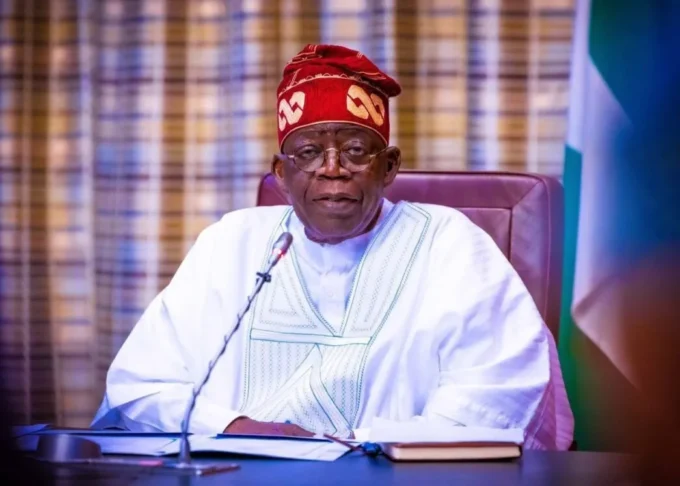
President Bola Tinubu has permanently abolished the controversial 5% excise duty on telecommunications services, representing a significant policy reversal aimed at reducing the financial burden on Nigerians and boosting growth in the country’s digital economy. The Executive Vice-Chairman of the Nigerian Communications Commission (NCC), Aminu Maida, announced the decision during a media briefing in Abuja on Tuesday, confirming that the levy—initially suspended in July 2023—has now been completely removed under revised national tax laws.
Build the future you deserve. Get started with our top-tier Online courses: ACCA, HESI A2, ATI TEAS 7, HESI EXIT, NCLEX-RN, NCLEX-PN, and Financial Literacy. Let Serrari Ed guide your path to success. Enroll today.
Policy Reversal and Presidential Directive
Complete Removal Under New Legislation
“The 5% excise duty is no longer in effect,” Maida stated. “Initially, it was only suspended, but the President has now completely removed it. I was present when the issue was raised, and he firmly said, ‘No, we cannot place this burden on Nigerians.’ That directive has now been captured in the new legislation.”
The controversial duty, which applied to mobile voice and data services, had drawn widespread criticism from consumer groups and telecom operators who argued that it would increase the cost of digital access and threaten the viability of businesses already struggling with rising operational expenses. Originally introduced in 2022 under former President Muhammadu Buhari, the tax faced immediate resistance from industry stakeholders and consumer advocates.
Historical Context and Previous Suspensions
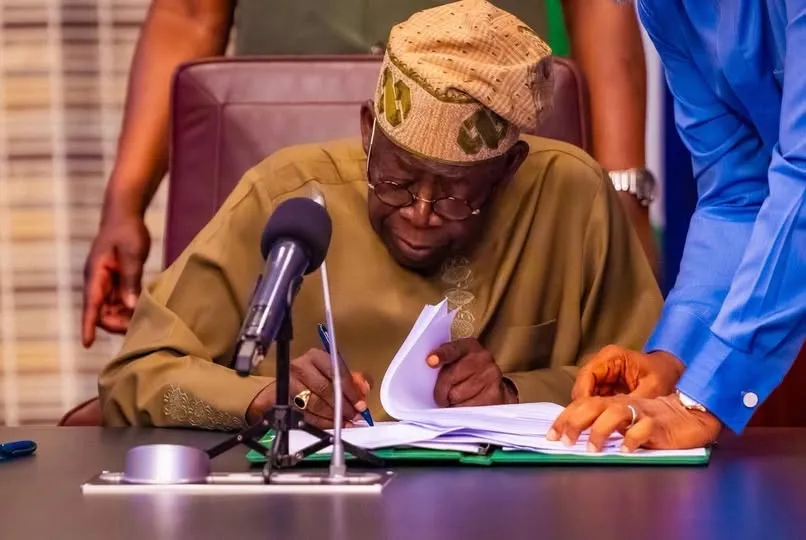
President Tinubu first suspended the telecoms levy in July 2023 as part of a broader effort to review Nigeria’s tax system and ease multiple levies on businesses and households. The suspension came through a series of executive orders signed shortly after he assumed office, demonstrating his administration’s commitment to reducing the tax burden on citizens.
However, the issue resurfaced in October 2024 when the National Assembly proposed reinstating the tax alongside levies on gaming, betting, and lottery services as part of broader revenue-generating measures. The proposal met strong resistance from the telecom sector, with the Association of Telecommunications Companies of Nigeria (ATCON) arguing that reinstating the excise duty would undermine service affordability and hinder sectoral growth.
Nigeria’s Massive Telecommunications Market
Subscriber Base and Market Scale
Nigeria operates Africa’s largest mobile telecommunications market, with significant scale and economic impact. As of January 2025, the country had 169.3 million active subscribers, representing a 2.66% surge from December 2024’s 164.9 million. The sector achieved a teledensity of 78% among Nigeria’s estimated 216 million population.
Recent NCC data shows Nigeria now has over 172 million active telecom subscribers, including 141 million internet users and 105 million broadband connections. This represents significant growth from historical levels, with the sector demonstrating remarkable resilience despite economic challenges.
Market Leadership and Competition
MTN Nigeria remains the market leader with 87.5 million subscribers, representing approximately 37.35% market share. Airtel follows with 28.93%, Globacom holds 28.40%, and 9mobile accounts for 5.32% of the market.
The industry’s revenue has demonstrated impressive growth trajectory, jumping from ₦2.25 trillion in 2018 to ₦3.86 trillion in 2022. Mobile services, especially GSM technology, drive most of this revenue flow, highlighting the crucial role telecommunications plays in daily Nigerian life.
Economic Impact and Digital Economy Contribution
GDP Contribution and Economic Significance
The telecommunications sector has become a cornerstone of Nigeria’s economy, contributing 14.58% to GDP as of Q1 2024, nearly doubling from 7.6% in 2014. This growth contrasts sharply with the oil sector, which declined from 8.9% of GDP in Q4 2014 to 6.38% by Q1 2024, demonstrating the telecom industry’s growing economic importance.
According to the National Bureau of Statistics (NBS), the Digital Industry sector contributed 23.09% to Nigeria’s Gross Domestic Product for Q4 2024, with telecommunications representing the largest component at 84.2% of the Information and Communications sector’s ₦3.8 trillion contribution.
Shift from Voice to Data Services
The industry is experiencing a fundamental transformation in revenue generation patterns. MTN’s data services contributed 43% of its revenue in 2023, surpassing voice services for the first time. This shift reflects Nigeria’s growing digital adoption and the increasing importance of internet connectivity for economic activities.
Voice subscriptions lead data subscriptions by 219.3 million to 164.3 million, but there’s a noticeable trend with voice subscriptions falling while data subscriptions rise. Active voice subscribers fell 2.41% quarter-on-quarter, while active internet subscribers rose by 4.33% quarter-on-quarter, indicating the ongoing digital transformation.
Recent Tariff Adjustments and Industry Context
50% Tariff Increase Approval
The removal of the 5% excise duty comes months after the NCC approved a significant 50% tariff increase for telecommunications operators in January 2025, marking the first such adjustment in over a decade. The tariff hike was designed to address mounting financial pressures on operators caused by naira devaluation and rising operational costs.
Telecom operators had requested a 100% tariff increase, but the NCC capped the adjustment at 50% after extensive stakeholder consultations. The regulator emphasized that the decision aimed to balance industry sustainability with consumer protection, ensuring operators could continue investing in infrastructure while maintaining affordable services.
Investment Unlock and Infrastructure Development
The tariff adjustment has already demonstrated positive results for industry investment. NCC Executive Vice-Chairman Aminu Maida revealed that the January tariff hike has unlocked over $1 billion in fresh infrastructure spending, with operators including MTN, Airtel, and Globacom upgrading networks, importing equipment, and building new towers.
MTN Nigeria invested ₦565.7 billion (approximately $377.1 million) in infrastructure during the first half of 2025—a 288.4% surge year-on-year. Meanwhile, Airtel Nigeria spent $39 million in Q2 2025 alone upgrading and expanding its mobile and broadband networks.
Consumer Protection and Service Quality Initiatives
Transparency and Service Improvement Mandates
The NCC has implemented comprehensive consumer protection measures alongside recent policy changes. The regulator mandated that operators implement tariff adjustments transparently and in a manner that is fair to consumers, requiring them to educate and inform the public about new rates while demonstrating measurable improvements in service delivery.
Dr. Maida explained that removing the 5% duty would not only relieve subscribers but also stimulate expansion in the telecom industry, which is critical to Nigeria’s digital transformation. The NCC is implementing reforms centered on transparency, consumer protection, and corporate governance to attract investment and strengthen competition.
Data Management and Network Performance Monitoring
Among significant consumer-focused initiatives, the NCC will launch a public map of network performance in September, giving subscribers independent data on download speeds, latency, and service quality. The regulator will also begin publishing quarterly network performance reports to improve accountability for operators and infrastructure providers.
Addressing long-standing consumer complaints about rapid data depletion, Maida clarified that independent audits by top accounting firms found no systemic fraud. Instead, factors such as device settings, background app usage, and complex tariff structures were identified as contributors to perceived data consumption issues.
Fuel your success with knowledge that matters. Enroll in our Online programs: ACCA, HESI A2, ATI TEAS 7, HESI EXIT, NCLEX-RN, NCLEX-PN, and Financial Literacy. Join Serrari Ed now and take control of your future.
Broader Tax Reform and Economic Policy
Comprehensive Tax System Review
The permanent removal of the telecoms levy represents part of President Tinubu’s broader effort to reform Nigeria’s tax system by eliminating multiple, overlapping levies that discourage investment and burden households. Industry analysts view this as a strategic move to create a more business-friendly environment while supporting the growth of Nigeria’s digital economy.
The decision aligns with the administration’s commitment to reducing regulatory burdens on businesses and encouraging private sector investment in critical infrastructure. By removing barriers to digital access, the government aims to accelerate Nigeria’s digital transformation and support the expansion of technology-enabled services across various sectors.
Balance Between Revenue Generation and Economic Growth
The policy reversal demonstrates the government’s recognition that certain tax measures may be counterproductive to long-term economic growth objectives. While the 5% levy would have generated revenue for government coffers, its removal signals prioritization of digital inclusion and economic accessibility over short-term fiscal gains.
Consumer rights groups and industry stakeholders are expected to welcome the decision as a rare win for both telecom operators and ordinary Nigerians who rely on affordable mobile and internet services for business, education, and social connectivity.
Digital Infrastructure and Future Growth Prospects
National Broadband Plan and 5G Deployment
Nigeria’s telecommunications sector is positioned for significant expansion under the National Broadband Plan, which aims for 70% broadband penetration by the end of 2025. This ambitious target requires substantial investment in fiber-optic and satellite technologies, with the removal of the excise duty expected to support these infrastructure development goals.
The country has already begun 5G network deployment, with the regulator estimating approximately 4.39 million 5G subscribers as of January 2025, representing 2.6% of the mobile subscriber base. Major operators including Airtel Nigeria and MTN Nigeria have launched commercial 5G services, though with limited initial reach.
Technology Innovation and Digital Services Expansion
The telecommunications sector serves as the foundation for Nigeria’s broader digital economy aspirations, supporting industries like e-commerce, fintech, and digital entertainment. The sector’s revenue growth and expanding infrastructure create opportunities for innovative service delivery across healthcare, education, agriculture, and financial services.
Recent policy initiatives include data localization requirements, with the National Information Technology Development Agency (NITDA) requesting telecommunications companies host all subscriber and consumer data within Nigeria. These measures aim to strengthen data sovereignty while supporting the growth of local technology capabilities.
Regional and Global Context
Africa’s Largest Telecom Market
Nigeria’s position as Africa’s largest ICT market with approximately 82% of the continent’s telecoms subscribers and 29% of internet usage underscores the significance of policy decisions affecting the sector. The country’s telecom policies often serve as models for other African markets facing similar development challenges.
The removal of the excise duty contrasts with trends in some other markets where governments have increased taxation on digital services to generate revenue. Nigeria’s approach reflects recognition that digital infrastructure investment requires supportive policy frameworks and reasonable cost structures for operators and consumers.
Comparative Regional Performance
Sub-Saharan Africa is projected to be the world’s fastest-growing region with a compound annual growth rate (CAGR) of 4.6% and additional subscriber enrollment of over 167 million in the next five years. Nigeria’s policy environment and market scale position it to capture a significant share of this growth.
The country’s approach to balancing revenue generation with digital inclusion may serve as a case study for other developing economies seeking to maximize the economic benefits of telecommunications infrastructure while maintaining affordability for citizens.
Industry Stakeholder Reactions and Future Outlook
Operator and Consumer Group Responses
Industry stakeholders have generally welcomed the permanent removal of the excise duty as providing certainty and supporting long-term investment planning. The Association of Telecommunications Companies of Nigeria (ATCON) had consistently argued that the levy would undermine service affordability and hinder sectoral growth.
Consumer advocacy groups, including the National Association of Telecoms Subscribers (NATCOMs), praised the federal government’s decision and indicated they may reconsider legal challenges that had been on hold pending policy clarity.
Investment and Infrastructure Development Prospects
The combination of tariff adjustment approval and excise duty removal creates a more predictable operating environment for telecommunications operators. Market analysts expect continued infrastructure investment, with operators now having both the financial capacity (through tariff adjustments) and regulatory certainty (through tax removal) to expand network coverage and improve service quality.
The policy changes are expected to accelerate deployment of advanced technologies including 5G networks, Internet of Things (IoT) applications, and smart city infrastructure that require significant upfront investment but promise substantial economic benefits.
Conclusion: Strengthening Nigeria’s Digital Foundation
The permanent removal of the 5% telecommunications excise duty represents a significant policy victory for digital inclusion advocates and reflects President Tinubu’s commitment to reducing barriers to digital access. Combined with recent tariff adjustments that enable operator investment, these policy changes create a more balanced framework supporting both industry sustainability and consumer affordability.
With Nigeria’s telecommunications sector contributing nearly 15% to GDP and supporting millions of jobs across the value chain, policy decisions affecting the industry have far-reaching economic implications. The removal of the excise duty eliminates a potential barrier to digital adoption while supporting the government’s broader objectives of economic diversification and technological advancement.
As Nigeria continues its digital transformation journey, the telecommunications sector will remain central to achieving development goals including financial inclusion, digital government services, and technology-enabled education and healthcare delivery. The policy framework established through these recent decisions provides a foundation for sustained growth and innovation in Africa’s largest digital economy.
The success of these policy changes will ultimately be measured by improvements in service quality, expanded network coverage, increased digital adoption, and the sector’s continued contribution to Nigeria’s economic growth and development objectives.
Ready to take your career to the next level? Join our Online courses: ACCA, HESI A2, ATI TEAS 7 , HESI EXIT , NCLEX – RN and NCLEX – PN, Financial Literacy!🌟 Dive into a world of opportunities and empower yourself for success. Explore more at Serrari Ed and start your exciting journey today! ✨
Track GDP, Inflation and Central Bank rates for top African markets with Serrari’s comparator tool.
See today’s Treasury bonds and Money market funds movement across financial service providers in Kenya, using Serrari’s comparator tools.
Photo source: Google
By: Montel Kamau
Serrari Financial Analyst
21st August, 2025