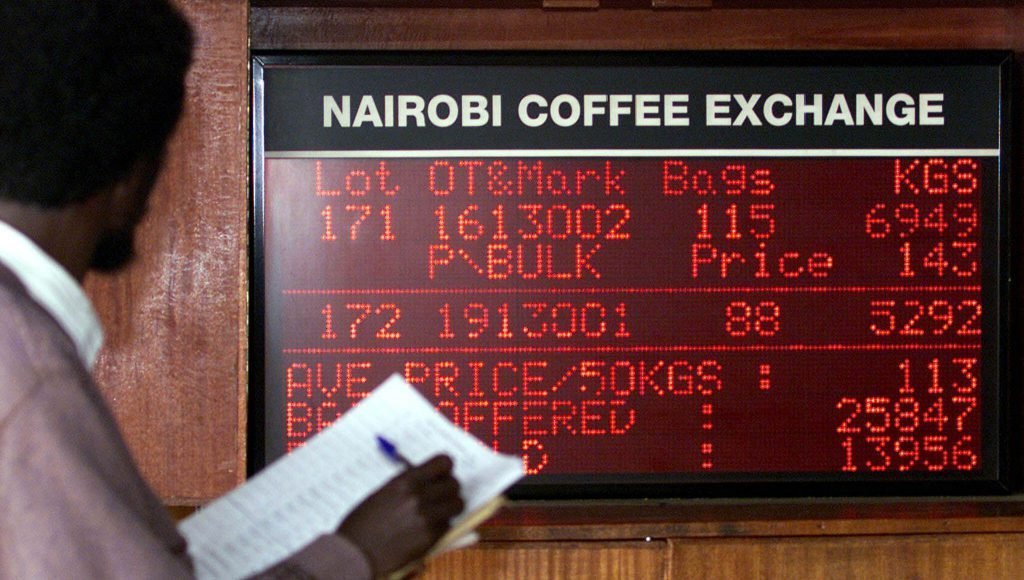
The Nairobi Coffee Exchange (NCE) is gearing up to reopen its trading operations after a prolonged halt that began on July 6. The suspension, attributed to the government’s decision to overhaul coffee brokerage and licenses, has stirred confusion within the industry, impacting trade dynamics.
Key industry players have pointed to the government’s reforms as the primary cause for the disruption. The resumption of trading on the NCE is contingent upon the fulfillment of stringent conditions laid out by the Capital Markets Authority (CMA). As per data from the CMA, 11 co-operative societies have obtained licenses to directly sell coffee at the NCE, with an additional five players expected to join by the close of this month.
The NCE’s Chief Executive, Risper Ndung’u, has mandated the exchange to reopen on August 15. However, the initial trading session is set to showcase a limited volume, with only 2,705 bags of coffee up for sale in the 30th trading event.
Established as a pivotal platform for transparent and efficient coffee trading, the Nairobi Coffee Exchange facilitates interactions between buyers and sellers. It offers a central hub for buyers to inspect and sample coffee before making purchases, while sellers can present their products to a diverse array of potential buyers.
In the current context, the industry faces notable hurdles. A mere four out of the eleven licensed co-operative societies managed to submit coffee samples for this week’s trading. Notably, several major millers reportedly boycotted the auction process. Reports from industry sources indicate that many coffee co-operatives are withholding their coffee stocks in warehouses due to confusion surrounding the implementation of new trading regulations.
As the NCE gears up for its reopening on August 15, 2023, it grapples with substantial challenges. The available volume for sale, a mere 2,705 bags of coffee, starkly contrasts with the exchange’s capacity to handle between 7,000 and 10,000 bags per week. A significant portion of this yield traditionally heads for export markets, underscoring the potential economic impact.
The role of the Co-operative Bank of Kenya in this scenario is paramount. It is set to provide the tech platform known as the Direct Settlement System (DSS), which will serve as the conduit for trading activities. The CMA had mandated the NCE to fulfill this condition as part of the resumption process.
The NCE’s recent extension of its in-principle approval until July 31, 2023, provided a three-month window to align with The Capital Markets (Coffee Exchange) Regulations, 2020, including the procurement of a Direct Settlement System (DSS) provider.
Historically, the first coffee auction in Kenya took place in 1935, a tradition that transitioned to the direct sales (2nd Window) method in 2006.
Under the authority vested by The Capital Markets (Coffee Exchange) Regulations, 2020, the CMA now holds the power to license both Coffee Exchanges and Brokers. Beyond mere regulation, the CMA’s role extends to fostering the development of orderly, fair, and efficient capital and commodities markets in Kenya, encompassing the realm of coffee brokers.
The upcoming trading phase at the NCE will operate under new trading rules harmonized with CMA guidelines. The settlement process will be executed through the Direct Settlement System (DSS), ensuring a transparent and efficient procedure for settling all sales transactions.
August 14, 2023
Delino Gayweh
Serrari Financial Analyst
photo source Google