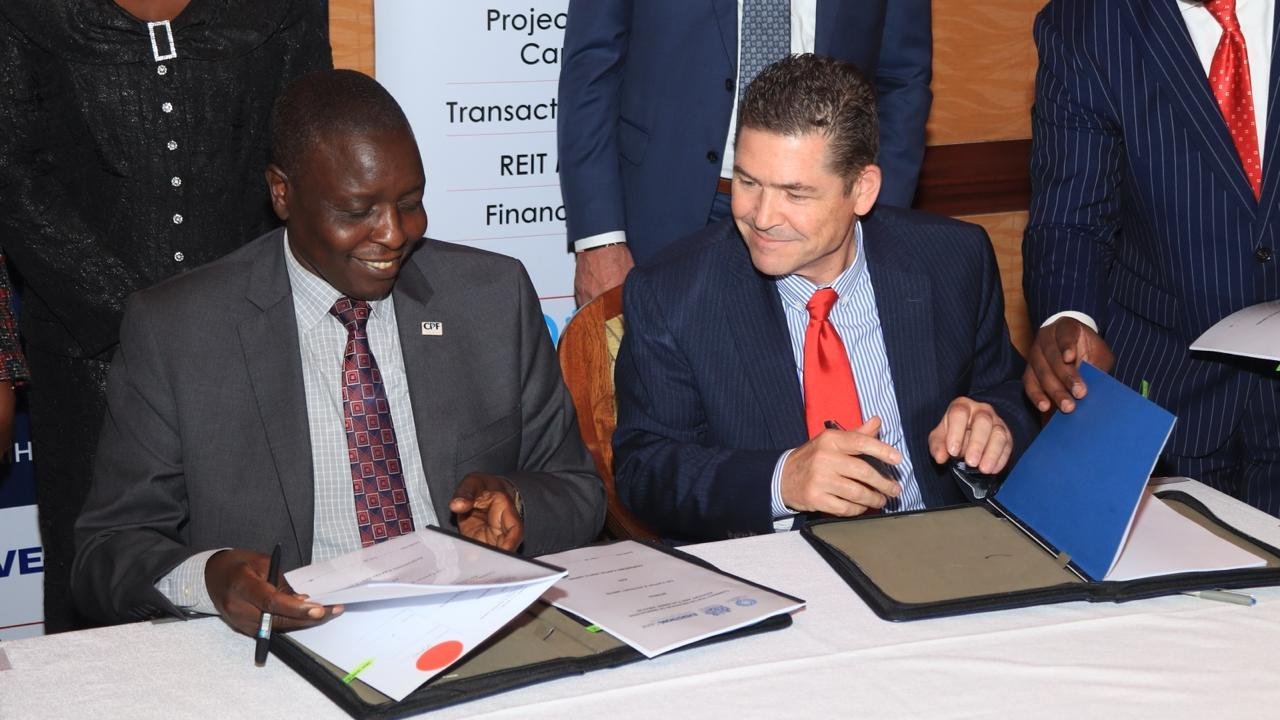
In a groundbreaking move set to transform Kenya’s transportation infrastructure, American asset management firm Everstrong Capital has partnered with CPF Capital & Advisory Ltd. to raise $1 billion (KSh 129 billion) for the ambitious Usahihi Nairobi-Mombasa Expressway project. This initiative marks a significant shift in Kenya’s approach to financing large-scale infrastructure developments, emphasizing local investment participation over heavy reliance on foreign debt.
The Nairobi-Mombasa Expressway, a 440-kilometer four-lane dual carriageway, is expected to revolutionize transportation between the capital city and the coastal hub. The project’s total estimated cost stands at $3.5 billion (KSh 452 billion), and the new financing agreement aims to secure a substantial portion of the required funds through Kenya’s capital markets.
A Shift Towards Local Investment in Infrastructure
Historically, Kenya has heavily relied on foreign loans and multilateral lenders for financing major infrastructural projects. However, the rising national debt and the pressure to achieve self-reliance have prompted a shift towards Public-Private Partnerships (PPPs) and local capital market mobilization.
CPF Managing Director Dr. Hosea Kili emphasized the transformative nature of the project, stating:
“This is more than just an infrastructure project. It is a bold step towards reshaping Kenya’s economy through private sector-led investments. It demonstrates the power of domestic institutional capital in fueling economic growth.”
The expressway will be funded through a PPP model, where private investors finance the construction and recoup their investment through toll fees and long-term concessions. This model has proven successful in countries such as South Africa, India, and Brazil, and Kenya is looking to replicate this success to ease the burden on public finances.
Public-Private Partnerships (PPPs): A Game Changer for Kenya
PPPs involve collaborations between governments and private sector entities to finance, build, and operate large projects. Kenya has increasingly turned to this model to mitigate high public debt levels while still pursuing infrastructure expansion.
The National Treasury has appointed over thirty experts from Kenya’s financial sector to create a framework for mobilizing long-term local financing for strategic state projects. This committee, chaired by Dr. Hosea Kili and deputized by Tom Mulwa, includes representatives from:
- Commercial and investment banks
- Stock market stakeholders
- Fund managers
- Insurance companies
- Pension fund managers
Their primary goal is to review PPP structures that attract local investors, allowing the country to build major infrastructure without increasing external debt.
“This initiative highlights the strength of strategic partnerships between local and international investors, leveraging blended capital to bring large-scale projects to life,” said Dr. Kili.
Key Benefits of the Nairobi-Mombasa Expressway
1. Drastically Reduced Travel Time
The expressway is designed to cut travel time from Nairobi to Mombasa from 10.5 hours to just 4.5 hours. The current Mombasa Road is often congested, with heavy truck traffic, frequent accidents, and unpredictable delays.
A more efficient transport corridor will:
- Enhance trade between the capital and the coastal region.
- Boost tourism by making travel to Mombasa and nearby destinations quicker.
- Improve supply chain logistics, benefiting the manufacturing, agriculture, and export industries.
2. Job Creation and Economic Growth
The construction phase alone is expected to create thousands of jobs, both directly in construction and indirectly in hospitality, retail, and logistics. Once operational, the expressway will generate employment opportunities in toll collection, maintenance, and service stations along the route.
3. Boosting Trade and the Transport Sector
Mombasa, home to East Africa’s largest port, serves as a key gateway for cargo heading to Uganda, Rwanda, South Sudan, and the DRC. A modern, efficient expressway will:
- Reduce transportation costs for businesses.
- Improve supply chain reliability.
- Encourage foreign direct investment (FDI) in Kenya’s logistics sector.
4. A Safer Alternative to the Current Highway
The Mombasa Road (A109) is one of the most dangerous highways in Kenya, with high accident rates due to congestion and reckless driving. The expressway’s design includes modern safety features, such as:
- Divided lanes to prevent head-on collisions.
- Smart traffic management systems.
- Emergency lanes and rest stops.
5. Lower Vehicle Operating Costs
With fewer traffic jams, vehicles will consume less fuel, reducing costs for motorists. The improved road surface will also result in less wear and tear, cutting maintenance expenses for both private and commercial vehicles.
Challenges and Concerns
While the Nairobi-Mombasa Expressway is an exciting project, several challenges need to be addressed:
1. Funding and Sustainability
Although Everstrong Capital and CPF Capital have secured $1 billion, the project still requires additional $2.5 billion. The government and investors must ensure that financing mechanisms, such as toll collections, can sustain the road without overburdening motorists.
2. Affordability of Tolls
There is growing concern about toll fees. If charges are too high, many motorists may continue using the old highway, limiting revenue generation for the new expressway. Authorities must balance affordability with profitability to ensure the expressway remains accessible to all.
3. Environmental and Social Impact
The construction of a 440-kilometer highway will have environmental implications, including:
- Displacement of communities living along the proposed route.
- Potential deforestation and loss of biodiversity.
- Carbon emissions from increased vehicle usage.
Authorities must implement sustainable construction practices and compensation programs for affected communities.
Historical Context: The Road to the Expressway
The Nairobi-Mombasa Expressway project has undergone several delays and changes over the years.
- 2017: Kenya signed a Sh230 billion deal with American engineering firm Bechtel for the road’s construction.
- 2019: The project was suspended as Kenya hit its debt ceiling, making borrowing for the project unfeasible.
- 2023: Everstrong Capital revived the project with a PPP approach, reducing reliance on government borrowing.
- 2024: Everstrong signed a deal with the Kenya National Highways Authority (KeNHA), officially kickstarting the fundraising process.
This long journey reflects Kenya’s evolving infrastructure financing strategy, shifting from government borrowing towards private sector partnerships.
Future Outlook: A Model for Other African Nations
Kenya’s approach to the Nairobi-Mombasa Expressway could serve as a blueprint for other African nations struggling with infrastructure financing. If successful, this PPP model could be applied to:
- The expansion of the LAPSSET corridor connecting Kenya, Ethiopia, and South Sudan.
- Upgrading Kenya’s railway system, integrating Standard Gauge Railway (SGR) with road networks.
- Developing new highways and bypasses to decongest urban centers.
Countries like Tanzania, Nigeria, and Ghana are watching Kenya’s progress closely, as they, too, explore PPP-driven infrastructure investments.
Conclusion: A Transformational Infrastructure Project
The Nairobi-Mombasa Expressway represents a milestone in Kenya’s infrastructure journey. By leveraging domestic capital markets, the country is taking a bold step toward economic self-reliance while modernizing its road networks.
With shorter travel times, job creation, improved safety, and enhanced trade efficiency, the expressway will be a game changer for Kenya and the broader East African region. While challenges remain, the commitment of investors, government officials, and local financial institutions provides a solid foundation for success.
If executed effectively, this project could redefine Kenya’s infrastructure landscape for decades to come, proving that Africa can finance its own future through innovative investment models.
Ready to take your career to the next level? Join our dynamic courses: ACCA, HESI A2, ATI TEAS 7 , HESI EXIT , NCLEX – RN and NCLEX – PN, Financial Literacy!🌟 Dive into a world of opportunities and empower yourself for success. Explore more at Serrari Ed and start your exciting journey today! ✨
photo source: Google
By: Montel Kamau
Serrari Financial Analyst
7th January, 2025