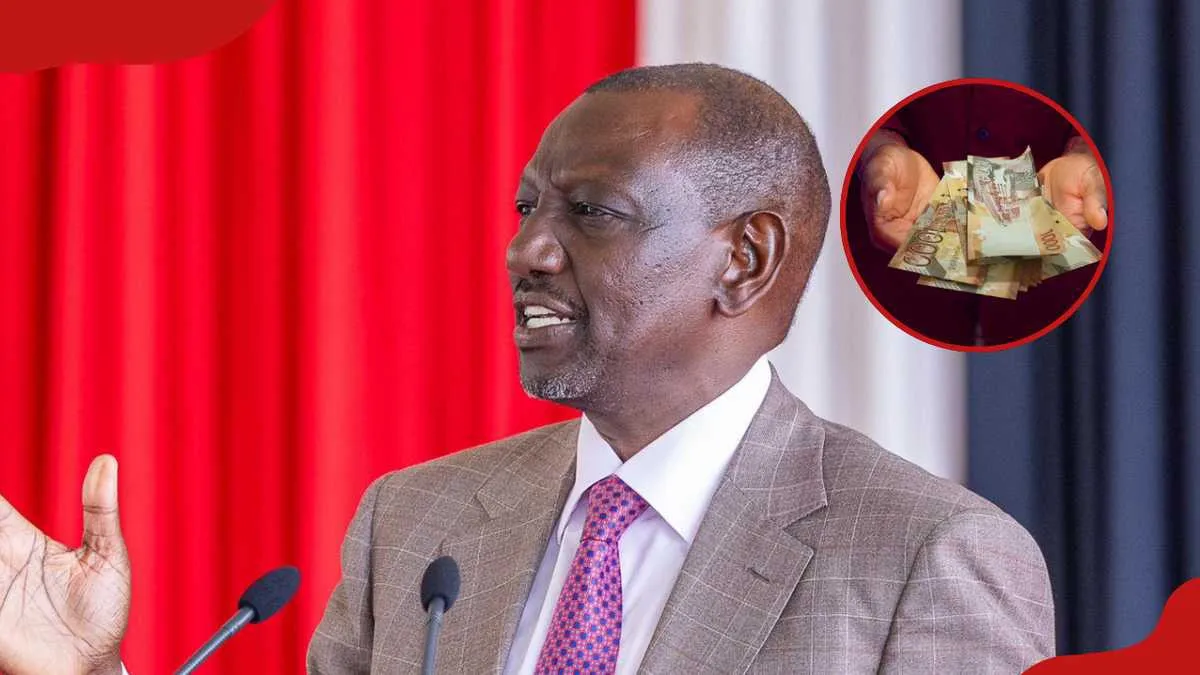
The financial stability of Kenya, a key economic hub in East Africa, has come under scrutiny as the nation’s foreign exchange (forex) reserves have experienced a significant drop. Data from the Central Bank of Kenya (CBK) highlights a decrease of $509 million (KSh 65.8 billion) over the past three weeks alone. This substantial decline is primarily attributed to a series of substantial external debt repayments, a situation that has been further complicated by a delay in securing new foreign currency loans. According to CBK data, the reserves plummeted from a record high of $11.2 billion (KSh 1.45 trillion) on Thursday, July 10, to $10.69 billion (KSh 1.38 trillion) on Thursday, July 31. This trend signals a period of heightened financial pressure, prompting concerns from global financial markets and local analysts about the sustainability of the country’s borrowing practices.
Build the future you deserve. Get started with top-tier courses in ACCA, HESI A2, ATI TEAS 7, HESI EXIT, NCLEX-RN, NCLEX-PN, and Financial Literacy. Let Serrari Ed guide your path to success. Enroll today.
The Central Bank’s data starkly reveals the consequences of a prolonged borrowing spree that has seen Kenya’s public debt stock soar to an all-time high of KSh 11.51 trillion. A significant portion of this, KSh 5.03 trillion, is owed to external lenders, making the country highly susceptible to shifts in global financial conditions and exchange rate volatility. The recent drop in reserves was widely anticipated due to scheduled external debt servicing obligations, a predictable yet challenging aspect of the nation’s financial management.
Unpacking the Decline: What are Forex Reserves and Why Do They Matter?
Foreign exchange reserves, often referred to as forex reserves, are a country’s official holdings of foreign currencies, primarily in U.S. dollars. These reserves are the Central Bank’s primary tool for managing a country’s external finances. They serve several critical functions:
- Exchange Rate Management: The CBK uses its forex reserves to intervene in the currency market. By buying and selling foreign currency, it can influence the value of the Kenyan shilling against major currencies like the U.S. dollar, helping to stabilize the exchange rate and prevent sharp devaluations.
- Import Cover: Reserves are a nation’s buffer against external shocks. They are used to pay for imports, such as fuel, food, and raw materials. The amount of import cover—typically measured in months—is a key indicator of a country’s economic health and its ability to weather crises. Moody’s, the global ratings firm, noted that Kenya’s reserves, covering almost five months of imports, provide some support, but this is being tested by high debt payments.
- Debt Servicing: This is the most direct reason for the current decline. Forex reserves are essential for repaying foreign currency loans, which are a major component of Kenya’s debt portfolio. Without sufficient reserves, a country risks defaulting on its payments, a scenario that would have catastrophic consequences for its international creditworthiness and its ability to borrow in the future.
- Investor Confidence: A healthy level of forex reserves signals to international investors that a country is fiscally responsible and has the capacity to meet its financial obligations. A rapid decline, therefore, can erode this confidence and make it more difficult and expensive to attract foreign capital.
The recent decline is particularly concerning because it underscores the fragility of Kenya’s current financial position. While the CBK’s proactive reserve buildup plan, which has involved purchasing dollars on the market, has helped stabilize the shilling, this strategy is only sustainable as long as new foreign currency inflows continue.
A Warning from Moody’s: The Challenge of Amortisation
On Monday, July 28, a powerful warning was issued by Moody’s, a global credit ratings firm, about the risks facing Kenya’s economy. The firm’s analysis is particularly significant because it influences how investors perceive a country’s creditworthiness. When a country’s rating is downgraded, it often means that borrowing costs will increase, making it more expensive to take on new loans.
Moody’s stated that the country’s external debt payment expenses would put the foreign exchange reserves and, consequently, the exchange rate to the test, especially in the absence of new inflows from concessional loans. The agency’s warning focused on the concept of amortisations, which are the periodic repayments of principal on a loan. Moody’s noted, “External amortisations (debt repayments) of around 3% of GDP could lead to a drawdown on reserves or renewed commercial borrowing in the absence of fresh multilateral funding.” This statement highlights a difficult choice for Kenya: either continue to use its reserves to meet these obligations or seek new, potentially more expensive, commercial loans to replenish its coffers. The reliance on new multilateral funding, which often comes with more favorable terms, is a critical part of this equation.
The warning from Moody’s provides an important external perspective on a situation that has been a subject of intense debate within Kenya. It validates the concerns of those who have been arguing that the country’s debt levels are unsustainable and that the government must find a more responsible fiscal path.
Ready to level up your career? Join our expert-led courses in ACCA, HESI A2, ATI TEAS 7, HESI EXIT, NCLEX-RN, NCLEX-PN, and Financial Literacy. At Serrari Ed, we turn potential into achievement. Start your journey today!
The Anatomy of Kenya’s Debt Repayments
The recent drop in reserves is a direct consequence of a series of large, scheduled payments. According to reports, the most significant of these was a payment to China, which accounted for a massive share of the nation’s external debt servicing in July. The total amount paid to China was $431.9 million (KSh 55.8 billion), a figure that included both principal and interest charges.
- Standard Gauge Railway (SGR) Loan: The majority of the payment to China was for the SGR, a flagship infrastructure project that has become a symbol of Kenya’s ambitious but costly development strategy. The loan repayments for the SGR began in 2019, after a five-year grace period. In July, these repayments made up a staggering 81.3% of the nation’s overall expenditure on external debt servicing. The SGR loan is one of the largest single debt obligations in Kenya’s history, and its scheduled repayments will continue to be a significant burden on the country’s finances for the foreseeable future.
- Eurobond Payments: Among the other significant debt commitments was the $31.5 million (KSh 4.1 billion) semi-annual interest payment on the $1 billion (KSh 129.25 billion) 12-year Eurobond that the nation launched in mid-2021. The bond has an annual coupon of 6.3%, and these payments are a fixed and regular drain on the country’s forex reserves.
- Multilateral and Bilateral Lenders: Other notable payments included $19.53 million (KSh 2.5 billion) to France, a bilateral lender, and $20.88 million (KSh 2.7 billion) to the Eastern & Southern African Trade & Development Bank (TDB). These payments highlight the diversity of Kenya’s debt portfolio and the complexity of managing obligations to various international institutions and countries.
The Political and Economic Debate: Auditing the Debt
The soaring public debt has become a central point of political discourse in Kenya. The administration of President William Ruto has come under intense scrutiny for its management of the national debt, which has continued to grow. In response to these concerns, National Treasury Cabinet Secretary (CS) John Mbadi announced that the government is undertaking an audit of its debt.
During a public discussion of the 2025/2026 budget, Mbadi assured taxpayers that the results of the audit would be made public once it was finished. He stated that while several Kenyans, including Busia senator Okiya Omtatah, have disputed the debt figures, the Treasury is committed to providing further information if any discrepancies are found. The audit is a crucial step towards restoring public trust and ensuring greater accountability in the management of public funds. A comprehensive and transparent audit would not only confirm the actual size and composition of the debt but would also provide a clear picture of the terms and conditions of each loan, helping to inform future fiscal policy and prevent a repeat of past borrowing mistakes.
Outlook and Future Challenges
The drop in forex reserves is more than just a temporary fluctuation; it is a symptom of deeper structural issues within Kenya’s economy. The country’s reliance on external borrowing to finance its ambitious infrastructure projects and its persistent current account deficit has made it vulnerable. The future stability of the shilling and the health of the economy will depend on a number of key factors:
- Securing New Funding: The country urgently needs to secure new inflows from multilateral and concessional lenders to replenish its forex reserves and to avoid resorting to more expensive commercial borrowing. Delays in this process could exacerbate the current pressure on reserves.
- Boosting Exports: The long-term solution to the forex challenge lies in increasing exports and attracting more foreign direct investment (FDI). This would increase the country’s foreign currency earnings and reduce its reliance on borrowing.
- Fiscal Consolidation: The government must demonstrate a clear commitment to fiscal consolidation, which means reining in spending, increasing revenue collection, and prioritizing projects that have a high return on investment. This would send a strong signal to investors and rating agencies that the country is serious about managing its debt.
- Managing Political Risks: A more transparent and open dialogue about the national debt, coupled with a credible audit, could help to reduce political uncertainty and build a national consensus on the way forward. This is essential for long-term economic planning and stability.
In conclusion, while the recent drop in Kenya’s forex reserves is an immediate challenge, it also serves as a critical wake-up call. The country’s economic future hinges on its ability to navigate a complex web of debt obligations, political pressures, and global economic headwinds. By implementing a clear and sustainable fiscal strategy, Kenya can not only protect its currency and its creditworthiness but also lay the groundwork for a more prosperous and resilient future.
Ready to take your career to the next level? Join our dynamic courses: ACCA, HESI A2, ATI TEAS 7 , HESI EXIT , NCLEX – RN and NCLEX – PN, Financial Literacy!🌟 Dive into a world of opportunities and empower yourself for success. Explore more at Serrari Ed and start your exciting journey today! ✨
photo source: Google
By: Montel Kamau
Serrari Financial Analyst
8th August, 2025