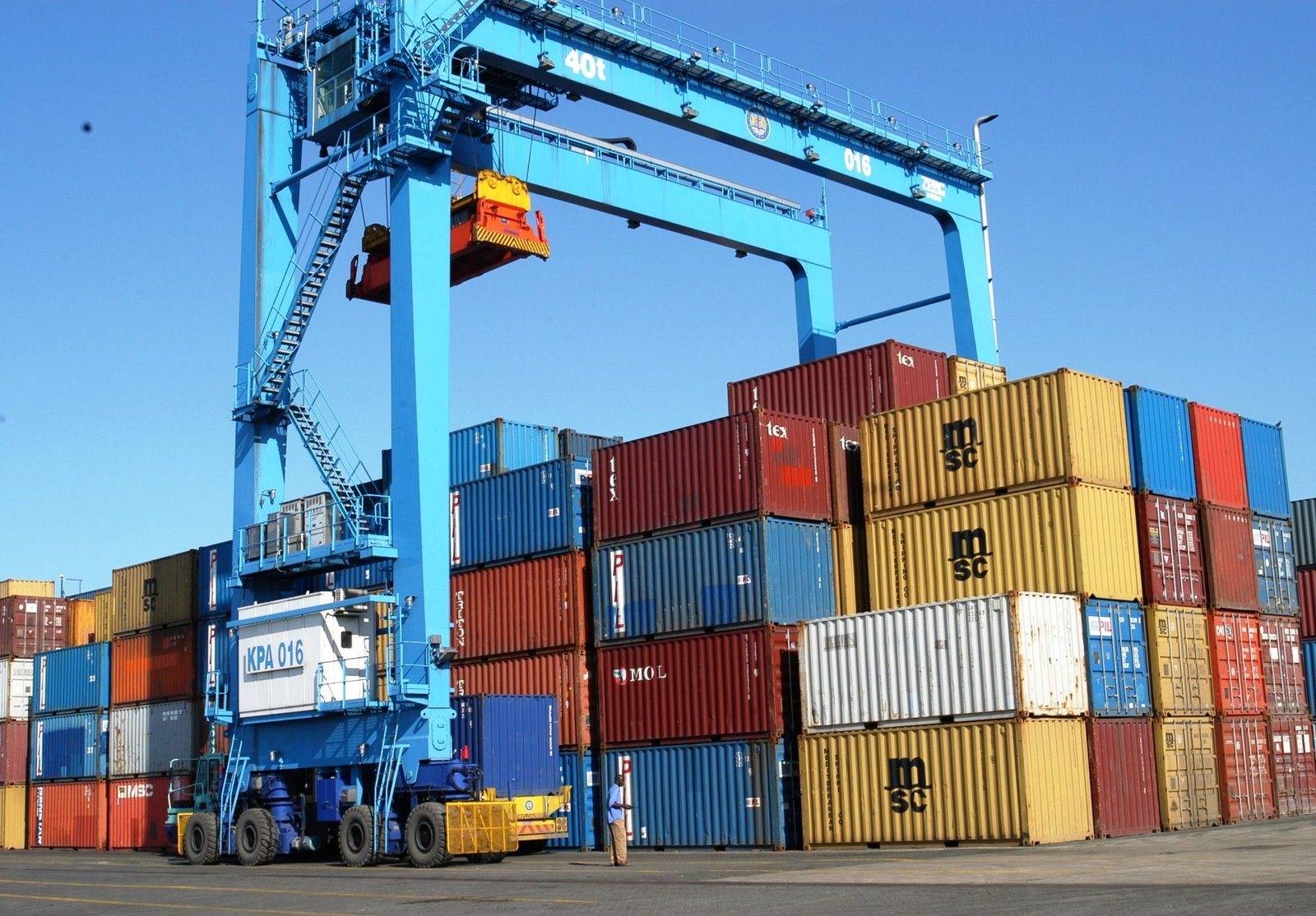
Kenya’s imports have experienced a notable decline of almost 14% during the initial eight months of this year. This downturn underscores the significant impact of the weakening Kenyan shilling on the nation’s purchasing power.
The Kenyan shilling has witnessed a substantial depreciation of 17% against the US dollar. This depreciation has made imports more expensive, given that they are primarily financed through the purchase of US dollars within the local market. This depreciation has also contributed to the rising inflation levels witnessed this year.
The Central Bank of Kenya (CBK) recently released trade data, revealing a clear picture of the country’s import situation. According to this data, Kenya’s imports for the period totaled $11.45 billion (Sh1.7 trillion), representing a 13.8% decline compared to $13.28 billion (Sh1.97 trillion) for the same period in 2022.
Notably, nearly all major product categories reported decreased imports, with the exception of food and live animals, which experienced a 28.3% increase, reaching $1.71 billion (Sh254 billion).
The most substantial decline in imports was witnessed in the category of manufactured goods, which fell by 27.3% to $1.81 billion (Sh269 billion), down from $2.49 billion (Sh370 billion) in the previous year.
During a Monetary Policy Committee briefing, CBK Governor Kamau Thugge explained, “Typically, currency depreciation stimulates exports and increases the cost of imports, effectively reducing the demand for foreign exchange and lessening the pressure on the exchange rate to depreciate. This is one of the contributing factors. There are additional factors, such as a reduction in the import of machinery and equipment, reflecting the completion of government projects.”
Other categories experiencing notable import declines include mineral fuels and lubricants (down by 19.9%), animal and vegetable oils (down by 20.9%), machinery and transport equipment (down by 18.9%), and chemicals (down by 14.3%).
The consequences of the expensive US dollar are being felt across various sectors. In the automotive industry, both dealers and assemblers have raised prices to compensate for higher expenses and safeguard profit margins. Manufacturers importing raw materials have also adjusted their prices to maintain margins against rising costs, resulting in an increase in the prices of locally manufactured goods.
Despite expectations of a significant boost in exports due to the weaker shilling, the reality has been less pronounced. Total export earnings during the first eight months of the year declined by 2.2% to $4.92 billion (Sh731 billion). This decline was evident in various sectors, including tea, coffee, horticulture, beverages, tobacco, cooking oils, and apparel.
The future trajectory of Kenya’s import-export dynamics will be closely monitored as the nation navigates currency fluctuations and their economic implications.
Photo Source: Google
By: Montel Kamau
Serrari Financial Analyst
7th October, 2023