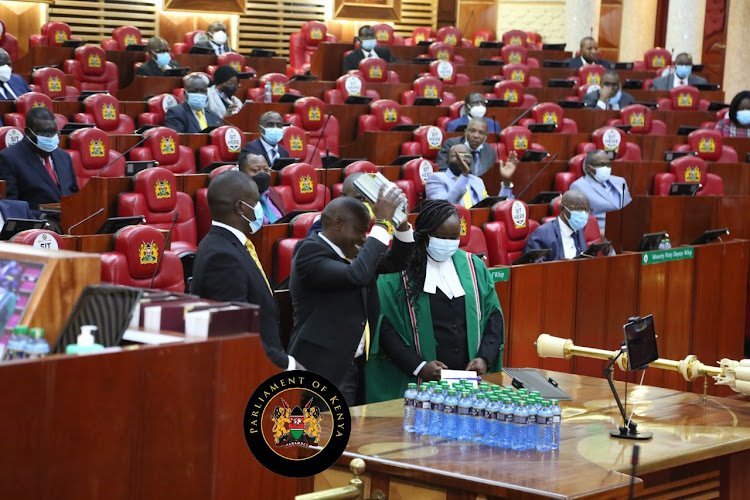
A proposed legislative amendment in Kenya could usher in a new era of opportunities for local businesses. Kiambaa MP John Njuguna Wanjiku has introduced the Public Procurement and Asset Disposal (Amendment) Bill, 2023, which aims to redefine the rules governing public procurement, favoring Kenyan-owned companies for contracts valued below Sh1 billion.
The primary focus of the bill is to bring clarity to public procurement by setting strict parameters for foreign firms competing for contracts exceeding the Sh1 billion threshold. If the bill is enacted, foreign companies seeking such contracts will be required to enter into joint ventures with local firms, with at least 30 percent of the contract’s value allocated to the local partner.
The proposed legislation prioritizes transparency in these joint ventures. It stipulates that foreign procurement entities must outline the specific goods, works, and services that the local firm will handle in the joint venture arrangement.
To ensure the integrity of the procurement process, the bill introduces penalties for those found guilty of falsely registering companies on behalf of non-Kenyan entities. The penalties are set at a maximum of Sh5 million in fines or imprisonment for a term not exceeding three years, or both. Foreign individuals involved in such activities could face even stricter penalties, including fines not exceeding Sh5 million or imprisonment for a term not exceeding five years, or both.
Under the bill, a “local firm” is defined as one that is wholly owned by a Kenyan and fully incorporated within Kenya’s borders. Conversely, a “foreign firm” is characterized as a company with more than 30 percent ownership or complete ownership by non-Kenyan entities, whether incorporated inside or outside Kenya.
MP John Njuguna Wanjiku cited Section 217(2) of the South African Constitution as inspiration for the bill. This section addresses “contract allocation preferences” to support disadvantaged individuals or groups, serving as a model for a balanced preferential procurement system in Kenya.
Wanjiku highlighted the potential of this legislation to stimulate economic growth and inclusivity. He emphasized the bill’s capacity to create opportunities for marginalized groups, including women, youth, persons with disabilities, and other underserved populations. This, he argued, would lead to poverty reduction, enhanced social equity, and improved living standards for Kenyan citizens.
MP Wanjiku concluded by underlining the bill’s alignment with the long-term sustainability of the local business environment. It signifies a positive stride towards nurturing homegrown entrepreneurship and fostering economic growth.
As the bill progresses through the legislative process, it is viewed as a significant step towards reshaping the procurement landscape, offering promising prospects for Kenyan businesses and disadvantaged communities.
Photo Source: Google
By: Montel Kamau
Serrari Financial Analyst
7th September, 2023