
In a significant boost for regional integration and economic growth, Kenya and Somalia are on the verge of finalizing a trade facilitation agreement designed to eliminate irregular non-tariff barriers and streamline commerce between the two neighboring countries. This landmark Memorandum of Understanding (MoU) is expected to not only bolster trade relations but also contribute to enhanced border security, improved customs clearance systems, and a more predictable policy environment for businesses operating across both nations.
A New Era of Regional Cooperation
Somalia’s accession to the East African Community (EAC) in December 2023 marked a pivotal moment in regional integration. Now the eighth member of the regional bloc, Somalia’s inclusion has opened up new opportunities for trade and investment among East African nations. However, despite its membership, trade between Kenya and Somalia has historically been hindered by multiple levies, policy shifts, and non-tariff barriers. These obstacles have often disrupted the free flow of goods, impacting sectors as diverse as agriculture, fisheries, manufacturing, and even niche products like khat.
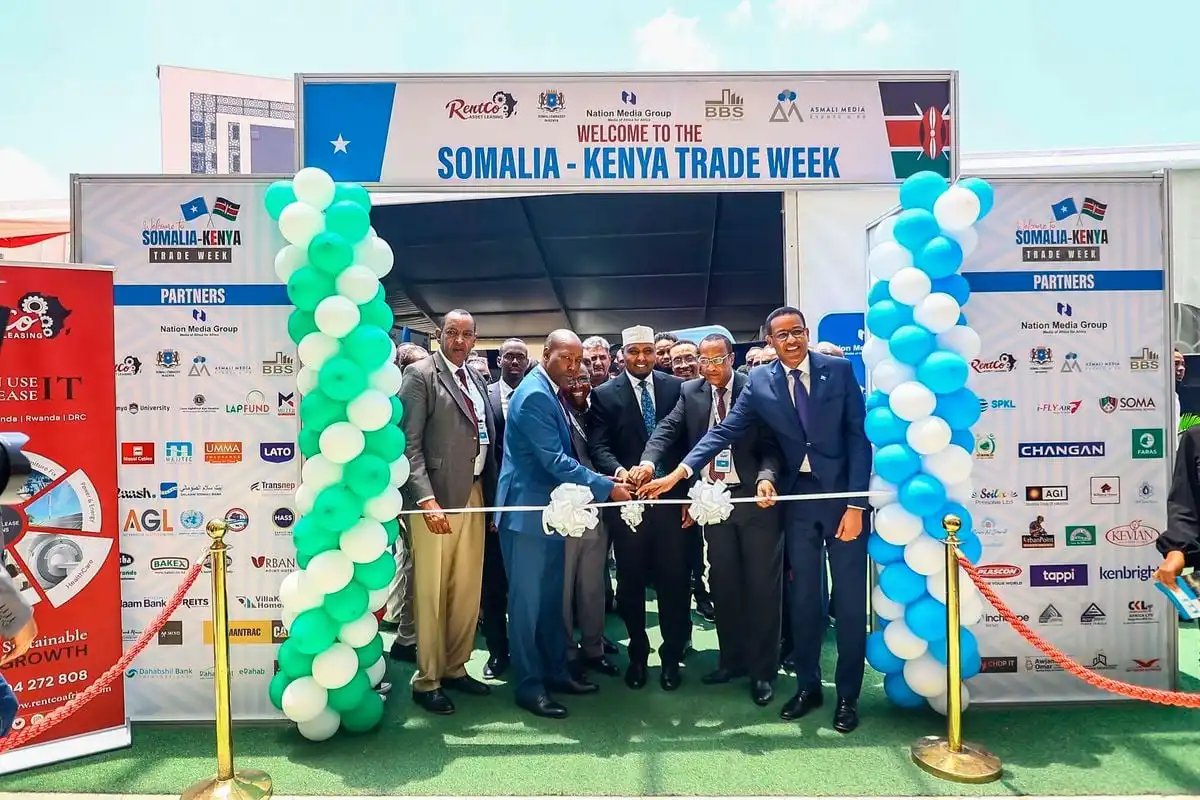
At the Somalia-Kenya Trade Week held in Nairobi, Kenya’s Trade Cabinet Secretary, Lee Kinyanjui, emphasized that the upcoming trade facilitation deal will prioritize the removal of these barriers. “To strengthen trade and investment, Kenya and Somalia must explore key areas of cooperation,” said Cabinet Secretary Kinyanjui during his address at the BBS Mall in Eastleigh, Nairobi. “Finalizing the MoU on the Promotion of Trade Cooperation is a crucial step toward facilitating smoother trade relations between our two countries.”
The agreement proposes the establishment of a joint trade committee tasked with addressing non-tariff barriers, along with measures aimed at upgrading border customs offices in Garissa, Wajir, and Mandera. By tackling issues such as irregular levies and unannounced policy changes, the deal aims to create a stable trading environment that will benefit both nations.
Historical Context and the Need for Reform
The longstanding trade challenges between Kenya and Somalia are not new. For years, Kenyan exporters have faced hurdles when shipping goods to Somalia—irregular fees, inconsistent customs procedures, and sometimes even unexpected flight cancellations have complicated the process. Despite these challenges, Kenya has maintained a robust trade relationship with Somalia. In 2023, Kenya’s exports to Somalia were valued at Sh20.2 billion (approximately $155.2 million), with key exports including khat, dairy products, cereals, pharmaceuticals, cement, steel, edible oils, tobacco, and detergents. Meanwhile, imports from Somalia—comprising fish, livestock, sesame seeds, fruits, natural gums, essential oils, and scrap metals—totaled around Sh45.2 million (roughly $348,000).
Somalia, with its vast potential for investment, particularly in sectors such as agriculture, fisheries, manufacturing, and infrastructure, is eager to expand its trade footprint. The country’s fisheries sector alone is estimated to be worth about Sh258 billion ($2 billion), owing largely to its 3,000km coastline—the longest on mainland Africa—which offers immense fishing and maritime trade opportunities.
However, despite this potential, Somalia’s ongoing implementation of key trade protocols to align with EAC standards has been slow, resulting in a patchwork of regulations that continue to frustrate traders. The new trade facilitation agreement seeks to harmonize these regulations, ensuring that Somalia can be on par with other EAC members in enjoying the benefits of regional free trade.
Key Provisions of the Trade Facilitation Agreement
The forthcoming MoU between Kenya and Somalia is comprehensive in scope. Key provisions include:
Elimination of Non-Tariff Barriers
The agreement aims to dismantle various non-tariff barriers (NTBs) that have historically plagued cross-border trade. NTBs such as excessive documentation, multiple levies, and inconsistent customs procedures will be addressed through the establishment of a joint trade committee. This committee will work on standardizing procedures and ensuring that any barriers that do exist are clearly defined and consistently applied.
Enhanced Customs Clearance Systems
Customs clearance delays have been a major pain point for traders on both sides of the border. The deal envisions significant upgrades to customs systems at key border points. By adopting advanced digital solutions and streamlined procedures, the new system is expected to reduce clearance times dramatically, thereby lowering the cost of doing business and increasing the predictability of trade flows.
Strengthened Border Security
While facilitating trade, the agreement also places a strong emphasis on enhancing border security. Improved security measures at border posts will help curb illegal trade and smuggling, ensuring that increased commercial activity is matched by robust regulatory oversight. This dual focus on facilitation and security is expected to build greater trust among traders and investors.
Promoting Transparency and Fair Trade Rules
Trade Cabinet Secretary Kinyanjui also highlighted the need for transparency in trade regulations as a way to boost investor confidence. “Strengthening trade regulations and ensuring transparency will play a vital role in boosting investor confidence,” he remarked. This is particularly relevant as both nations work to attract foreign direct investment (FDI) and encourage local entrepreneurship.
Economic Implications for Kenya and Somalia
The anticipated trade facilitation deal carries significant economic implications for both Kenya and Somalia, as well as the broader East African region.
For Kenya
Kenya stands to benefit from a more predictable and efficient trade environment with Somalia. With reduced bureaucratic hurdles, Kenyan businesses can expect lower transaction costs and faster access to the Somali market. This is particularly important for sectors like dairy, pharmaceuticals, and building materials, which have a steady demand in Somalia. Moreover, improved trade relations are likely to foster further investment in logistics and infrastructure along the border, creating jobs and stimulating local economies in counties like Garissa, Wajir, and Mandera.
Trade experts also note that better trade facilitation can help Kenya diversify its export base. While traditional exports such as khat have been significant, there is considerable untapped potential in sectors like processed foods, textiles, and technology. As Kenyan industries become more competitive in the Somali market, there could be a broader shift towards manufacturing and value-added production.
For Somalia
For Somalia, the benefits are equally compelling. As the nation continues its journey toward economic stabilization and integration into the EAC, improved trade conditions will be crucial for sustaining growth. The elimination of irregular levies and simplification of customs procedures will make it easier for Somali businesses to participate in regional trade. With its vast natural resources and strategic geographic location, Somalia is well-positioned to become a hub for maritime trade in East Africa.
In particular, the fisheries sector is expected to see a significant boost. Enhanced trade facilitation could lead to increased exports of fish and seafood, allowing Somalia to better capitalize on its extensive coastline. Additionally, the agreement could stimulate growth in other key sectors such as agriculture and manufacturing, contributing to broader economic diversification and resilience.
Voices from the Trade Week
The Kenya-Somalia Trade Week 2025, held from February 26 to 28 in Nairobi, has provided a platform for stakeholders from both countries to discuss these transformative initiatives. The event, jointly organized by the Nation Media Group PLC and the Somali Embassy in Nairobi, brought together government officials, business leaders, and trade experts.
At the event, Somalia’s Minister for Planning, Investment and Development, Mohamud Abdurrahman Sheikh Farah, expressed optimism about the future of bilateral trade. “This trade week takes place at an important time as Somalia enters a new era of optimism and progress,” he said. He highlighted that the trade facilitation agreement would enhance not only trade but also broader economic and investment cooperation between Kenya and Somalia.
NMG Board Chairman Wilfred Kiboro also underscored the potential for increased intra-African trade. “Why do we have to continue importing second-hand clothes when we could be manufacturing them right here?” he remarked, advocating for policies that support local production and industrialization. Kiboro’s call for a re-examination of government policies that hinder free trade reflects a growing sentiment among African business leaders: that economic self-reliance and intra-regional trade are essential for sustainable development.
Garissa Governor Nathif Jamah added his voice to the chorus, urging the media to help shape a more positive narrative around Somalia. “We must move away from negative stereotypes and recognize the immense potential that Somalia holds. Positive stories will help attract investment and drive growth,” he stated, emphasizing the role of accurate reporting in fostering regional prosperity.
The Broader Vision: Intra-African Trade and Industrialization
The trade facilitation deal between Kenya and Somalia is part of a larger trend toward enhanced intra-African trade. With the African Continental Free Trade Area (AfCFTA) gaining momentum, regional integration is being seen as a vital pathway to economic development. By reducing trade barriers and harmonizing regulations, African countries can tap into a combined market of over 1.4 billion people, a move that is expected to generate significant economic dividends.
Trade facilitation agreements like the one between Kenya and Somalia not only simplify cross-border commerce but also serve as building blocks for deeper economic integration. They encourage the movement of goods, services, and capital, laying the groundwork for industrialization. As African nations increasingly trade with one another, there is a growing recognition that importing finished products—such as second-hand clothes and footwear—could be replaced with local manufacturing. This shift has the potential to create jobs, boost local industries, and reduce dependency on external markets.
NMG Board Chairman Wilfred Kiboro’s remarks highlight a common frustration among many African leaders: “There is no reason why we cannot grow cotton or manufacture clothes and fabrics right here in Africa.” By focusing on local production and fostering regional supply chains, African countries can stimulate economic growth and ensure that the benefits of trade remain within the continent.
Challenges and the Road Ahead
Despite the promising outlook, significant challenges remain. Both Kenya and Somalia must navigate issues related to political stability, infrastructure deficits, and regulatory inconsistencies. Somalia, in particular, is still in the process of fully implementing trade protocols required for seamless integration into the EAC. These challenges have, at times, resulted in irregular levies and disruptions that have frustrated traders and undermined confidence.
However, the commitment shown by both governments offers a hopeful outlook. By establishing mechanisms to resolve disputes—such as a joint trade committee—and investing in the modernization of customs and border facilities, both nations are taking proactive steps to overcome these obstacles. The forthcoming MoU is seen as a critical step in that direction.
Trade experts stress that the success of this initiative will depend not only on government actions but also on the willingness of the private sector to embrace new opportunities. Businesses on both sides of the border must be ready to adapt to a more streamlined regulatory environment, invest in modern logistics solutions, and explore new markets within the region.
Implications for the East African Community and Beyond
The trade facilitation agreement between Kenya and Somalia is expected to have broader implications for the East African Community. As Somalia works to align its trade practices with EAC standards, other member states may be encouraged to adopt similar reforms. This could lead to a more harmonized regional market, reducing transaction costs and making it easier for businesses to operate across borders.
Moreover, enhanced trade relations within the EAC can serve as a catalyst for attracting foreign direct investment. Investors are more likely to commit capital to regions with predictable, transparent, and efficient trade systems. The ongoing efforts to modernize customs, improve border security, and eliminate non-tariff barriers will not only benefit trade between Kenya and Somalia but also strengthen the overall business climate in East Africa.
The success of such initiatives can also contribute to reshaping global perceptions of the region. As more positive stories emerge about increased intra-African trade and industrialization, negative stereotypes may be replaced with narratives of opportunity and resilience. This shift in perception is critical, particularly as African nations seek to position themselves as competitive players in the global economy.
Conclusion: A Strategic Leap Toward Economic Integration
The imminent signing of the trade facilitation deal between Kenya and Somalia represents a strategic leap forward in efforts to enhance regional integration and economic development in East Africa. By addressing longstanding challenges—such as irregular levies, non-tariff barriers, and inefficient customs procedures—the agreement aims to create a more predictable and business-friendly environment for traders and investors alike.
At a time when intra-African trade is gaining unprecedented momentum under initiatives like AfCFTA, this agreement could serve as a model for other regional partnerships. The potential benefits are manifold: increased trade volumes, greater investment in local industries, improved public infrastructure, and ultimately, a higher standard of living for millions of people across the continent.
As stakeholders from both Kenya and Somalia work together to finalize the MoU, there is a palpable sense of optimism about the future of regional trade. Government officials, business leaders, and community representatives have all expressed confidence that this agreement will pave the way for smoother, more efficient trade relations—one that will ultimately contribute to the economic prosperity of the region.
In the words of Trade Cabinet Secretary Lee Kinyanjui, “The only way for Africa to develop is to get out of this cycle and start trading with one another.” As both nations prepare to sign this critical agreement, the focus is not only on removing barriers but also on building a future where trade serves as a catalyst for sustainable, inclusive growth. With the right policies in place and a shared commitment to reform, Kenya and Somalia are poised to unlock the full potential of their economic partnership, setting a powerful example for the rest of Africa.
Ready to take your career to the next level? Join our dynamic courses: ACCA, HESI A2, ATI TEAS 7 , HESI EXIT , NCLEX – RN and NCLEX – PN, Financial Literacy!🌟 Dive into a world of opportunities and empower yourself for success. Explore more at Serrari Ed and start your exciting journey today! ✨
photo source: Google
By: Montel Kamau
Serrari Financial Analyst
28th February, 2025