

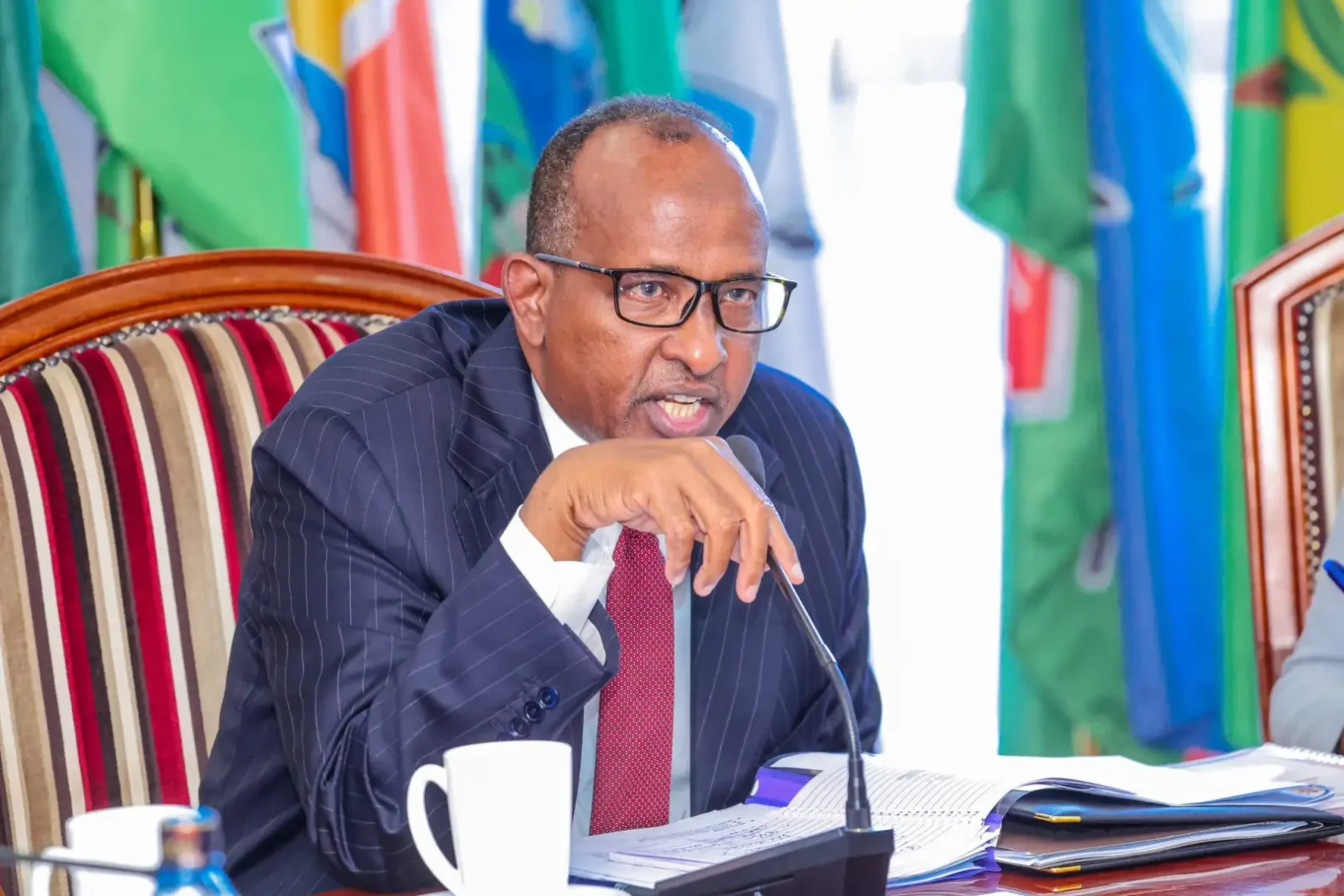
In a bid to shore up Kenya’s fledgling Social Health Authority (SHA) and ensure timely remittance of contributions, Health Cabinet Secretary Aden Duale announced plans to have all civil servants’ SHA dues deducted directly by the National Treasury. The move comes after widespread reports of frontline health workers being denied care despite payroll deductions, and ahead of mounting concerns over low active contributions threatening the scheme’s sustainability.
Origins and ambitions of the Social Health Authority
Launched in October 2024 under President William Ruto’s push for Universal Health Coverage (UHC), the SHA consolidated multiple schemes—including the long-standing National Health Insurance Fund (NHIF) and new emergency and chronic-illness funds—into a unified structure Step By Step Insurance. By January 2025, over 18.2 million Kenyans had registered via the USSD *146# code, online portal and community drives—an early sign of public enthusiasm for affordable, comprehensive care. Yet, registration has far outpaced actual contributions: of those registered, only about 5 million make regular payments, raising red flags for the scheme’s revenue base and ability to pay providers on time The Eastleigh Voice News.
SHA’s design envisaged contributions from employers, employees and the self-employed, with varying rates depending on income bands. Civil servants were to contribute 1.5% of gross salary, matched by their agencies; private-sector workers 2% under a sliding scale; and informal-sector participants a flat rate of KSh 300 per month for access to a basic benefits package. Despite these provisions, the SHA has struggled to collect and remit funds consistently—delays that have left hospitals grappling with unpaid claims and contributors unable to access services.
Healthcare workers turn away from care
In recent weeks, alarming stories emerged of doctors, nurses and support staff being denied even outpatient services at public hospitals because their SHA deductions had not reached facilities. At the Kenya Medical Practitioners, Pharmacists and Dentists Union (KMPDU) conference in Mombasa on May 10, frontline medics recounted being turned away despite showing payslips indicating monthly SHA contributions. One consultant physician described the experience as “immoral and unacceptable,” stressing that those who save lives should not be blocked from accessing the very system they run.
These reports underscored a systemic breakdown: counties and national agencies deduct SHA dues but sometimes fail to remit them to the SHA’s central account. Hospitals, lacking working capital, delay payments to suppliers and risk stock-outs of essential medicines. A March 2025 performance review by the Rural and Urban Private Hospitals Association of Kenya (RUPHA) assigned the SHA a “D” grade, noting its financial-health score plunged from 46% in December 2024 to 44% by February 2025 Jijuze.
Duale’s proposal: Treasury as the gatekeeper
To plug these leakages, CS Duale unveiled a proposal to the Council of Governors and National Treasury: mandate that all civil-servant SHA contributions—at national and county levels—be deducted at source by the Treasury’s payroll system and transferred automatically to the SHA. “It is not SHA that locks you out; it’s the system,” Duale told delegates, vowing to present the measure formally to Cabinet. “We cannot build a successful UHC model while our own public servants and healthcare workers are blocked from care due to bureaucratic lapses” The Eastleigh Voice News.
Mombasa Governor Abdulswamad Nassir welcomed the idea as “common sense,” urging swift action to protect both providers and contributors. Under the new model, contributions would bypass county treasury wallets—where funds often stall—and flow directly into a secure SHA account. This would mirror the existing mechanism for civil-service pension deductions, widely regarded as reliable and transparent.
The numbers: gap between registration and contributions
While SHA registration has exceeded 20 million as of May 2025, active contributors remain stuck at roughly a quarter of that figure. Data from the Ministry of Health indicate:
- Registered members: 20 million (both formal and informal sectors) Tuko.co.ke – Kenya news.
Why contributions stall: administrative and behavioral hurdles
Several factors underlie the low remittance rates:
- County versus national friction: Devolved health budgets often grapple with competing priorities. Counties sometimes divert SHA deductions to cover wage bills or local projects, pending release of conditional grants from the national government.
- Payroll system gaps: While the Public Service Commission’s IPPD payroll platform deducts pension and tax reliably, SHA deductions were initially slated for manual county-level remittance, exposing them to human error and delay.
- Informal sector complexity: For small traders and casual workers, monthly SHIF registration and renewal via online portals or designated agents remains cumbersome, leading to lapses and benefit interruptions
- Public awareness and trust issues: Early messaging on SHA’s benefits was overshadowed by confusion over eligibility, benefit ceilings and co-payments, undermining willingness to pay among low-income earners.
Broadening the net: reaching informal and vulnerable groups
Kenya’s informal sector comprises over 80% of the workforce, yet only 300,000 of an estimated 3 million eligible traders have signed up for SHA so far. To address this, the Ministry of Health and SHA management, led by Acting CEO Robert Ingasira, have rolled out targeted interventions:
- Mobile registration units: Teams deploying vans equipped with tablets and SIM-enabled routers to markets and remote villages, cutting registration time from days to under an hour.
- USSD-based reminders and renewals: Automated prompts via *146# reminding informal contributors to renew packages, with the option to pay via M-Pesa or bank transfer.
- Subsidized premiums for poorest counties: A sliding-scale subsidy funded through the Primary Health Care Levy (a 1% surcharge on mobile money transfers), earmarked for the bottom 15 poverty-ranked counties.
Yet uptake in these segments remains tepid, highlighting the need for community-level education and stronger incentives, such as linking SHA membership to agricultural input subsidies and micro-credit programs.
Learning from peers: comparative insights
Kenya’s SHA parallels other African UHC pilots. Ghana’s National Health Insurance Scheme (NHIS), launched in 2003, struggled with low enrollment (<40%) until mobile-money payments and biometric verification drove active membership to over 50% by 2022 . Rwanda’s Community-Based Health Insurance (CBHI), pegged at 6% of household income, boasts 95% population coverage through mandatory enrolment tied to government benefits . These examples underscore the potential of technology and policy levers—but also the pitfalls of voluntary schemes without robust enforcement.
Financial sustainability: projections and risks
Actuarial analysis by the World Bank and Ministry of Health suggests that, under current contribution rates, SHA’s reserve fund (initially set at KSh 50 billion) would be exhausted by Q4 2025. Shifting civil-service deductions directly to Treasury could recover an additional KSh 1.8 billion monthly, while improved informal-sector collections could add KSh 600 million, extending solvency into 2027. However, these gains depend on parallel reforms:
- Timely disbursement of county grants: The National Treasury must honor conditional health-sector transfers to counties, reducing the temptation to divert SHA funds.
- Strengthened audit and compliance: National and county public accounts committees need real-time dashboards tracking SHA remittances and flagging discrepancies.
- Benefit-package clarity: Publishing standardized tariffs for inpatient, outpatient and maternity services, so contributors understand service entitlements and hospitals can budget accurately.
Next steps and implementation roadmap
With Cabinet expected to debate and approve Duale’s proposal in June 2025, the following timeline is under consideration:
- July 2025: Treasury-managed deduction pilot for select ministries—Education, Health and Interior—to test direct-remittance mechanisms.
- September 2025: Rollout to all national civil-service payroll units, leveraging the IPPD platform; simultaneous launch of a compliance-monitoring app for governors.
- December 2025: Extension of direct deduction to county government payrolls, following amendments to Public Finance Management regulations.
- March 2026: Full integration of SHA contributions into national and county e-fiscal systems, with public dashboards showing collection and remittance rates by department.
The Ministry of Health will coordinate with the National Treasury’s Budget Office, Office of the Controller of Budget and Ethics & Anti-Corruption Commission to ensure transparency and adherence to fiscal rules.
Overcoming challenges: building trust and capacity
Even with direct deductions, the SHA’s success hinges on broader governance and communication efforts:
- Stakeholder engagement: Regular forums with county chiefs, trade unions and private-sector associations to address operational hiccups and share performance data.
- Public communication campaigns: Multimedia drives—radio, TV, social media—clarifying SHA benefits, co-payment ceilings and grievance-redress channels.
- Digital enhancements: Upgraded SHA portal with real-time claim adjudication and mobile e-cards reducing paperwork and wait times.
- Enforcement measures: Penalties for employers (national or county) who fail to remit within 14 days, including fines and procurement suspensions.
These steps mirror recommendations from the IMF’s 2025 Article IV consultation, which lauded Kenya’s fiscal reforms but cautioned that revenue initiatives must be paired with strong institutional capacity to achieve intended outcomes.
Broader implications for UHC and economic resilience
Kenya’s experiment with direct-deduction SHA remittances could become a model for other low- and middle-income countries wrestling with fragmented payroll systems and weak compliance. Ensuring health-sector workers and civil servants remain covered not only preserves workforce health and morale but also safeguards the public’s confidence in UHC schemes.
Moreover, a well-funded, efficiently administered SHA could reduce catastrophic out-of-pocket healthcare spending—currently estimated at 27% of total health outlays—and improve health outcomes across indicators from maternal mortality to chronic-disease management The Eastleigh Voice News. These health gains, in turn, bolster economic productivity and social stability, reinforcing the government’s agenda for inclusive growth under the “Big Four” development pillars.
Conclusion: a critical juncture for Kenya’s health system
By directing SHA contributions through the Treasury’s robust payroll infrastructure, the Ruto administration aims to tackle the root causes of non-remittance and restore trust in Kenya’s UHC journey. While technical and political hurdles remain, the proposal’s approval could mark a pivotal step toward a sustainable, equitable health-financing model—one that honors both the dignity of providers and the needs of the millions who rely on quality care without fear of financial ruin. As Cabinet deliberations unfold, all eyes will be on whether Kenya can translate policy innovation into real-world impact, ensuring that the promise of “health for all” becomes a lived reality across the nation.
Ready to take your career to the next level? Join our dynamic courses: ACCA, HESI A2, ATI TEAS 7 , HESI EXIT , NCLEX – RN and NCLEX – PN, Financial Literacy!🌟 Dive into a world of opportunities and empower yourself for success. Explore more at Serrari Ed and start your exciting journey today! ✨
Photo source: Google
By: Montel Kamau
Serrari Financial Analyst
12th May, 2025