Kenya and South Korea have signed a Memorandum of Understanding (MoU) to strengthen technical cooperation in nuclear energy research and development, positioning Kenya as a frontrunner in Africa’s nuclear energy renaissance.
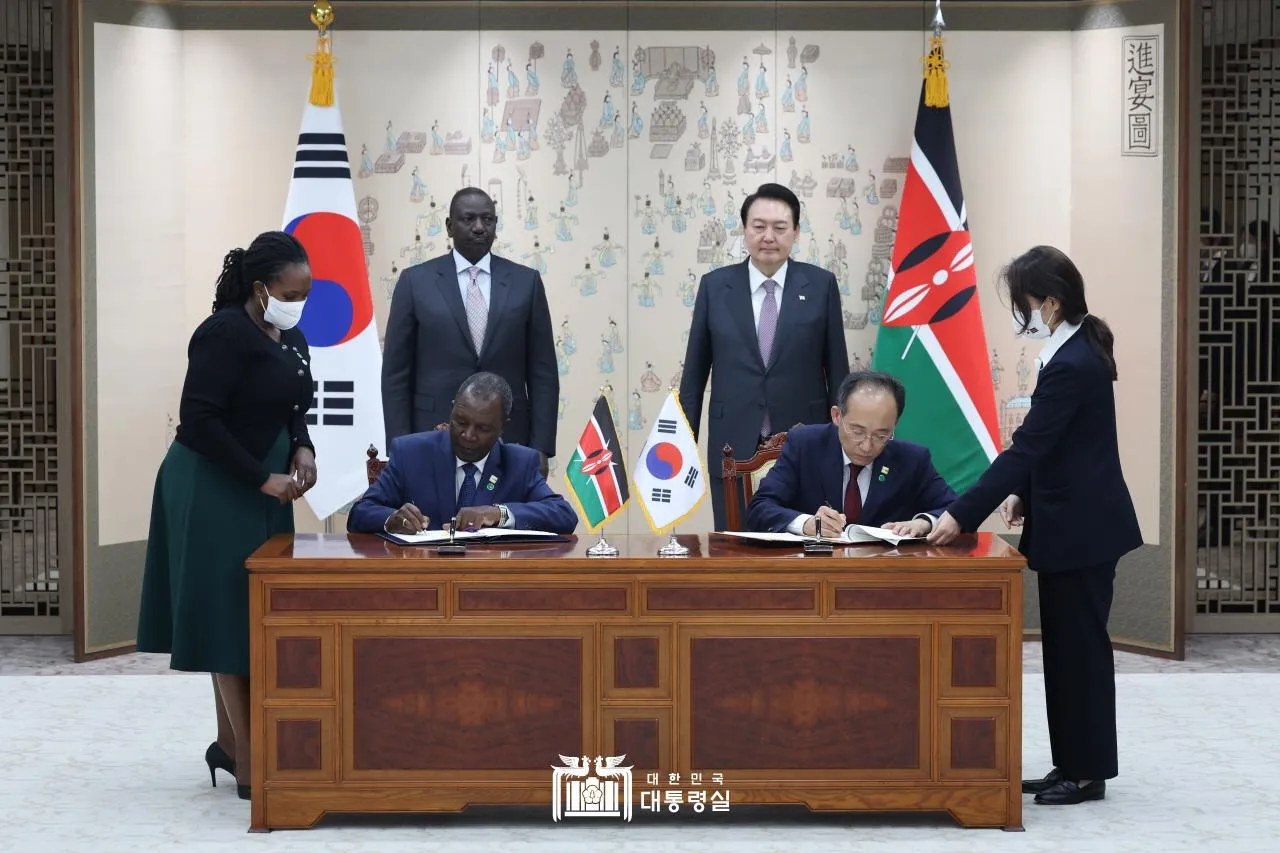
The historic agreement was signed on September 15 in Vienna, Austria, by Kenya Nuclear Power and Energy Agency (NuPEA) CEO Justus Wabuyabo and Han Gyu Joo, President of the Korea Atomic Energy Research Institute (KAERI). The ceremony took place on the sidelines of the 69th General Conference of the International Atomic Energy Agency (IAEA) and was witnessed by Prof. Abdulrazak Shaukat, Principal Secretary in the State Department for Science, Research, and Innovation.
Push boundaries, reach goals, achieve more. Whether it’s ACCA, HESI A2, ATI TEAS 7, HESI EXIT, NCLEX-RN, NCLEX-PN, or Financial Literacy, we’ve got the Online course to match your ambition. Start with Serrari Ed now.
A Strategic Partnership for Nuclear Development
NuPEA described the MoU as a “major milestone” in Kenya’s pursuit of a robust nuclear energy framework. “It serves as a testament to the country’s commitment to developing a technically sound, safe, and sustainable nuclear programme,” the agency said.
At the heart of this initiative is the Kenya Nuclear Research Reactor (KNRR) project, which NuPEA is currently implementing. The agency noted that the research reactor will be central to building local capacity in nuclear science, while also advancing Kenya’s participation in the global nuclear energy agenda.
“The KNRR is envisioned to be instrumental in advancing national priorities outlined in Kenya Vision 2030 and the Bottom-Up Economic Transformation Agenda (BETA),” NuPEA added.
Kenya’s Ambitious Nuclear Timeline
The collaboration comes at a crucial time as Kenya accelerates its nuclear energy ambitions. According to NuPEA’s proposed roadmap and strategy for nuclear power infrastructure development, the country aims to see the construction and commissioning of its first nuclear power plant by 2034, while the research reactor – KNRR – is to be commissioned by the early 2030s.
Kenya targets to commence construction of its first nuclear power plant in 2027 and eventually commission it in 2034. The country is seeking to deploy the Small Modular Reactor Technology, generating about 300MW of electricity which can be scaled up. This strategic approach aligns with global trends toward more flexible nuclear technologies that can better integrate with existing power grids in developing nations.
The Kenya Nuclear Research Reactor Project
The counties of Kilifi and Kwale have been identified as potential hosts for the power plant, while land has been set aside at the Konza Technopolis technology hub, 64 km south of Nairobi, for the research reactor. According to NuPEA, the facility, which will be set up at the Konza Technopolis where 65 acres of land have been set aside, “will be the heart of the nuclear research centre, which is envisioned to be a centre of education and training as well as technical support to the broad nuclear power programme.”
The KNRR project represents more than just a research facility. The main utilisations envisaged for the nuclear research reactors include enhancing national research and development capabilities, improving and encouraging industrial competitiveness, enhancing material structure study for various applications. The facility will serve multiple critical functions including training, education, research, healthcare, agriculture, and industrial applications.
International Recognition and Progress
Kenya’s nuclear development efforts have gained significant international recognition. Kenya has made significant progress in the development of the national nuclear infrastructure for its new research reactor programme, according to an International Atomic Energy Agency (IAEA) Integrated Nuclear Infrastructure Review for Research Reactors (INIR-RR) mission.
The Nuclear Power and Energy Agency’s (NuPEA) 2023-2027 Strategic Plan identifies six key result areas from six strategic issues: nuclear infrastructure development; stakeholder engagement and advocacy; energy research and innovation; energy capacity development; research reactor programme and institutional sustainability.
South Korea’s Nuclear Expertise
South Korea brings substantial expertise to this partnership. South Korea is among the world’s most prominent nuclear energy countries, and exports its technology widely. Today 26 reactors provide about one-third of South Korea’s electricity from 26 GWe of plant. The Korea Atomic Energy Research Institute (KAERI) has been at the forefront of nuclear research and development, with extensive experience in reactor technology and nuclear safety protocols.
KAERI has been actively expanding its international cooperation, recently signing renewed agreements with institutions like Argonne National Laboratory to expand bilateral cooperation in nuclear research and development. This track record of international collaboration demonstrates South Korea’s commitment to sharing nuclear technology for peaceful purposes.
Build the future you deserve. Get started with our top-tier Online courses: ACCA, HESI A2, ATI TEAS 7, HESI EXIT, NCLEX-RN, NCLEX-PN, and Financial Literacy. Let Serrari Ed guide your path to success. Enroll today.
Building on Previous Collaboration
The new MoU builds on earlier collaboration between NuPEA and KAERI, including a comprehensive feasibility study for the KNRR project. In preparation, NuPEA has carried out stakeholder consultations, policy and strategy formulation, economic viability assessments, and detailed site investigations.
The Nuclear Power and Energy Agency (NuPEA) hosted a Site & External Events Design (SEED) Review Mission for the Kenya Nuclear Research Reactor from 22nd – 26th January 2024 in Nairobi. This mission was conducted by a team of International Atomic Energy Agency (IAEA) and international experts to review site safety related aspects and protection of nuclear installations against external events.
Healthcare and Agricultural Applications
The nuclear research reactor will have significant implications for Kenya’s healthcare sector. Shaukat Abdulrazak, Director for the Division for Africa at the IAEA Department of Technical Cooperation, noted that the research reactor would support Kenya’s drive to achieve universal health coverage. “Kenya has plans to have at least one radiotherapy centre in every county. The research reactor will play a pivotal role in terms of production of radioisotopes,” he said.
In his opening remarks, IAEA Deputy Director General Mikhail Chudakov noted that there are more than 200 nuclear research reactors that are instrumental in material testing, production of radioisotopes for medicine and industry operating in 53 countries around the world. This global network provides Kenya with a proven framework for leveraging nuclear technology for peaceful development purposes.
Economic and Energy Security Benefits
Kenya’s nuclear programme is driven by compelling economic and energy security considerations. The Ministry of Energy estimates that power demand will rise by 20 times by 2050 amid rapid industrial development. Kenya’s current installed energy capacity, as of 2023, totals 3,321 MW, with significant contributions from geothermal (863 MW), hydroelectric power (838 MW), wind (436 MW), solar (173 MW), biomass (2 MW), and thermal energy (678 MW).
The nuclear programme aligns with Kenya’s broader clean energy goals. The MoU aims to enhance bilateral collaboration in nuclear energy deployment across various sectors, including healthcare, and is seen as a pivotal move in addressing Kenya’s growing demand for electricity and meeting its industrialisation goals.
Regional Leadership in Nuclear Energy
Kenya’s nuclear programme positions the country as a leader in Africa’s nuclear energy development. Currently, only one nuclear power station – the Koeberg plant near Cape Town in South Africa – is in operation on the whole African continent. Another is being built by Russian company Rosatom in Egypt, with the first of four reactors set to come online in 2026.
“In Africa, several countries plan to implement national nuclear research reactors programmes to improve their health care, industrial and agricultural productivity,” noted IAEA Deputy Director General Mikhail Chudakov. Kenya’s proactive approach and international partnerships position it well to become a regional hub for nuclear expertise and technology.
Beyond the South Korean Partnership
Beyond the South Korean partnership, Kenya has been building a comprehensive network of international nuclear cooperation agreements. Kenya has officially advanced its nuclear ambitions by signing a Memorandum of Understanding with the United States Nuclear Regulatory Commission (US NRC) during the 68th International Atomic Energy Agency (IAEA) General Conference in Vienna. This demonstrates the confidence international partners have in Kenya’s nuclear programme development.
The MoU was signed by the Kenya Nuclear Regulatory Authority (KNRA) and the US NRC, will leverage US expertise in nuclear safety, security, and safeguards, crucial for developing a robust regulatory framework. These multiple partnerships ensure that Kenya’s nuclear programme benefits from best practices and technologies from leading nuclear nations.
Commitment to Safety and Peaceful Use
Officials emphasized that the agreement will deepen bilateral cooperation, particularly in advancing Kenya’s nuclear power and research reactor programmes. NuPEA and KAERI also reaffirmed their commitment to the peaceful use of nuclear science and technology, underscoring the principles of transparency, accountability, and mutual benefit.
NuPEA Acting CEO Justus Wabuyabo said Kenya is implementing the nuclear research reactor project guided by the IAEA. This adherence to international standards and guidelines ensures that Kenya’s nuclear programme maintains the highest safety and security standards while contributing to national development goals.
Looking Forward
Kenya is presently at Phase 2 within the International Atomic Energy Agency (IAEA) milestone approach. The signing of this MoU with South Korea represents a significant step forward in Kenya’s nuclear journey, providing access to proven technologies and expertise while building local capacity for sustainable nuclear development.
The partnership between Kenya and South Korea demonstrates how international cooperation can accelerate peaceful nuclear technology development, ensuring that developing nations can access clean, reliable energy sources while maintaining the highest standards of safety and security. As Kenya continues to advance its nuclear programme, this collaboration with one of the world’s leading nuclear technology nations provides a solid foundation for achieving its ambitious energy and development goals by 2034.
Ready to take your career to the next level? Join our Online courses: ACCA, HESI A2, ATI TEAS 7 , HESI EXIT , NCLEX – RN and NCLEX – PN, Financial Literacy!🌟 Dive into a world of opportunities and empower yourself for success. Explore more at Serrari Ed and start your exciting journey today! ✨
Track GDP, Inflation and Central Bank rates for top African markets with Serrari’s comparator tool.
See today’s Treasury bonds and Money market funds movement across financial service providers in Kenya, using Serrari’s comparator tools.
photo source: Google
By: Montel Kamau
Serrari Financial Analyst
17th September, 2025