

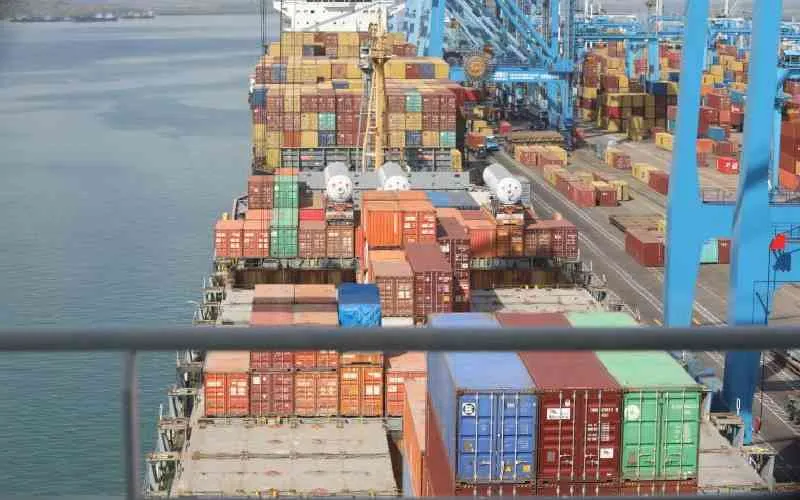
Kenya has officially joined Tanzania in eliminating the long-standing requirement for cash deposits on shipping containers, marking a transformative moment for East African trade that could significantly reduce import costs and streamline cargo operations across the region.
One decision can change your entire career. Take that step with our Online courses in ACCA, HESI A2, ATI TEAS 7, HESI EXIT, NCLEX-RN, NCLEX-PN, and Financial Literacy. Join Serrari Ed and start building your brighter future today.
Breaking Down Decades-Old Trade Barriers
This groundbreaking development comes more than nine years after the Northern Corridor Integration Project Heads of State Summit first recommended alternative methods to secure containers. The April 13, 2016 summit initially urged the abolition of cash guarantees, but implementation has taken nearly a decade to materialize.
The policy change represents a fundamental shift in how business operates at Kenya’s crucial ports of Mombasa and Lamu. With major cargo handlers now adopting container guarantee services to replace traditional cash deposits, the cost of importing goods is expected to become substantially cheaper and less bureaucratic.
Immediate Impact on Trade Operations
At least 1,000 clearing and forwarding agents registered by the Kenya Revenue Authority—who handle the majority of daily cargo operations at the Port of Mombasa—adopted the new model on Wednesday. This represents a significant portion of the logistics workforce that keeps Kenya’s import-export economy functioning.
The change provides immediate relief for small-scale traders, who previously faced the burden of paying a minimum of $500 per container as a cash deposit before goods could leave the port. This requirement often created substantial financial strain, particularly for emerging businesses and smaller enterprises trying to compete in the import market.
The Old System’s Financial Burden
Under the traditional system, containers could not leave the Port of Mombasa without substantial cash deposits designed to ensure their return in good condition. The financial requirements varied significantly based on destination and risk assessment:
- Standard containers: $500-$1,000 deposits for 20-foot and 40-foot containers respectively for cargo destined within Kenya
- Transit cargo: $1,000-$5,000 depending on risk level and destination
- High-risk regions: Up to $5,000 for destinations like South Sudan and the eastern Democratic Republic of Congo
These deposits created multiple challenges for traders. Beyond the immediate financial burden, the system often caused significant delays, especially during weekends or national holidays when banks were closed. Traders frequently had to wait until weekdays to process cash bonds, incurring expensive demurrage costs that further increased the overall cost of imports.
According to industry estimates, billions of shillings remained idle annually, with over 2 million containers passing through Mombasa requiring these minimum deposits. The World Trade Organization reported that container deposits in East Africa totaled approximately $1.5 billion, representing a massive amount of capital tied up in the system rather than being used for productive business expansion.
The New Digital Solution
The revolutionary change is being implemented through Viaservice East Africa, a company that provides comprehensive container guarantee services. Under this new arrangement, importers pay a percentage-based fee calculated on the actual value of an empty container, rather than depositing cash equivalent to the container’s full value.
Managing Director John Mathenge explained that this arrangement will advance best practices in shipping and logistics while strengthening global trade competitiveness. “The solution also strengthens container safety and provides greater security assurance across the supply chain. Our mission is to simplify and facilitate global trade through strategic partnerships and innovation,” Mathenge stated.
Industry Adoption and Support
The adoption rate has been impressive, with significant buy-in from major industry players:
- Four major shipping lines have already signed memorandums of understanding with Viaservice, including CMA CGM (the world’s second-largest shipping company) and MSC/Ocean Freight
- Over 25 percent of clearing and forwarding companies in Kenya have joined the initiative
- The Kenya Ship Agents Association (KSAA), representing 44 of the 87 registered shipping agents in the country, endorsed the program last week
This widespread industry support demonstrates confidence in the new system and suggests rapid adoption across the sector.
Build the future you deserve. Get started with our top-tier Online courses: ACCA, HESI A2, ATI TEAS 7, HESI EXIT, NCLEX-RN, NCLEX-PN, and Financial Literacy. Let Serrari Ed guide your path to success. Enroll today.
Regional Leadership and Competition
Kenya’s implementation makes it the second country in East Africa to adopt this technology, following Tanzania’s successful rollout where 75 percent of clearing and forwarding agents are already participating. Tanzania’s experience has provided valuable insights and demonstrated the system’s effectiveness in real-world conditions.
In Tanzania, six major shipping lines have embraced the new model, including MSC Tanzania, Messina, Inchcape Tanzania (Hapag Lloyd), WOSAC, ONE, and WEC Lines. This success story provided the blueprint for Kenya’s implementation and helped build confidence among Kenyan stakeholders.
Economic Implications for Small-Scale Traders
The elimination of cash deposits is particularly significant for small-scale traders who form the backbone of Kenya’s import economy. Previously, these entrepreneurs faced substantial barriers to entry due to the capital requirements for container deposits. The new system enables them to:
- Clear multiple containers simultaneously without tying up significant cash reserves
- Compete more effectively with larger enterprises that had easier access to capital
- Reduce working capital requirements, freeing up funds for inventory and business expansion
- Avoid demurrage costs associated with weekend and holiday delays
This democratization of trade access could lead to increased competition in the import market, potentially resulting in better prices for consumers and more diverse product offerings.
Operational Efficiency Gains
Beyond the financial benefits, the new system promotes several operational improvements:
- Digital innovation: The guarantee system leverages technology to streamline processes and reduce paperwork
- 24/7 availability: Unlike traditional banking systems, digital guarantees can be processed outside normal business hours
- Reduced processing time: Faster clearance procedures mean goods can reach markets more quickly
- Enhanced security: Digital tracking and guarantee systems provide better oversight of container movements
Regional Integration Benefits
This development aligns with broader East African Community (EAC) integration goals and the Northern Corridor Integration Project’s vision of seamless trade across the region. The elimination of cash deposits removes a significant non-tariff barrier that has historically complicated intra-regional trade.
KSAA Chairperson Roger Dainty emphasized the partnership’s role in enhancing efficiency and competitiveness in East African maritime logistics. “This collaboration with Viaservice is a significant step forward for Kenya and the entire East African shipping and logistics sector,” Dainty noted. “It enhances efficiency, reliability, container safety, customer satisfaction, and security assurance across the supply chain.”
Addressing Landlocked Countries’ Challenges
The new system particularly benefits landlocked countries that depend on Kenya’s ports for their trade. Countries like Uganda, Rwanda, Burundi, South Sudan, and eastern DRC have historically faced additional challenges and costs when using Mombasa as their gateway to international markets.
The elimination of cash deposits reduces one significant cost component for these nations’ trade, potentially improving their competitiveness in global markets and reducing the cost of goods for their populations.
Future Outlook and Expansion Plans
Industry officials indicate that the new system promotes digital innovation and trade financing while eliminating trade barriers and enhancing operational efficiency. The success of the Kenya and Tanzania implementations may encourage other East African countries to adopt similar systems.
The estimated annual demurrage costs in East Africa of around $3 million per year could be significantly reduced as the new system eliminates many of the delays that cause these charges. This represents additional savings that will ultimately benefit consumers through lower import costs.
Challenges and Considerations
While the new system offers significant benefits, successful implementation will require:
- Robust digital infrastructure to support the guarantee system
- Training for industry stakeholders to ensure smooth transition
- Regulatory oversight to maintain security and prevent fraud
- Continuous monitoring to address any operational issues
The experience of Tanzania and the early adoption by major industry players in Kenya suggests these challenges are manageable and that the benefits far outweigh the implementation costs.
Conclusion
Kenya’s decision to eliminate container cash deposits represents a watershed moment for East African trade. By removing this significant financial barrier, the country has positioned itself as a progressive trade hub that prioritizes efficiency and competitiveness, aligning with Kenya’s Vision 2030 development goals.
The policy change is expected to democratize access to international trade, particularly benefiting small-scale traders and businesses in landlocked countries. As the system scales up and more industry players adopt the digital guarantee model, Kenya’s ports are likely to become even more attractive to international shipping lines and regional traders.
This development underscores the importance of regional cooperation and digital innovation in addressing longstanding trade barriers. As other East African countries observe the success of Kenya and Tanzania’s implementations, the elimination of container cash deposits may become the new standard across the region, further enhancing East Africa’s position as an emerging economic powerhouse.
The successful implementation of this system could serve as a model for other developing regions facing similar trade barriers, demonstrating how digital innovation and public-private partnerships can create more inclusive and efficient trading environments.
Ready to take your career to the next level? Join our Online courses: ACCA, HESI A2, ATI TEAS 7 , HESI EXIT , NCLEX – RN and NCLEX – PN, Financial Literacy!🌟 Dive into a world of opportunities and empower yourself for success. Explore more at Serrari Ed and start your exciting journey today! ✨
Track GDP, Inflation and Central Bank rates for top African markets with Serrari’s comparator tool.
See today’s Treasury bonds and Money market funds movement across financial service providers in Kenya, using Serrari’s comparator tools.
photo source: Google
By: Montel Kamau
Serrari Financial Analyst
8th September, 2025