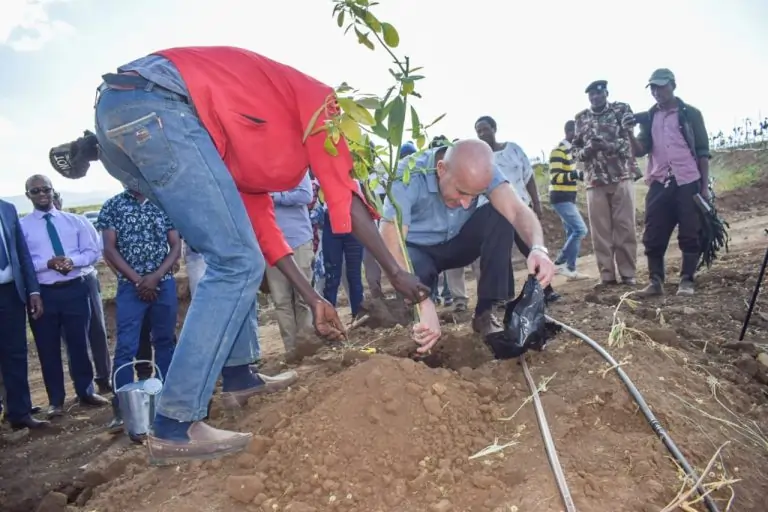
In a significant move to address global food security concerns, Kenya and Israel have announced a groundbreaking agricultural cooperation partnership aimed at boosting food production in Kenya while leveraging Israel’s advanced agricultural technologies. This strategic alliance comes at a critical time, as the ongoing war in Ukraine continues to disrupt global food supply chains, particularly affecting Israel’s food production capabilities, including crucial crops like wheat.
A New Era of Agricultural Collaboration
The agreement between Kenya and Israel is designed to not only enhance food production in Kenya but also to make Kenyan-grown agricultural produce more competitive on the global stage. By harnessing Israel’s cutting-edge agricultural technologies, Kenya aims to lower production costs and improve efficiency in farming practices, ultimately leading to increased yields and enhanced food security.
Israel, a global leader in agricultural innovation, is particularly interested in Kenya’s vast tracts of arable land. The partnership outlines a 25-year farming deal, which will see Israeli investors collaborate with Kenyan farming entities to cultivate and manage large-scale agricultural projects. This partnership is expected to transform Kenya’s agricultural landscape, introducing modern farming techniques that are sustainable and environmentally friendly.
Impact of the Ukraine War on Global Food Production
The war in Ukraine has had far-reaching consequences on global food production, with disruptions in the supply of wheat and other essential commodities. Israel, which has traditionally relied on imports to supplement its food production, has faced challenges due to these disruptions. The partnership with Kenya is seen as a strategic move to mitigate these challenges by diversifying food production sources and ensuring a stable supply of key agricultural products.
Kenya, on the other hand, stands to benefit immensely from this collaboration. The country has been grappling with food insecurity issues, exacerbated by climate change, inconsistent rainfall, and a lack of modern farming infrastructure. By partnering with Israel, Kenya aims to address these challenges head-on, using Israeli expertise to boost productivity and make better use of its agricultural resources.
Private Sector Involvement and Government Support
One of the unique aspects of this partnership is its emphasis on private-to-private arrangements, supported and facilitated by the governments of both countries. Prime Cabinet Secretary Musalia Mudavadi emphasized that the Kenyan government is committed to creating a conducive environment for Israeli investors, ensuring that all necessary logistics and regulatory frameworks are in place.
“This is a private-to-private arrangement which will only be guaranteed by the two governments through giving necessary logistics and a conducive environment,” Mr. Mudavadi stated during a video conference with Israeli Agriculture Minister Avi Dichter.
Israeli investors have shown a keen interest in forming partnerships with Kenyan farming entities, particularly those involved in wheat production. These investors are not only bringing financial resources but also advanced technologies that will help Kenya achieve higher food production levels with minimal use of water and soil resources. This focus on sustainability is crucial for Kenya, where water scarcity and soil degradation are significant challenges.
The Role of Technology in Modern Agriculture
Israel’s reputation as a leader in precision agriculture is well established. The country has developed a range of technologies that can significantly boost agricultural productivity, including the use of drones, sensors, and advanced farm management software. These technologies allow for more efficient use of resources, better monitoring of crop health, and improved decision-making processes for farmers.
“The private sector investors will be allowed to invest billions in thousands of hectares and export the produce through a private arrangement in a possible 25-year deal,” stated the Kenyan Ministry of Foreign Affairs.
Precision agriculture is particularly relevant for Kenya, where the agricultural sector contributes over 33 percent of the gross domestic product (GDP), employs 40 percent of the population, and accounts for 65 percent of the country’s export earnings. By adopting these advanced technologies, Kenyan farmers can increase their yields, reduce waste, and make their products more competitive internationally.
Economic and Social Benefits for Kenya
The partnership is expected to bring significant economic and social benefits to Kenya. One of the most immediate impacts will be job creation. With the influx of Israeli investment, thousands of jobs are expected to be generated across the agricultural value chain, from farm labor to logistics, processing, and export.
“The biggest catch for Kenyans is the thousands of jobs that would be created by the private sector once the Israeli investors come in. Kenya will also leverage on modern technologies to transform from being an importer to a net exporter,” added Mr. Mudavadi.
Moreover, the partnership is poised to revitalize Kenya’s agricultural sector, making it a cornerstone of the country’s economic growth. By increasing food production and improving the quality of agricultural products, Kenya can reduce its reliance on food imports, which currently strains the national budget. The move towards self-sufficiency in food production will also help stabilize food prices, benefiting consumers and contributing to overall economic stability.
Environmental Sustainability and Climate Resilience
Another critical aspect of the Kenya-Israel agricultural partnership is its focus on environmental sustainability. The collaboration will introduce farming practices that are not only efficient but also environmentally friendly. Israel’s expertise in water management, particularly in arid and semi-arid regions, will be instrumental in helping Kenya manage its water resources more effectively.
Minister Avi Dichter highlighted that Israeli technology could enable Kenya to achieve high levels of food production with minimal use of water and soil resources. This is particularly important for Kenya, where climate change has led to increasingly erratic weather patterns, affecting crop yields and food security.
The partnership will also promote the use of sustainable farming practices, such as crop rotation, organic farming, and the integration of agroforestry, which can help improve soil health and increase biodiversity. By adopting these practices, Kenya can build a more resilient agricultural sector that can withstand the challenges posed by climate change.
Geopolitical Implications and Regional Cooperation
The Kenya-Israel agricultural partnership also has significant geopolitical implications. It reflects a broader trend of increasing cooperation between African nations and Israel, particularly in areas of technology transfer and economic development. This partnership is likely to strengthen diplomatic ties between the two countries and could pave the way for further collaboration in other sectors, such as technology, security, and trade.
Moreover, the success of this partnership could serve as a model for other African countries looking to boost their agricultural productivity and achieve food security. By demonstrating the benefits of leveraging modern technology and international partnerships, Kenya and Israel could inspire similar collaborations across the continent.
Challenges and Considerations
While the Kenya-Israel agricultural partnership holds great promise, it is not without challenges. One of the primary concerns is ensuring that the benefits of the partnership are equitably distributed among all stakeholders, particularly smallholder farmers. There is a risk that large-scale commercial farming operations could marginalize these farmers, leading to social and economic inequalities.
To address this, the Kenyan government must ensure that the partnership includes provisions for supporting smallholder farmers, such as access to credit, training, and technology. By empowering these farmers, Kenya can ensure that the benefits of increased food production are shared widely and contribute to broader economic development.
Additionally, the success of the partnership will depend on the effective implementation of the agreed-upon projects. This will require strong coordination between the Kenyan and Israeli governments, as well as active participation from the private sector. Transparent governance and accountability mechanisms will be crucial to ensuring that the partnership delivers on its promises.
Conclusion
The Kenya-Israel agricultural partnership represents a bold and forward-thinking approach to addressing the challenges of food security in a rapidly changing world. By combining Kenya’s vast agricultural potential with Israel’s technological expertise, the two countries are poised to make significant strides in boosting food production, creating jobs, and promoting sustainable development.
As the world grapples with the ongoing effects of the Ukraine war and the broader impacts of climate change, such partnerships are essential for building resilient and self-sufficient food systems. For Kenya, this collaboration offers a pathway to not only achieve food security but also to position itself as a key player in the global agricultural market.
The success of this partnership will depend on the commitment of both governments and the active involvement of the private sector. If implemented effectively, it could serve as a model for other countries facing similar challenges, demonstrating the power of international cooperation in solving some of the most pressing issues of our time.
photo source: Google
By: Montel Kamau
Serrari Financial Analyst
29th August, 2024