The Japanese government announced Wednesday that it will permanently close all six of its economic centers in Russia, ending a 31-year program designed to foster business relations and support market reforms in the post-Soviet era, as bilateral relations deteriorate to their lowest point since World War II following Russia’s invasion of Ukraine.
Push boundaries, reach goals, achieve more. Whether it’s ACCA, HESI A2, ATI TEAS 7, HESI EXIT, NCLEX-RN, NCLEX-PN, or Financial Literacy, we’ve got the Online course to match your ambition. Start with Serrari Ed now.
End of an Era: Three Decades of Economic Cooperation
“Amid major changes in the situation around Japan-Russia relations, the Japan Centers have fulfilled their historic roles,” Chief Cabinet Secretary Yoshimasa Hayashi told a press conference Wednesday, marking the formal conclusion of one of the most significant bilateral economic cooperation initiatives between the two nations.
The Japan Centers, established starting in 1994 in Khabarovsk, Vladivostok, Yuzhno-Sakhalinsk, Moscow, St. Petersburg and Nizhny Novgorod, were created to train personnel involved in economic ties between the two countries and support Russia’s transition to a market economy. The state-backed facilities offered management and business training to Russian executives and entrepreneurs, along with Japanese language courses and cultural programs.
Russia’s unilateral suspension of the memorandum of understanding on the Japan Centers in January 2025 provided another compelling reason for their closure, Hayashi explained. The decision represents the final severance of institutional economic ties that had persisted even through previous periods of tension between the two nations.
Escalating Pressures and Russian Interference
The closure decision was accelerated by increasing Russian pressure on the facilities. The Japan Center in the Russian Far Eastern city of Vladivostok underwent intensive on-the-spot inspections by the Russian Internal Affairs Ministry on July 30 and August 26, Hayashi disclosed, indicating growing Russian government hostility toward Japanese operations.
In January 2025, Russian Prime Minister Mikhail Mishustin had already ordered the closure of the centers, effectively forcing Tokyo’s hand in making the formal announcement. The Russian government’s action came as part of a broader crackdown on foreign institutions and cultural organizations operating within Russian territory.
The decision to close the Japan Centers was communicated to the Russian side through diplomatic channels on August 27, according to the Japanese Foreign Ministry, representing the formal end of diplomatic cooperation on the economic development front.
Historical Context: From Post-Cold War Cooperation to Current Crisis
The Japan Centers represented a significant investment in Russia’s post-Soviet transformation, formalized through intergovernmental agreements signed in 2000 and 2003. The program was part of Japan’s broader strategy to support Russia’s integration into the global market economy while building economic relationships that could potentially lead to resolution of long-standing territorial disputes.
For three decades, the centers served as crucial bridges between Japanese and Russian business communities, offering training programs, language instruction, and cultural exchange opportunities. They became symbols of Japan’s commitment to engaging Russia constructively, even during periods of political tension.
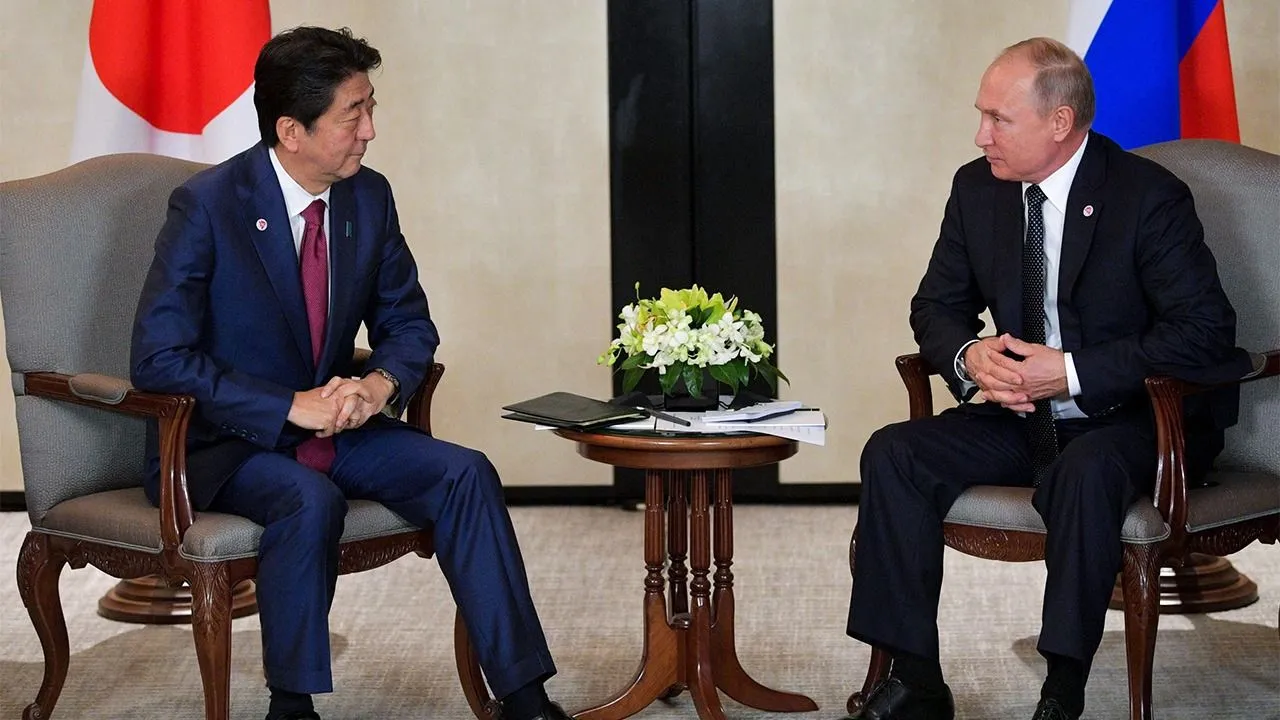
The closure marks a dramatic reversal from the height of Japan-Russia cooperation under former Prime Minister Shinzo Abe, who made improving relations with Russia a cornerstone of his foreign policy. Abe met with President Vladimir Putin over 25 times and even offered economic and territorial concessions in pursuit of a peace treaty and territorial resolution.
Unprecedented Sanctions Regime and Economic Severance
Japan’s decision reflects its broader alignment with Western sanctions against Russia following the February 2022 invasion of Ukraine. Unlike its restrained response to Russia’s 2014 annexation of Crimea, Japan moved swiftly to implement comprehensive sanctions following the full-scale invasion.
The sanctions regime has included financial restrictions on Russian banks, asset freezes targeting individuals and entities, trade restrictions, and export bans on military-related equipment. Most recently, in January 2025, Japan imposed sanctions on 11 individuals and 29 entities from Russia, along with restrictions on three Russian banks and one Georgian bank.
Japanese companies have felt the immediate impact of these measures, with 55.9 percent experiencing negative effects from Western sanctions. The number of Japanese firms entering the Russian market dropped sharply from 14 to just two in 2015, and business sentiment has remained pessimistic about expansion opportunities in Russia.
Strategic Calculations: China Factor and Regional Security
Japan’s tough stance on Russia stems significantly from concerns about implications for China and regional security in East Asia. Tokyo fears that a successful Russian territorial conquest in Ukraine could embolden Chinese ambitions regarding Taiwan and disputed territories in the East China Sea.
“Japan’s tough response to the invasion of Ukraine is designed to prevent Moscow from achieving a victory that could embolden Beijing, and also to signal to China that any aggression against Taiwan will be similarly punished by the international community,” according to analysis from the Carnegie Endowment for International Peace.
This represents a fundamental shift from earlier Japanese strategic thinking, which sought to improve relations with Russia as a way to prevent Moscow from forming a united front with Beijing against Japanese interests. The Ukraine war has effectively ended this balancing strategy, pushing Russia firmly into China’s orbit.
Build the future you deserve. Get started with our top-tier Online courses: ACCA, HESI A2, ATI TEAS 7, HESI EXIT, NCLEX-RN, NCLEX-PN, and Financial Literacy. Let Serrari Ed guide your path to success. Enroll today.
Territorial Disputes and Peace Treaty Prospects
The closure of the economic centers coincides with the complete breakdown of peace treaty negotiations between Japan and Russia. The two countries have never signed a formal peace treaty ending World War II hostilities, primarily due to disagreements over the Southern Kuril Islands, known in Japan as the Northern Territories.
In March 2022, Russia suspended peace treaty talks with Japan, citing Tokyo’s “unfriendly” sanctions. Japan’s Ministry of Foreign Affairs responded by describing the four disputed islands as “illegally occupied by Russia” in its 2022 Diplomatic Bluebook, using language not seen since 2003 and effectively abandoning diplomatic language designed to avoid antagonizing Moscow.
The territorial dispute, which has persisted for nearly eight decades, now appears more intractable than ever, with zero prospect for resolution under current circumstances. Russia’s addition of a “prohibition of territorial cession” clause to its revised constitution in July 2020 has further complicated any potential future negotiations.
Economic Impact and Business Relations Collapse
The breakdown in political relations has devastated economic ties between the two nations. Japan had been actively investing in Russia’s Far East region, with Japanese companies participating in energy cooperation projects and exploring equity stakes in Russian energy companies, including sanctioned entities like Novatek and Gazprom.
However, economic cooperation has largely collapsed as Japanese companies have withdrawn from Russian projects to avoid running afoul of international sanctions. Major Japanese corporations have suspended operations, cancelled investments, and terminated business relationships with Russian partners.
The impact extends beyond bilateral trade to broader regional economic integration. Japan had viewed economic engagement with Russia as part of its strategy to diversify energy sources and reduce dependence on Middle Eastern oil and gas, while also creating economic incentives for Russian cooperation on regional security issues.
Security Implications and Regional Dynamics
The deterioration in Japan-Russia relations has significant implications for regional security architecture in Northeast Asia. Japan’s alignment with Western sanctions represents its most proactive foreign policy stance in decades and demonstrates its commitment to upholding the international order.
Tokyo has pledged over $12 billion in support for Ukraine, including humanitarian supplies, military equipment, and financial assistance. Japan has also bypassed domestic restrictions on arms exports by sending Patriot missiles to the United States, enabling continued American military support for Ukraine.
The crisis has also deepened Japan’s security cooperation with NATO and European partners, with Japanese Prime Minister Fumio Kishida participating in NATO summits and NATO Secretary General Jens Stoltenberg describing Japan as NATO’s closest ally in Asia.
North Korea Complications and Regional Instability
Russia’s growing military cooperation with North Korea has created additional security concerns for Japan. The mutual defense pact between Russia and North Korea represents a significant escalation in regional tensions, particularly given North Korea’s nuclear capabilities and history of missile tests over Japanese territory.
North Korea has long been viewed as Japan’s primary security threat, with the Kim regime periodically threatening Japan with nuclear annihilation and conducting missile tests that trigger alarms across Japanese territories. Russian military support for North Korea’s weapons programs would represent a direct threat to Japanese security interests.
The Russia-North Korea partnership also complicates regional diplomacy, as it reduces China’s influence over North Korea while potentially destabilizing the balance of power in Northeast Asia. This development underscores Japan’s concerns about the consequences of Russian international isolation driving Moscow toward closer cooperation with other authoritarian regimes.
Broader Implications for International Economic Relations
The closure of Japan’s economic centers in Russia reflects broader trends in the fragmentation of international economic relationships along geopolitical lines. The end of the 31-year program represents the abandonment of the post-Cold War optimism that economic integration could overcome political differences and territorial disputes.
Japan’s experience with Russia serves as a cautionary tale about the limits of economic engagement as a tool for political influence. Despite decades of investment and cooperation, economic ties proved insufficient to prevent territorial aggression or maintain diplomatic dialogue when fundamental security interests came into conflict.
The decision also highlights the challenges facing multinational corporations and international organizations operating in authoritarian environments, where political calculations can quickly override commercial relationships and institutional agreements.
Future Prospects and Policy Implications
The closure of the Japan Centers likely represents a permanent shift in Japan-Russia relations, with little prospect for renewal of cooperation in the foreseeable future. The institutional infrastructure for economic cooperation has been dismantled, and the political foundation for rebuilding relationships has been severely damaged.
Japan’s foreign policy has evolved toward a more assertive stance on international law and territorial integrity, aligning Tokyo more closely with Western partners while maintaining its focus on China as the primary long-term strategic challenge. This represents a significant departure from Japan’s historical reluctance to take strong positions on international conflicts outside of its immediate region.
For Russia, the loss of Japanese economic cooperation represents another step in its increasing isolation from developed economies and growing dependence on partnerships with China, North Korea, and other authoritarian states. This isolation may ultimately weaken Russia’s position in Asia and reduce its options for balancing between different regional powers.
The end of the Japan Centers also symbolizes the broader failure of economic integration to prevent conflict and territorial aggression in the contemporary international system. As geopolitical competition intensifies, economic relationships increasingly become subordinated to security considerations and alliance politics.
Ready to take your career to the next level? Join our Online courses: ACCA, HESI A2, ATI TEAS 7 , HESI EXIT , NCLEX – RN and NCLEX – PN, Financial Literacy!🌟 Dive into a world of opportunities and empower yourself for success. Explore more at Serrari Ed and start your exciting journey today! ✨
Track GDP, Inflation and Central Bank rates for top African markets with Serrari’s comparator tool.
See today’s Treasury bonds and Money market funds movement across financial service providers in Kenya, using Serrari’s comparator tools.
photo source: Google
By: Montel Kamau
Serrari Financial Analyst
11th September, 2025