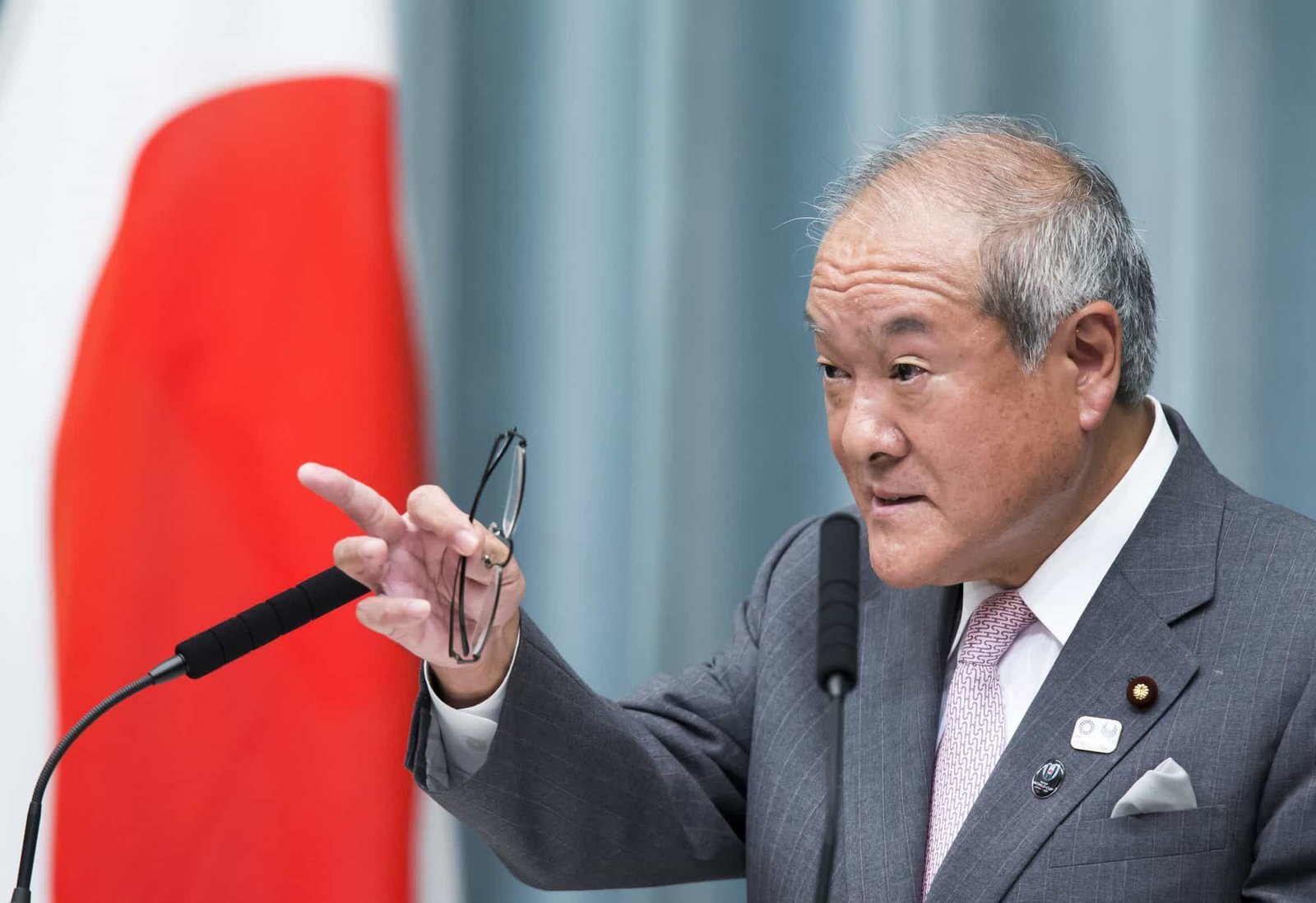
In Tokyo, Japanese Finance Minister Shunichi Suzuki affirmed the government’s willingness to tackle the issue of the weakening yen. Speaking on Tuesday, Suzuki highlighted the importance of maintaining stability in the currency market while acknowledging the dual impacts of a weak yen on the economy.
Suzuki emphasized that while a weak yen could offer benefits, such as boosting exports, excessive volatility could introduce uncertainty for businesses, potentially hindering economic stability. This stance reflects Tokyo’s focus on the steadiness of market movements rather than specific currency levels.
During the early trading hours on Tuesday, the dollar experienced a slight retreat against the yen, facing notable resistance near the 152 level, amidst concerns of potential intervention by Japanese authorities. Since the beginning of the year, the greenback has appreciated by approximately 7% against the yen.
Suzuki refrained from commenting directly on the possibility of Tokyo intervening in the currency market. However, he indicated that the speed of currency fluctuations would be a factor in any decision to enter the market.
Japan’s last intervention in the currency market occurred in September and October 2022 when the government moved to halt the yen’s decline, initially at around 145 yen to the dollar, followed by another intervention in October as the U.S. currency surged to a 32-year high near the 152 yen mark.
Suzuki’s remarks underscore Japan’s commitment to maintaining stability in the currency market, signaling a cautious approach amidst evolving economic conditions. As global markets closely monitor developments in the yen-dollar exchange rate, Japan remains poised to respond appropriately to ensure economic stability.
photo source: Google
By: Montel Kamau
Serrari Financial Analyst
26th March, 2024