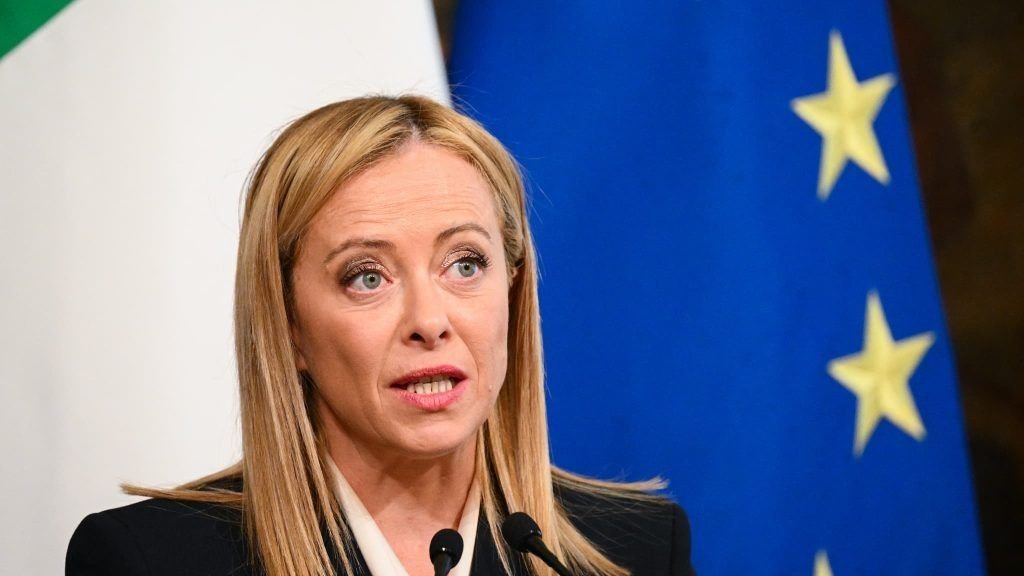
In a stunning move that has reverberated throughout the European banking landscape, Italy has unleashed a surprise windfall tax, setting the financial world abuzz. This tax, amounting to a hefty 40% on profits derived from higher interest rates, has sent shockwaves through the banking sector. The Italian government, under the leadership of Prime Minister Giorgia Meloni, has taken a resolute stance, accusing banks of not adequately rewarding depositors in the face of record-breaking official interest rates.
As banks across Europe reaped substantial gains due to soaring interest rates, Italy’s government felt compelled to intervene, leveling the playing field and demanding a fairer distribution of the windfall. This groundbreaking decision comes on the heels of similar actions by Spain and Hungary, raising speculation about the potential for other nations to follow suit.
The timing of the tax’s implementation surprised many, as earlier in the year, the government had seemingly cooled on the idea. However, robust first-half earnings from the banking sector reignited discussions, propelling the proposal back to the forefront. The government swiftly acted on the eve of the summer political hiatus, signaling its determination to address the issue head-on.
The heart of the issue lies in the discrepancy between how Italian banks have passed on a mere 12% of interest rate increases to depositors compared to the more substantial 22% seen across the eurozone. Deputy Prime Minister Matteo Salvini emphasized the staggering magnitude of bank profits during a press conference, asserting that the windfall tax seeks to redress the imbalance between banks’ gains and depositors’ returns.
The repercussions of Italy’s move were felt across financial markets, with the country’s banking share index plummeting by 7.3%. Major institutions like Intesa Sanpaolo and UniCredit experienced substantial declines of 8.6% and 5.8%, respectively, which in turn dragged down the broader European index by 3.7%.
Analysts are grappling with the potential impact of the windfall tax, as Citi analysts estimate it could erode up to 12% of Italian banks’ 2023 earnings. Meanwhile, Bank of America’s projections for government proceeds range between 2-3 billion euros, with Treasury sources indicating expectations below 3 billion euros. This aligns with a similar windfall tax imposed on energy companies earlier in the year.
This extraordinary tax will exclusively apply to the fiscal year 2023, requiring banks to settle the levy by June 30, 2024. Focusing on the net interest margin (NIM), the tax encompasses 40% of the NIM earned in either 2022 or 2023, targeting increments exceeding predetermined thresholds of 5% for 2022 and 10% for 2023.
The Italian government’s decision to channel tax revenue toward supporting struggling mortgage holders underscores its commitment to fostering economic stability and mitigating financial hardships for its citizens.
As Italy boldly navigates this uncharted territory, the banking sector grapples with the potential far-reaching effects of the tax. The move underscores Italy’s proactive approach to promoting financial equity and may set a precedent for future regulatory actions across Europe.
By: Montel Kamau
Serrari Financial Analyst
9th August, 2023
photo source Google