
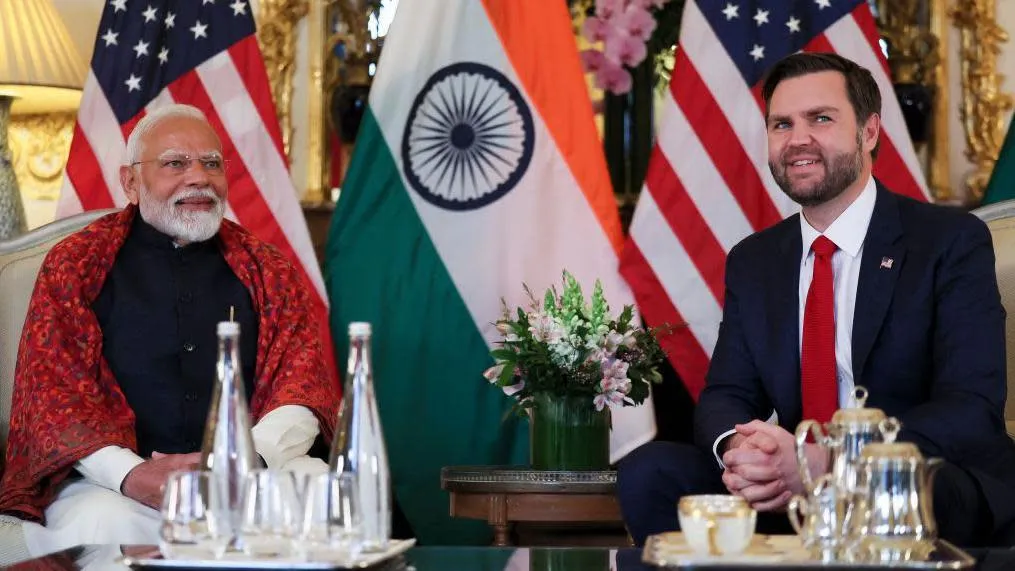
India has tabled a sweeping proposal to reduce its average tariff differential with the United States from nearly 13% to under 4%, in exchange for an exemption from existing and potential new U.S. tariffs. The move comes as New Delhi races to clinch a landmark trade agreement before President Donald Trump’s 90-day tariff suspension lapses, setting the stage for one of the most consequential economic pacts of 2025.
A high-stakes balancing act
Bilateral trade between the world’s two largest democracies reached roughly US $129 billion in 2024, with India running a surplus of $45.7 billion on goods alone Reuters. Trump’s administration had planned reciprocal tariffs on all trading partners, including a proposed 26% levy on Indian goods, but delayed implementation for 90 days while negotiating “breakthrough” deals first with Britain and now with India and Japan Reuters.
Against this backdrop, New Delhi’s negotiators are offering to eliminate duties on 60% of tariff lines in a first-phase deal, effectively erasing 9 percentage points of the unweighted tariff gap in one fell swoop Forexlive. By contrast, U.S. tariffs on imports from India remain at a 10% base rate under the suspension, threatening to rise again once talks conclude.
Delving into India’s offer
Under the current Indian tariff schedule, duties range widely—from zero for certain raw materials to over 100% on luxury and “sin” goods—and average out at about 13% when measured across all product lines without trade-volume weighting. By slashing that to sub-4%, India would bring down barriers on everything from machinery and chemicals to select consumer items.
Key features of the proposal include:
- Zero duties on the majority of U.S. exports: India would remove tariffs entirely on more than 60% of U.S. goods, covering sectors such as aerospace components, telecommunications equipment, medical devices and electric vehicles.
- Preferential treatment for strategic exports: New Delhi seeks guaranteed, lower-duty access for Indian gems and jewellery, leather, textiles, pharmaceuticals, oilseeds, shrimp and horticultural produce—categories that employ millions and underpin rural livelihoods Reuters.
- Long-term “most-favoured-nation” clause: In an unprecedented concession, India is willing to extend to the U.S. any future tariff cuts it grants to other partners, ensuring Washington benefits from deeper liberalization down the road Reuters.
For Indian exporters, the proposal offers a pathway to mitigate volatility. Yet it comes at a steep price: the average tariff gap would fall by roughly two-thirds, altering domestic price structures and exposing nascent industries to stiffer U.S. competition.
What does India want in return?
India’s chief demand is immunity from Trump’s threatened tariffs—both the 10% base rate in force during the suspension and any sharp hikes targeting “current and potential” trading partners. But negotiators have also pressed for:
- Regulatory equivalence in cutting-edge sectors: Equal footing with U.S. allies like Britain, Australia and Japan in areas such as artificial intelligence, biotech, telecom equipment and semiconductors. This could unlock joint research, technology transfers and relaxed export controls on dual-use goods.
- Streamlined market access: Faster, more transparent customs procedures and mutual recognition of standards for agricultural produce, dairy and seafood—sectors where India seeks to expand exports.
- Strengthened dispute-settlement mechanisms: A bilateral framework to resolve trade irritants swiftly, bypassing delays in multilateral forums.
According to insiders, India’s willingness to tackle its own tariff walls underscores a broader strategic shift: to embed its economy more deeply in global value chains and reduce reliance on China as both a market and sourcing hub Forexlive.
U.S. perspectives and political dynamics
For Washington, a deal with India promises to ease a chronic trade deficit and strengthen ties with a key strategic partner amid rising competition from China. Industry lobbies—from automotive to pharmaceuticals—have urged the administration to secure tariff cuts that match global peers’ access to the U.S. market.
Yet political obstacles loom. Trump’s “America First” base decries any deal perceived as ceding U.S. leverage on tariffs, while some lawmakers demand rigorous labour and environmental standards be woven into the pact. The Senate Finance Committee has signalled it will scrutinize whether reduced duties on luxury goods and agricultural imports serve American workers and farmers.
Economic advisers close to the White House have diverging views: some argue that lower barriers will spur U.S. exports worth tens of billions annually, while others warn that insufficient safeguards could hollow out domestic manufacturing Reuters. Ultimately, Trump’s calculation will hinge on whether the headline of a “record-breaking” trade deal outweighs potential domestic backlash.
Sectoral winners and losers
Aerospace and defence: India’s offer to zero out tariffs on aircraft parts and complete aircraft could bolster U.S. exporters like Boeing and Lockheed Martin, albeit at the cost of local assembly jobs unless counterbalanced by joint ventures.
Automotive: Luxury carmakers—from Tesla to BMW—stand to gain from cheaper access, while India’s fledgling electric-vehicle sector may face stiffer competition on home turf unless safeguarded by local content incentives.
Agriculture: American soybeans, pulses and horticultural products would see lower duties, benefiting U.S. farmers but potentially undercutting Indian producers unless tariff-rate quotas are maintained.
Pharmaceuticals and chemicals: Indian generics manufacturers seek reduced barriers for bulk drug intermediates, while U.S. firms look for faster approvals of cutting-edge therapies. The pact could accelerate market entry but requires robust data-protection clauses.
Based on trade-value weighting, sectors such as telecom equipment and medical devices could experience the most pronounced tariff cuts, reshaping competitive dynamics across multiple value chains.
Beyond tariffs: addressing internal bottlenecks
While headline cuts grab attention, India also grapples with domestic impediments that can be as damaging as external duties. Internal logistics inefficiencies—stemming from fragmented state regulations, poor road and rail connectivity and cumbersome licensing—are estimated to shave off nearly 14% of India’s GDP Financial Times. If unaddressed, these barriers could blunt the impact of any U.S. tariff concessions by slowing goods movement and raising costs.
Reforms under India’s Goods and Services Tax (GST) have helped, but experts say more is needed: streamlined inter-state permits, unified electronic-way billing systems and expanded cold-chain infrastructure for perishables. In parallel, digitizing customs clearances and harmonizing standards with the U.S. could ensure that lower tariffs translate into real-world trade flows.
Negotiation timeline and key milestones
India’s trade ministry has fast-tracked talks since early April. A delegation is expected in Washington later this month, potentially led by Commerce Minister Piyush Goyal, to hammer out text on tariff schedules and accompanying regulatory chapters. Observers note:
- April 2025: Initial “terms of reference” agreed, mapping out 24 product categories for immediate liberalization Reuters.
- May 2025: Detailed tariff-line negotiations scheduled, aiming to finalize scope before the 90-day tariff suspension ends.
- June 2025: Draft legal text to be reviewed by legal teams in both capitals.
- July 2025: Final political sign-off, ideally before the U.S. reimposes higher tariffs.
Delays risk resurrecting Trump’s planned 26% tariff on Indian imports, heightening urgency on both sides to deliver a framework agreement swiftly.
Economic and geopolitical ramifications
A U.S.-India trade deal of this magnitude carries implications beyond tariffs:
- Supply-chain diversification: American firms have accelerated shifts out of China, with India as a prime alternative for manufacturing and sourcing. A stable, low-tariff environment would amplify this “China+1” strategy, potentially boosting investment in Indian electronics, textiles and pharmaceuticals.
- Strategic partnership: Beyond economics, a pact cements India’s role in Washington’s Indo-Pacific strategy, countering China’s influence and enhancing collaboration in critical technology domains such as 5G, AI and semiconductors.
- Global trade norms: By embedding forward most-favoured-nation clauses, India signals readiness to lock in “WTO-plus” commitments, potentially setting a new benchmark for bilateral pacts and prompting other nations to offer similar terms to maintain competitiveness.
However, critics caution that over-generous concessions could expose India’s domestic industries to sudden shocks, while U.S. producers of certain goods may still face competition from lower-cost third-country suppliers.
Humanizing the deal: voices from the ground
A Mumbai exporter of garments describes the offer as “a lifeline.” With U.S. buyers demanding ever-lower prices, the prospect of zero tariffs on select textile inputs could trim costs by up to 8%, according to industry surveys. “This helps us compete, but we need clarity on rules of origin and paperwork,” she adds.
A farmer in Iowa welcomes greater market access for soybeans and pulses but urges parity in sanitary and phytosanitary standards to avoid non-tariff hurdles. “Tariffs matter, but if shipments sit at the port for weeks, we still lose out,” he notes.
A small Indian software startup sees regulatory equivalence as the real prize. “Access to U.S. artificial-intelligence funding and talent exchanges could transform our R&D capabilities,” says its co-founder. Yet she stresses that data-localization rules must be eased to enable cross-border cloud deployment.
The road ahead: opportunities and risks
India’s bold tariff-cut offer represents a calculated gamble. If successful, it secures tariff immunity, expands market access, deepens economic ties and propels India further into global supply chains. But the price—steep dilution of protective duties—carries short-term pain and exposes policymakers to domestic political scrutiny.
For U.S. negotiators, the challenge is to craft deal language that balances tariff relief with safeguards on labour, environment and national security. Ensuring robust dispute-settlement procedures and sunset clauses may prove critical to sustaining bipartisan support.
As both sides sprint toward a July deadline, the deal’s final contours will reveal how far India is willing to liberalize and how firmly the U.S. holds to its “America First” rhetoric. One thing is clear: in an era of fractured trade alliances, a U.S.-India agreement of this scale would stand out as a historic win—if, and only if, negotiators can thread the needle between ambition and pragmatism.
Ready to take your career to the next level? Join our dynamic courses: ACCA, HESI A2, ATI TEAS 7 , HESI EXIT , NCLEX – RN and NCLEX – PN, Financial Literacy!🌟 Dive into a world of opportunities and empower yourself for success. Explore more at Serrari Ed and start your exciting journey today! ✨
Photo source: Google
By: Montel Kamau
Serrari Financial Analyst
12th May, 2025