
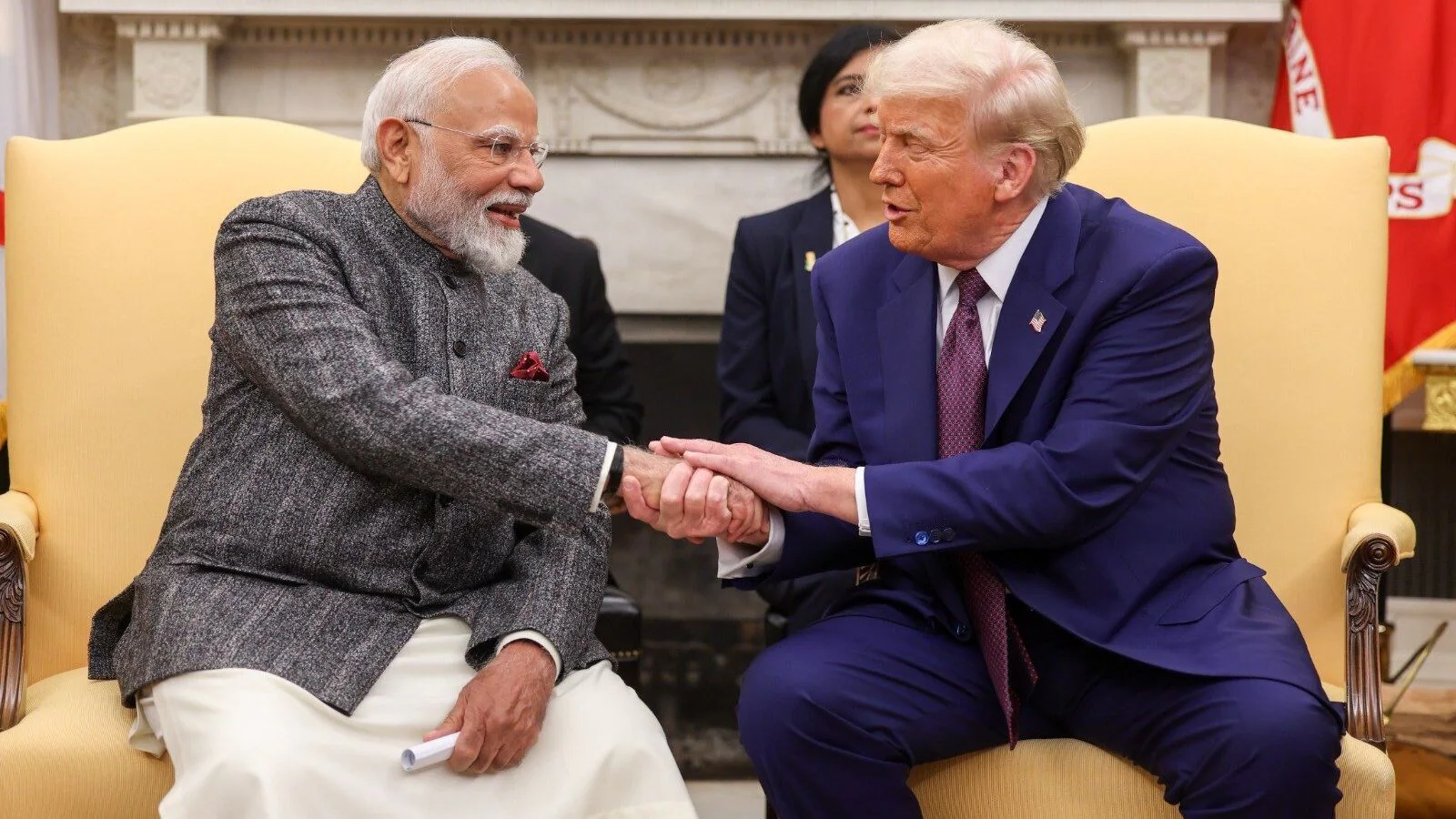
In a significant development for international trade relations, India and the United States have agreed to initiate discussions aimed at resolving longstanding trade and tariff disputes. This decision emerged from a high-profile meeting between U.S. President Donald Trump and Indian Prime Minister Narendra Modi at the White House on February 13, 2025. The leaders expressed optimism about finalizing an initial trade agreement within the next seven months, signaling a potential thaw in economic tensions between the two nations.
Background of Trade Disputes
The trade relationship between India and the United States has been characterized by both collaboration and contention. Historically, the U.S. has expressed concerns over India’s high tariff rates, which have been perceived as barriers to American goods entering the Indian market. For instance, the U.S. has a trade-weighted average tariff rate of approximately 2.2%, while India’s stands at around 12%, according to data from the World Trade Organization. This disparity has been a focal point in trade discussions, with the U.S. advocating for more equitable market access.
In response to U.S. tariffs on steel and aluminum imposed under Section 232 of the Trade Expansion Act, India had levied retaliatory tariffs on a range of American products, including agricultural goods like almonds, walnuts, and apples. These measures further strained trade relations, leading to multiple disputes being filed at the World Trade Organization (WTO) by both nations.
Recent Developments
During the recent meeting, both leaders acknowledged the need to address these challenges constructively. President Trump highlighted India’s recent steps to reduce tariffs on select U.S. products and emphasized the importance of reciprocal trade practices. He stated, “Prime Minister Modi recently announced the reductions to India’s unfair, very strong tariffs that limit us access to the Indian market, very strongly. And really it’s a big problem I must say.”
Prime Minister Modi, in turn, expressed India’s commitment to protecting its national interests while engaging in fair trade practices. He remarked, “One thing that I deeply appreciate, and I learn from President Trump, is that he keeps the national interest supreme. Like him, I also keep the national interest of India at the top of everything else.”
Path Forward
India’s Foreign Secretary, Vikram Misri, indicated that a preliminary trade agreement could be reached by the fall of 2025. He noted that while both nations have their perspectives on tariffs, the establishment of a framework for dialogue is a positive development. Misri stated, “Recognizing that this level of ambition would require new, fair-trade terms, the leaders announced plans to negotiate the first tranche of a mutually beneficial, multi-sector Bilateral Trade Agreement (BTA) by fall of 2025.”
The joint statement released after the meeting underscored the commitment to resolving trade disputes and enhancing economic cooperation. It highlighted India’s willingness to increase imports of U.S. agricultural products and the U.S.’s support for India’s aspirations in the global economy.
Defense and Energy Cooperation
Beyond trade, the discussions encompassed defense and energy cooperation, signaling a broadening of the bilateral relationship. President Trump announced plans to enhance military sales to India, including the eventual provision of F-35 fighter jets. He stated, “We’re also paving the way to ultimately provide India with the F-35 stealth fighters.” This move is seen as a significant step in strengthening defense ties between the two nations.
However, Foreign Secretary Misri clarified that the acquisition process for advanced aircraft like the F-35 is still in its preliminary stages in India. He emphasized that while the proposal is on the table, formal discussions and evaluations are yet to commence.
In the energy sector, India has agreed to increase its imports of U.S. oil and gas, aiming to reduce the trade deficit and enhance energy security. President Trump highlighted this development, noting that it would contribute to a more balanced trade relationship.
Strategic Implications
The deepening of defense and energy ties between India and the United States carries significant strategic implications. For India, diversifying its defense procurement sources aligns with its goal of reducing dependence on any single country. Historically, India has sourced a substantial portion of its military equipment from Russia. However, geopolitical shifts and the desire for technological advancement have prompted India to explore partnerships with Western nations.
The potential acquisition of F-35 fighter jets represents a notable shift in India’s defense strategy. The F-35, developed by Lockheed Martin, is among the most advanced multirole fighters globally, featuring stealth capabilities and cutting-edge avionics. If the deal materializes, it would mark India’s entry into an exclusive group of nations operating this platform, thereby enhancing its air combat capabilities.
On the energy front, increasing imports of U.S. oil and gas aligns with India’s strategy to diversify its energy sources and ensure long-term energy security. The U.S., having emerged as a leading exporter of energy resources, offers a reliable supply that can help India meet its growing energy demands.
Challenges Ahead
Despite the positive developments, several challenges remain. The complexity of trade negotiations means that reaching a comprehensive agreement will require careful deliberation and compromise from both sides. Issues such as intellectual property rights, market access, and regulatory standards are likely to feature prominently in the discussions.
In the defense sector, the potential sale of F-35 jets will necessitate rigorous evaluations to ensure compatibility with India’s existing military infrastructure. Additionally, considerations around technology transfer, maintenance, and training will play a crucial role in the decision-making process.
Energy cooperation, while mutually beneficial, will require the establishment of robust logistical frameworks to facilitate the increased flow of resources. This includes investments in infrastructure such as ports, pipelines, and storage facilities to handle the augmented volumes of oil and gas.
Global Context
The strengthening of India-U.S. relations occurs against a backdrop of shifting global dynamics. Both nations share concerns about the rise of China and its assertive policies in the Indo-Pacific region. By deepening their partnership, India and the U.S. aim to promote a rules-based international order and ensure stability in the region.
Furthermore, the collaboration between the world’s largest democracies sends a strong signal about their commitment to upholding democratic values and fostering economic growth. As both nations navigate complex geopolitical landscapes, their partnership serves as a cornerstone for broader regional and global cooperation.
Conclusion
The recent talks between President Trump and Prime Minister Modi mark a pivotal moment in India-U.S. relations. The commitment to resolving trade disputes, coupled with enhanced cooperation in defense and energy sectors, underscores the evolving nature of the bilateral partnership. While challenges persist, the proactive engagement by both leaders reflects a shared vision for a prosperous and secure future. As negotiations progress, the international community will keenly observe how these developments shape the geopolitical and economic landscape in the years to come.
Ready to take your career to the next level? Join our dynamic courses: ACCA, HESI A2, ATI TEAS 7 , HESI EXIT , NCLEX – RN and NCLEX – PN, Financial Literacy!🌟 Dive into a world of opportunities and empower yourself for success. Explore more at Serrari Ed and start your exciting journey today! ✨
photo source: Google
By: Montel Kamau
Serrari Financial Analyst
14th February, 2025