Introduction: A Perfect Storm of Trade Tensions and Economic Uncertainty
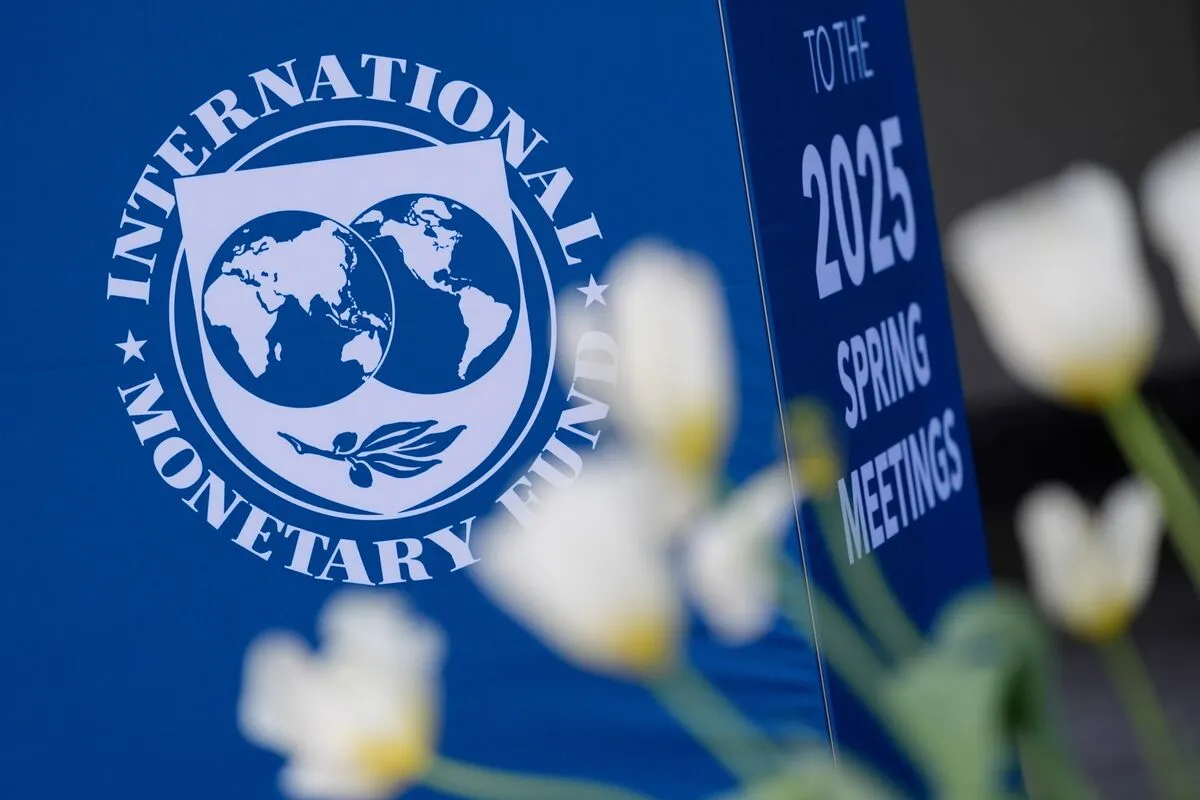
The International Monetary Fund (IMF) has called on Asian central banks to wield monetary policy as a shield against the economic fallout from escalating U.S. tariffs, warning that the region’s growth prospects face significant risks from trade disruptions and financial market volatility. In its latest regional outlook, the IMF slashed Asia’s GDP growth forecasts to 3.9% for 2025 and 4.0% for 2026—a stark downgrade from 4.6% in 2024—and singled out U.S. protectionist measures as a critical threat to export-reliant economies.
The advisory comes amid a brewing storm triggered by former U.S. President Donald Trump’s April 2 announcement of sweeping tariffs targeting over 90% of global imports, with Asian nations bearing the brunt. Cambodia, Vietnam, and Thailand faced tariffs as high as 49%, 46%, and 37%, respectively, while China—already entrenched in a years-long trade war—saw its tariffs hiked further. Though Trump later paused the measures for some nations, the damage to business confidence and supply chains has already rippled across the Pacific.
“Trade policy uncertainty has increased materially since January, worsening the near-term outlook for Asia,” said Krishna Srinivasan, Director of the IMF’s Asia and Pacific Department, during a press briefing in Washington. “Policymakers now face sharp trade-offs between stabilizing growth and safeguarding financial stability.”
The IMF’s Diagnosis: Why Asia Is on the Frontlines
Asia’s vulnerability stems from its deep integration into global trade networks. The region accounts for 35% of global exports, with supply chains spanning electronics, textiles, and automotive components. Countries like Vietnam and Malaysia have become critical hubs for semiconductor manufacturing, while Cambodia and Bangladesh rely heavily on garment exports.
The U.S. tariffs, however, have exposed structural frailties. For instance, Vietnam’s textile industry—which contributes 16% of its GDP—faces existential risks if American buyers shift orders to tariff-free competitors in Africa or Latin America. Similarly, Thailand’s electronics sector, responsible for 25% of its exports, could see factories idle if component shipments to U.S. tech giants slow.
“Asia isn’t just a victim of tariffs; it’s a casualty of the global supply chain’s fragility,” said Dr. Mei Lin, a Singapore-based economist at the Asian Development Bank. “When the U.S. sneezes, Asia catches a cold—but this time, it’s pneumonia.”
Monetary Firepower: Inflation Trends Open Door to Rate Cuts
With inflation across most of Asia hovering near or below central bank targets, the IMF argues that policymakers have room to act. Japan’s core inflation, for example, has cooled to 1.2%—well under the Bank of Japan’s 2% goal—while South Korea’s consumer price growth slowed to 2.4% in March, its lowest in three years. Even India, where inflation once topped 7%, has seen rates stabilize at 4.5%, giving the Reserve Bank of India (RBI) flexibility.
“In a region where inflation is mostly at or below target, there’s scope for monetary easing to cushion external shocks,” Srinivasan emphasized. Analysts speculate that central banks could collectively slash rates by 50–100 basis points over the next 12 months. The Philippines’ Bangko Sentral has already hinted at cuts, while Indonesia’s central bank paused its tightening cycle in April, signaling a dovish pivot.
But the path isn’t without risks. Lower rates could weaken currencies like the Thai baht or Malaysian ringgit, raising import costs for energy and food—a critical concern for nations such as Sri Lanka and Pakistan, which are still recovering from debt crises.
Country Spotlight: Pain Points and Policy Responses
- Vietnam: The Garment Sector’s Double Bind
Vietnam’s economy, which grew 6.5% in 2024, is projected to slow to 5.2% in 2025. The U.S. tariffs threaten 800,000 textile jobs, many held by women in rural areas. “My factory already cut overtime hours,” said Nguyen Thi Anh, a seamstress in Ho Chi Minh City. “If orders drop more, we’ll lose our jobs.” The State Bank of Vietnam is expected to cut rates by 75 basis points by year-end to spur domestic demand. - Thailand: Auto Parts and Tourism Under Siege
Thailand’s auto sector, which supplies parts to U.S. manufacturers like Ford and GM, could see exports plummet by $3 billion annually. Meanwhile, a stronger baht (up 8% against the dollar since January) is deterring tourists. The Bank of Thailand faces pressure to intervene in currency markets while balancing rate cuts. - China: Retaliation and Domestic Strain
China’s retaliatory tariffs on U.S. agriculture and machinery have backfired, worsening its own industrial slowdown. Youth unemployment remains at 14%, and property defaults continue to weigh on consumer sentiment. The People’s Bank of China (PBOC) has resisted broad rate cuts, opting instead for targeted liquidity injections—a strategy the IMF calls “insufficient.”
The Currency Conundrum: To Intervene or Not?
With capital flight risks looming, the IMF stressed that exchange rate flexibility should act as a “first line of defense.” However, Srinivasan acknowledged that intervention might be necessary during extreme volatility. Japan’s yen, which hit a 34-year low of 158 against the dollar in April, prompted Tokyo to spend $35 billion propping up the currency—a move that drew criticism for masking deeper economic woes.
“Currency wars are a zero-sum game,” warned former IMF chief economist Raghuram Rajan. “Asia needs coordinated policy, not piecemeal devaluations.”
Historical Echoes: Lessons from Past Trade Wars
The current crisis evokes memories of the 2018–2020 U.S.-China trade war, which reduced global GDP by 0.8% and pushed Asia into recession. Back then, central banks slashed rates aggressively: Indonesia cut by 150 basis points, India by 135. But today’s challenge is compounded by higher debt levels. Asia’s corporate debt-to-GDP ratio has surged to 165%, up from 135% in 2018, limiting room for fiscal stimulus.
“Policymakers are walking a tightrope,” said HSBC Asia economist Frederic Neumann. “They must support growth without reigniting inflation or sparking capital flight.”
The Human Toll: Stories from the Ground
In Phnom Penh, Cambodian rice farmer Sok Vannara fears bankruptcy. The U.S. tariffs on rice exports have slashed prices by 30%, forcing him to sell land to pay loans. “America was our biggest market. Now, I don’t know how to feed my family,” he said.
Meanwhile, in Chennai, India, tech worker Arjun Mehta worries about layoffs as U.S. firms reduce outsourcing. “The IT sector is nervous. Everyone’s saving, not spending,” he told Reuters.
Global Ripple Effects: Beyond Asia’s Borders
Asia’s slowdown threatens to dent global growth. Europe relies on Asian semiconductors for its auto industry, while African nations import affordable electronics and machinery. A prolonged slump could also depress commodity prices, hurting exporters like Australia and Brazil.
“The world is interconnected,” said World Bank President Ajay Banga. “Asia’s pain will echo everywhere.”
Conclusion: A Call for Prudence and Collaboration
The IMF’s report is both a warning and a roadmap. While rate cuts offer short-term relief, Srinivasan urged governments to accelerate structural reforms—such as diversifying exports and boosting productivity—to reduce reliance on fickle trade partnerships.
For now, the ball is in central bankers’ courts. As Thailand’s finance minister, Arkhom Termpittayapaisith, put it: “We need to act swiftly, but wisely. The stakes have never been higher.”
Ready to take your career to the next level? Join our dynamic courses: ACCA, HESI A2, ATI TEAS 7 , HESI EXIT , NCLEX – RN and NCLEX – PN, Financial Literacy!🌟 Dive into a world of opportunities and empower yourself for success. Explore more at Serrari Ed and start your exciting journey today! ✨
Photo source: Google
By: Montel Kamau
Serrari Financial Analyst
25th April, 2025