The International Monetary Fund (IMF) has raised its forecast for global economic growth in 2025, attributing much of the upward revision to stronger-than-expected growth in the United States. However, the IMF also warned of the potential adverse impacts of protectionist trade policies and subsidies, emphasizing their potential to disrupt global markets and harm long-term growth.
In its latest World Economic Outlook report, the IMF projects global economic growth of 3.3% in 2025 and 2026, an increase of 0.1 percentage point from previous forecasts. Global headline inflation is expected to decline to 4.2% in 2025 and further to 3.5% in 2026, creating space for monetary policy normalization. However, the projected growth remains below the historical average of 3.7% observed between 2000 and 2019, reflecting lingering uncertainties and challenges in the global economy.
Positive U.S. Economic Outlook
The IMF revised its U.S. growth forecast upward to 2.7% for 2025, a significant increase of 0.5 percentage points compared to its October forecast. The revision is driven by robust labor markets, increasing consumer confidence, and accelerating investment. Growth is expected to taper slightly to 2.1% in 2026.
Pierre-Olivier Gourinchas, the IMF’s chief economist, highlighted the divergence between the United States and other advanced economies, particularly in the euro area, attributing the difference to structural factors such as stronger productivity growth in the U.S., especially in the technology sector.
“The U.S. economy is showing remarkable resilience, but there are risks on the horizon, particularly from potential trade disruptions and financial deregulation,” Gourinchas noted.
Warnings on Protectionism
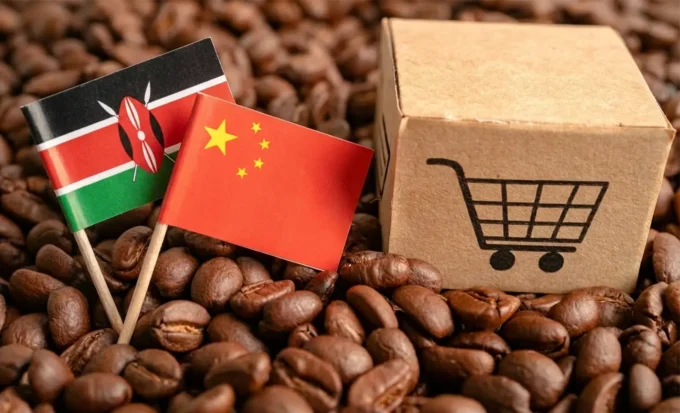
The IMF has expressed concern over the rise of protectionist policies, such as tariffs, subsidies, and non-tariff barriers. Gourinchas emphasized that such measures rarely improve domestic prospects in a sustainable manner and could leave all countries worse off.
“An intensification of protectionist policies could exacerbate trade tensions, disrupt supply chains, and lower global investment,” the IMF said in its report. The warning comes amid proposals from the incoming U.S. administration to impose high tariffs on imports from Canada, Mexico, and China.
The IMF cautioned that such actions could raise input costs for businesses, distort trade flows, and trigger retaliatory measures from trading partners, ultimately slowing global economic activity.
Euro Area and Divergent Growth Trends
In contrast to the optimistic U.S. outlook, the euro area’s growth projections have been revised downward. The IMF now forecasts growth of just 1.0% in 2025, a reduction of 0.2 percentage points, and 1.4% in 2026, down by 0.1 percentage point. Key economies like Germany and France face significant downward revisions due to weaker momentum in manufacturing and heightened policy uncertainties.
Germany’s economy is expected to grow by only 0.3% in 2025 and 1.1% in 2026, reflecting struggles in the industrial sector and challenges in transitioning to green energy. France, similarly, sees its forecast cut to 0.8% for 2025 and 1.1% for 2026, as political uncertainties weigh on investor confidence.
China’s Steady Growth
China, the world’s second-largest economy, saw its growth forecast revised upward. The IMF now expects the Chinese economy to expand by 4.6% in 2025 and 4.5% in 2026, supported by a robust fiscal stimulus package announced in November 2024. This upward revision is particularly noteworthy as China navigates its economic transformation from investment-led growth to a consumption-driven model.
However, the IMF highlighted challenges in China’s property market and rising debt levels, which could pose risks to long-term stability.
Inflation and Monetary Policy
Global inflation is projected to decline steadily, thanks to cooling labor markets and lower energy prices. However, the IMF warned of potential new inflationary pressures arising from trade measures and persistent supply chain disruptions.
“Renewed inflation pressures could de-anchor inflation expectations and necessitate more agile and proactive monetary policies,” Gourinchas wrote in a blog accompanying the report.
The IMF also pointed to risks associated with excessive deregulation in the U.S. financial sector, which could lead to boom-bust cycles with global repercussions.
Digital Currency Oversight
As digital currencies gain prominence, the IMF underscored the need for robust oversight to ensure financial stability. Gourinchas noted that inadequate regulation of cross-border digital payments could lead to systemic risks, including potential “runs” on digital assets.
“The payment system is the lifeblood of the economy. If alternative payment methods become significant without proper oversight, they could pose significant risks to the financial system,” he warned.
Impact on Emerging Markets
Emerging markets and developing economies face a mixed outlook. The IMF downgraded growth projections for the Middle East and Central Asia to 3.6% in 2025 and 3.9% in 2026, reflecting the impact of voluntary oil production cuts by major exporters like Saudi Arabia.
In sub-Saharan Africa, growth is expected to remain steady, with countries like Nigeria and Kenya showing resilience despite global headwinds. However, challenges such as high debt levels and limited fiscal space continue to constrain growth prospects in the region.
Recommendations and Way Forward
To sustain global growth and mitigate risks, the IMF has urged countries to avoid unilateral measures that could disrupt trade and investment. Instead, it recommends a coordinated approach to address global challenges, including climate change, digital transformation, and geopolitical tensions.
The report also calls for continued efforts to strengthen global financial safety nets, enhance transparency in digital currencies, and promote sustainable development.
Conclusion
The IMF’s latest outlook highlights both opportunities and risks in the global economy. While the U.S. shows promising growth, the uneven recovery across regions underscores the need for balanced policies and international cooperation.
Protectionist measures, if pursued aggressively, could derail progress and exacerbate existing inequalities. As global economies navigate these uncertain times, the IMF’s message is clear: collaboration and prudent policymaking are key to fostering sustainable and inclusive growth.
Ready to take your career to the next level? Join our dynamic courses: ACCA, HESI A2, ATI TEAS 7 , HESI EXIT , NCLEX – RN and NCLEX – PN!🌟 Dive into a world of opportunities and empower yourself for success. Explore more at Serrari Ed and start your exciting journey today! ✨
photo source: Google
By: Montel Kamau
Serrari Financial Analyst
20th January, 2024