Nigeria’s energy landscape is about to undergo a revolutionary transformation as the World Bank joins hands with the government and the private sector to fund the construction of 1,000 mini solar power grids. The ambitious initiative was unveiled by World Bank President, Ajay Banga, during his visit to a mini grid site on the outskirts of Abuja, signifying a major stride towards sustainable development.
With a staggering population exceeding 200 million, Nigeria has long grappled with energy shortages, despite boasting an installed power generation capacity of 12,500 megawatts (MW). The result is Countless households and businesses have resorted to relying on fossil fuel-based generators. In a bid to banish darkness and power progress, these mini solar grids will emerge as a beacon of hope.
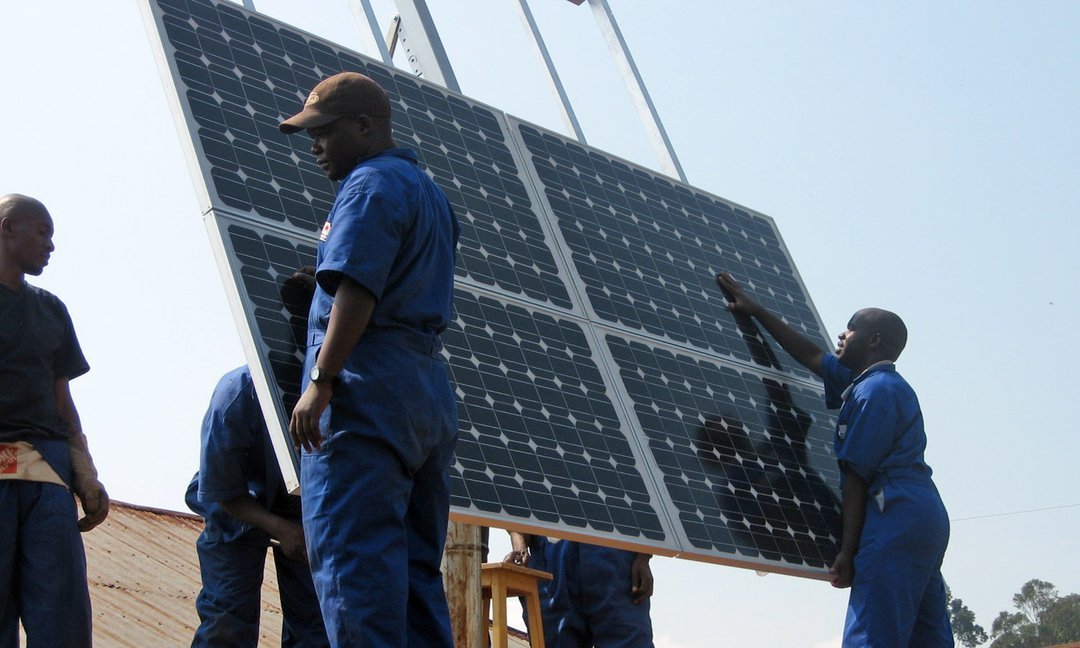
Mini grids, compact electricity generating units, will soon dot Nigeria’s landscape, varying in size from a few kilowatts to an impressive 10 MW – enough to energize around 200 households each. This venture hinges on tapping into the abundant sunshine that blankets the African continent, harnessing clean and renewable energy to brighten lives.
The World Bank’s role extends far beyond funding; it’s a catalyst for change. Having already contributed to almost 150 mini grid projects, the institution now aims to intensify its impact, partnering with both the Nigerian government and the private sector. The World Bank revealed plans for an additional 300 mini grids, with a visionary goal of reaching 1,000.
The financial commitment to this solar revolution is nothing short of extraordinary, with hundreds of millions of dollars poised for investment. Yet, Banga clarified that the World Bank’s involvement transcends financial backing. “Our capital acts as a spark, igniting a self-sustaining fire of progress,” he ardently stated.
The World Bank’s initiative holds global significance. The sub-Saharan region, where 568 million people lack electricity, is poised to reap substantial benefits from this endeavor. Globally, nearly 8 out of 10 people living without electricity reside within Africa’s borders.
The voyage towards 1,000 mini solar power grids has commenced – a journey characterized by collaboration, innovation, and empowerment. With the World Bank and its partners steering towards this radiant horizon, the future for Africa appears brighter than ever before.
By: Montel Kamau
Serrari Financial Analyst
7th August, 2023
photo source Google