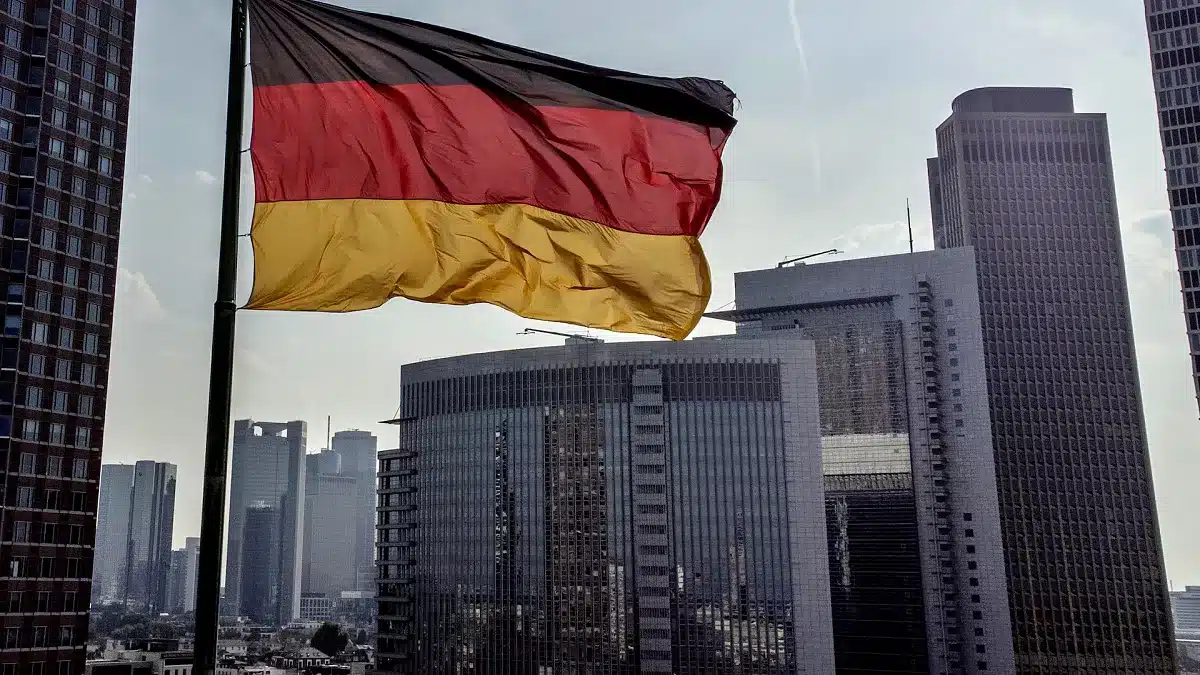
Germany’s economic performance in the third quarter of 2024 has been revised downward, with the country’s gross domestic product (GDP) growing by a mere 0.1% compared to the previous quarter. This modest growth figure, released by Germany’s federal statistics office, falls short of the earlier estimate of 0.2%, further highlighting the economic challenges faced by Europe’s largest economy.
This lackluster growth cements Germany’s position as the weakest performer among the Group of Seven (G7) economies, with analysts projecting the country’s economy to shrink for the second consecutive year in 2024.
A Struggling Economy
The revised GDP figures underline persistent stagnation in the German economy. “The German economy barely moved forward in the third quarter, continuing the trend of virtually no growth in the eurozone’s largest economy,” noted Claus Vistesen, chief eurozone economist at Pantheon Macroeconomics.
Since 2021, Germany’s growth has consistently lagged behind the European Union (EU) average, raising questions about the resilience of its economic model. While the economy narrowly avoided a recession in the summer, experts warn that a winter recession appears imminent. Carsten Brzeski, global head of macro at ING, remarked, “Even if the German economy avoided a summer recession, a winter recession is looming.”
Key Drivers of Economic Activity
Breaking down the latest data, household consumption grew by 0.3% quarter-on-quarter, offering a glimmer of hope for consumer-driven recovery. Government spending also increased by 0.4%, reflecting public sector efforts to stimulate the economy.
However, these gains were offset by declines in investment and exports:
- Investment in machinery and equipment dropped by 0.2%.
- Construction investment fell by 0.3%, underscoring ongoing challenges in the real estate and infrastructure sectors.
- Exports of goods and services declined significantly, falling 1.9% from the second quarter. Goods exports were particularly hard-hit, with a 2.4% contraction.
Structural Challenges in Germany’s Economy
Germany’s economic woes reflect deeper structural challenges. The country’s dependence on exports, traditionally a pillar of strength, has turned into a vulnerability amid global uncertainties. The industrial sector, which accounts for a substantial portion of GDP, has faced headwinds from weak global demand, supply chain disruptions, and competition from regions like Asia and North America.
Furthermore, the energy crisis triggered by geopolitical tensions has had a disproportionate impact on Germany due to its high reliance on imported energy. Rising energy costs have strained industries and households alike, exacerbating inflationary pressures.
The Role of Domestic Consumption
Domestic consumption, often seen as a potential counterbalance to weak exports, has shown some promise. With real income growth rebounding and a historically high savings rate, consumer spending could drive future growth. Claus Vistesen commented, “There is room for growth in consumers’ spending to continue given solid real income growth and a high savings rate.”
Nevertheless, the gains in household consumption are unlikely to fully offset the broader economic weaknesses.
Policy Responses and Outlook
The German government faces mounting pressure to implement structural reforms and targeted economic measures to stimulate growth. Policy initiatives aimed at fostering innovation, modernizing infrastructure, and reducing bureaucratic hurdles are essential to boosting competitiveness.
Carsten Brzeski emphasized the importance of the government’s role in revitalizing the economy, stating, “Looking beyond the winter, the German growth outlook will heavily depend on the new government’s ability to strengthen the domestic economy amid a potential trade war and even stronger industrial policies in the U.S.”
Global Context and Trade Challenges
Germany’s export-heavy economy is particularly vulnerable to global trade dynamics. A slowdown in China, one of its major trading partners, has dampened demand for German goods. Meanwhile, protectionist measures in the U.S. and other markets have created additional barriers for exporters.
Adding to these challenges is the ongoing green transition, which requires significant investment in renewable energy and sustainable technologies. While this transition presents long-term opportunities, it poses short-term economic adjustments for Germany’s industrial base.
The Road Ahead
Economists remain cautious about Germany’s growth prospects. While the EU’s broader economic recovery and improved consumer confidence could provide a tailwind, the road to sustained recovery is fraught with obstacles.
Germany’s ability to navigate these challenges will likely hinge on its willingness to adapt its economic model. Diversifying away from overreliance on exports, investing in technology, and enhancing domestic demand will be critical.
As Europe’s largest economy and a key driver of the EU’s economic health, Germany’s performance will have far-reaching implications. The global community will closely watch how the country responds to these economic trials in the coming months.
Ready to take your career to the next level? Join our dynamic courses: ACCA, HESI A2, ATI TEAS 7 and HESI EXIT !🌟 Dive into a world of opportunities and empower yourself for success. Explore more at Serrari Ed and start your exciting journey today! ✨
photo source: Google
By: Montel Kamau
Serrari Financial Analyst
22nd November, 2024