A New Chapter in Ethiopia’s Green Mobility Journey
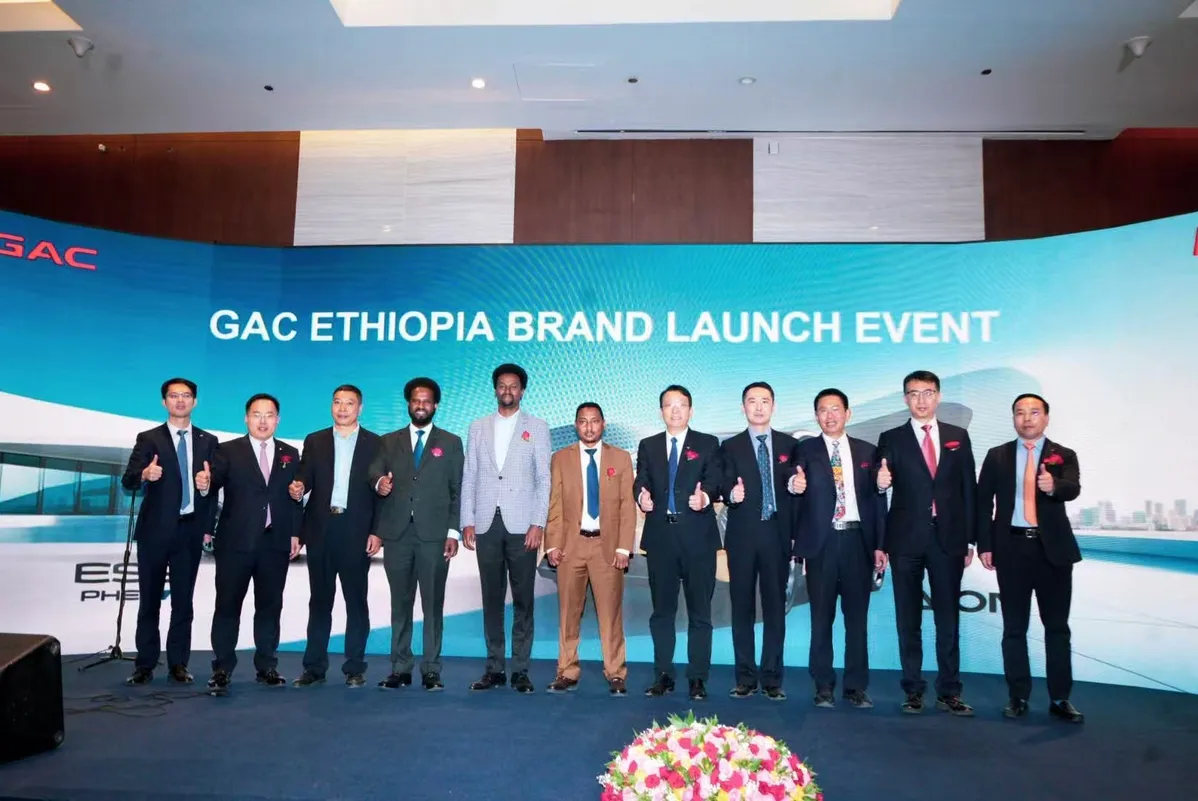
In a landmark event on May 17, Chinese automaker Guangzhou Automobile Group Co., Ltd (GAC Group) unveiled two of its electric vehicle (EV) models—the AION Y and the Trumpchi ES9—to the Ethiopian market in Addis Ababa. This marks GAC’s official entry into East Africa’s burgeoning EV space, aligning perfectly with Ethiopia’s bold strategy to transition away from internal combustion engines and embrace a cleaner, electrified transport future (China Daily).
Ethiopia’s Ministry of Transport and Logistics has already reported over 100,000 EVs on Ethiopian roads—an impressive achievement following the January 2024 ban on the import of gasoline- and diesel-powered vehicles. The government aims to scale this number to 500,000 EVs by 2035, replacing nearly all fossil-fuel cars and paving the way for a carbon-reduced economy (Le Monde.fr).
Ethiopia’s EV Policy Landscape
ICE Import Ban and Fiscal Incentives
In January 2024, Ethiopia became the first nation to outlaw the import and assembly of new internal combustion engine (ICE) vehicles, a measure designed to conserve precious foreign exchange and reduce carbon emissions. To cushion the transition, the government offers:
- Import Duty Exemptions on EVs and charging-station equipment.
- Free or Leased Land Allocations for EV after-sales service centres.
- Fast-Track Licensing and streamlined approvals via the Ethiopian Investment Commission (Fana Broadcasting).
National EV Charging Strategy
A robust charging network is critical for EV adoption. Current plans include:
- Installing public charging stations every 50–120 km across main highways.
- Expanding Addis Ababa’s existing 90 fast-charging points to over 1,200 stations nationwide.
- Partnering with Ethio Telecom and private investors to develop off-grid charging solutions in rural areas (Sputnik Africa, Climate Home News).
However, challenges remain in remote regions, where unreliable grid power and sparse infrastructure hinder long-distance travel. The government is seeking international grants to bolster rural charging and train mechanics in EV maintenance, ensuring no community is left behind (Climate Home News).
GAC Group’s Vision and Local Partnership
GAC Group, China’s sixth-largest automaker and the world’s second-largest EV producer by volume, has ambitious plans beyond mere vehicle sales. Through its local partner Huajian Group, GAC International President Wei Haigang announced commitments to:
- Establish Local Assembly Operations in Ethiopia within three years.
- Develop a ‘Full Value Chain’ encompassing R&D, production, sales, service, and infrastructure.
- Launch Five New EV Models in the Ethiopian market by 2028 (Metal News).
This strategy aims not only to supply vehicles but to transfer technology, create skilled jobs, and stimulate downstream industries—including battery recycling and charging-station manufacture.
Spotlight on the AION Y
The AION Y is a compact electric SUV built on GAC’s GEP 2.0 platform and features the ADiGO 3.0 autonomous-driving assistance system. Key specifications include:
- Battery Options: 60 kWh (460 km NEDC range), 70 kWh (500 km), 80 kWh (600 km).
- Motor: Front-axle permanent-magnet synchronous motor delivering up to 135 kW.
- Charging: 0–80 percent DC fast-charging in ~35 minutes.
- Tech Suite: 5G connectivity, one-button remote parking, and a dual-screen infotainment setup.
Priced in China from ¥105,900 to ¥149,900, the AION Y’s blend of range, tech and affordability positions it as a strong competitor in Ethiopia’s growing mid-sized EV market.
Unveiling the Trumpchi ES9
Complementing the AION Y is the Trumpchi ES9, a plug-in hybrid SUV that bridges the gap between pure EVs and ICE vehicles. According to manufacturer data, the ES9 PHEV offers:
- Powertrain: 2.0 L turbocharged petrol engine (140 kW) combined with a 134 kW electric motor for a total output of 274 kW and 630 Nm of torque.
- Battery: 25.6 kWh ternary-lithium pack delivering a 143 km CLTC pure-electric range.
- Combined Range: Up to 1,215 km on a full charge and tank.
- Performance: 0–100 km/h in 8 seconds, top speed of 180 km/h.
Priced at roughly US $36,678 ex-factory in China, the ES9 PHEV caters to buyers seeking electric driving benefits with the reassurance of a petrol fallback for longer trips (AutoCango).
Government Endorsement and Local Economic Impact
At the launch in Addis Ababa, Zeleke Temesgen, Commissioner of the Ethiopian Investment Commission, lauded GAC’s entry and urged the automaker to establish a domestic manufacturing plant to harness Ethiopia’s low labor costs, strategic location, and market potential. Bareo Hassen, State Minister of Transport and Logistics, highlighted the government’s goal to achieve green mobility “in the shortest time possible,” emphasising energy conservation and economic support (ena.et).
Experts estimate that local assembly could reduce vehicle costs by up to 20 percent, boost exports to neighbouring East African markets and generate 5,000–10,000 jobs across manufacturing, assembly, and after-sales services.
Power Infrastructure and Regional Integration
Ethiopia’s electrification drive benefits from major power projects, notably the Sodo–Moyale–Suswa HVDC Interconnector, which, upon completion, will transmit 2,000 MW of Ethiopian hydropower to Kenya, stabilising regional grids and supporting EV charging demand.
Simultaneously, the Grand Ethiopian Renaissance Dam (GERD) is slated to raise national generating capacity by 6,000 MW, offering the reliable electricity base essential for widespread EV adoption and industrial growth.
Economic and Environmental Upsides
Transitioning to electric mobility presents multifaceted benefits:
- Foreign Exchange Savings: Ethiopia spent over €6 billion on fuel imports in 2023; EV use could slash this bill by 70 percent over the next decade (Le Monde.fr).
- Emission Reductions: The EV initiative aims to cut transport-sector CO₂ emissions by 20 percent, contributing to national climate targets under the Paris Agreement (Sputnik Africa).
- Job Creation: EV assembly and charging-station installation are projected to support up to 50,000 direct and indirect jobs by 2030.
- Technology Transfer: Local R&D partnerships with GAC may spur innovation in battery tech, smart-charging solutions, and renewable integration.
Remaining Hurdles
Despite strong momentum, stakeholders caution on key challenges:
- Grid Reliability: Frequent load-shedding in rural areas could stall EV uptake unless off-grid and solar-plus-storage chargers are deployed.
- Skills Gap: Training centres for EV technicians are ramping up, yet more certified programmes are needed to service complex EV systems (Climate Home News).
- Consumer Awareness: High upfront costs and nascent resale markets necessitate robust public education and financing schemes, including low-interest loans and lease-to-own options.
Addressing these will require continued collaboration among government ministries, multilateral partners, and private sector players.
A Model for African EV Adoption
Ethiopia’s aggressive EV roadmap—with its 2024 ICE import ban, giga-watts of renewable power, and partnerships like GAC’s—positions it as a potential flagship for EV transition in Africa. Comparisons with markets such as Rwanda and Kenya, which offer lower import duties but lack a full ICE ban, highlight Ethiopia’s unique policy boldness (AP News).
Regional bodies, including the African Union, are watching closely. A successful Ethiopian model could be replicated across East Africa Community (EAC) states, advancing continental goals under the African Continental Free Trade Area (AfCFTA).
Looking Ahead
- 2025–2028: GAC Group plans local assembly lines in Addis Ababa, rolling out five new EV models.
- 2025–2027: Expansion to secondary cities such as Dire Dawa and Mekelle, backed by Ethio Telecom’s charging network.
- 2026–2030: Full integration of EV fleets in public transport, including taxis and light commercial vehicles, with incentives for bus- and truck-conversion.
- 2035 Target: Phase out all remaining ICE vehicles, achieving a 95 percent electric transport share.
If Ethiopia hits these milestones, it will stand not only as a cleaner-air pioneer but also as a vibrant EV manufacturing hub, underscoring the transformative power of aligning policy, infrastructure, and industry partnerships.
Ready to take your career to the next level? Join our dynamic courses: ACCA, HESI A2, ATI TEAS 7 , HESI EXIT , NCLEX – RN and NCLEX – PN, Financial Literacy!🌟 Dive into a world of opportunities and empower yourself for success. Explore more at Serrari Ed and start your exciting journey today! ✨
Photo source: Google
By: Montel Kamau
Serrari Financial Analyst
19th May, 2025