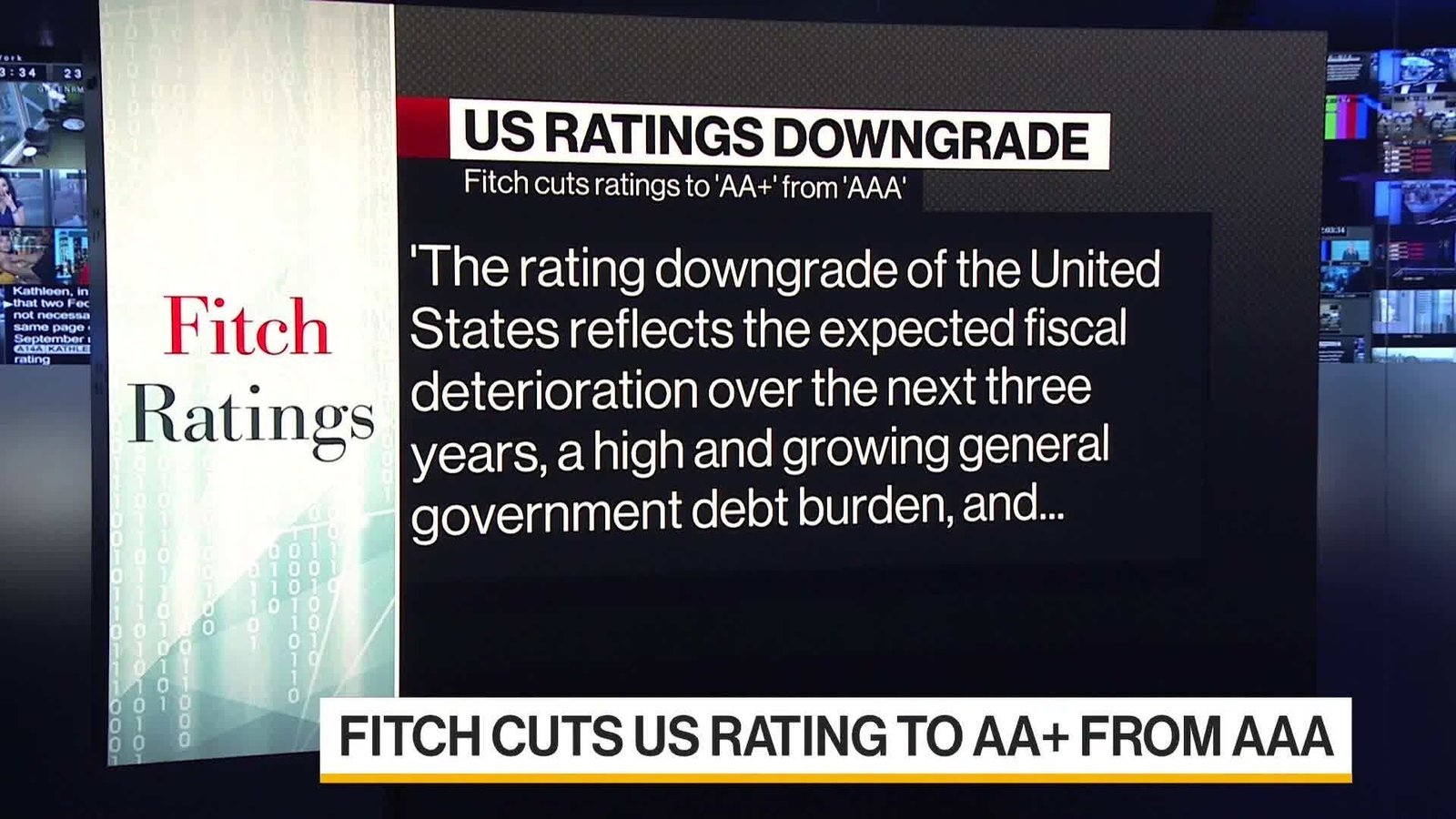
Fitch Ratings has chosen to decrease the credit rating of the United States, moving it from triple A to double A plus. This decision is based on concerns about a worsening fiscal situation and governance challenges. This alteration in the rating occurs just two months following a period of political brinkmanship that brought the world’s largest economy dangerously close to a sovereign default.
In its recent statement, the rating agency emphasized the projected deterioration in fiscal conditions over the next three years and highlighted the increasing burden of government debt. Fitch also pointed out a decline in governance standards spanning the last two decades, which has resulted in recurring conflicts over the debt ceiling and last-minute solutions.
The United States narrowly avoided an anticipated default in June by reaching an agreement to raise the federal borrowing limit just in time, preventing a crisis. Fitch had already indicated the possibility of a downgrade in late May due to growing obstruction caused by political divisions, hindering effective problem-solving.
Fitch is one of the three major credit rating agencies whose viewpoints are closely monitored by global economists and market participants. While Moody’s still maintains the US’s triple A rating, S&P had previously adjusted its rating to double A plus in 2011 after an earlier debt ceiling standoff.
Despite news of the downgrade, there was minimal impact on the markets for US Treasury bonds and the dollar index, which measures the US dollar’s performance against other currencies. Notably, the US stock market had already closed before Fitch’s announcement.
In response to the downgrade, Janet Yellen, the US Treasury Secretary, strongly disagreed with Fitch’s decision, calling it “random and based on outdated data.” Yellen noted that Fitch’s quantitative ratings model had shown a decline between 2018 and 2020, and she highlighted the progress indicated by several indicators relied upon by Fitch.
Economist Lawrence Summers, a former Treasury Secretary during the Clinton administration, also criticized the announcement. In a tweet, he labeled the decision as “strange and inept,” particularly considering the current robust state of the economy.
Fitch also expressed concerns about the increasing US debt load. The agency’s projections show that the general government deficit is expected to rise to 6.3% of the gross domestic product in 2023, up from 3.7% in 2022. This change is attributed to weaker federal revenues due to cyclical factors, new spending initiatives, and higher interest costs.
Fitch also predicted a setback in US growth, foreseeing a recession in the fourth quarter of 2023 and the first quarter of 2024.
It’s important to note that a country’s borrowing costs in debt markets usually rise with lower credit ratings. However, it remains uncertain if this trend will hold true in this case. Past experience has shown that S&P’s removal of the US’s triple A rating had little long-lasting impact on markets.
Edward Al-Hussainy, a senior analyst at Columbia Threadneedle, highlighted that the US’s credit rating holds a unique status as the premier safe-haven asset globally. He observed that Fitch’s move seems to signal concerns about the debt ceiling process and the current fiscal trajectory. These concerns reflect views on US politics rather than policy decisions.
Implications:
Impact on Borrowing Costs: A credit rating downgrade could potentially increase the costs of borrowing for the US government. Lenders might ask for higher interest rates to counter the heightened risk.
Global Market Effects: The downgrade of the US credit rating could trigger a series of consequences across international financial markets. This situation might lead to increased instability and potentially prompt sales of stocks and bonds.
Dollar Influence: The downgrade could weaken the strength of the US dollar as assets denominated in dollars become less attractive to foreign investors.
Confidence Ramifications: The downgrade could impact confidence levels in the US economy, both domestically and globally. Potential outcomes include changes in consumer spending and business investment, potentially slowing down economic growth.
Impact on US Treasuries: US Treasuries, often seen as a safe haven during market turbulence, might be influenced by the downgrade. The perceived security of these assets could decrease, potentially resulting in higher yields.
Effect on Federal Reserve Policy: The downgrade might affect Federal Reserve policy. The Federal Reserve might be hesitant to raise interest rates if concerned about the impact on government borrowing costs.
Public Finances: The downgrade could strain US public finances. Higher borrowing costs could increase the budget deficit and public debt levels.
Tightening of Credit Conditions: The downgrade could tighten credit conditions, potentially making it harder for businesses and consumers to secure credit.
Impact on Other Ratings: The reduction in the US credit rating could trigger reductions in other related ratings, such as those of government-sponsored enterprises tied to the US government.
It’s important to acknowledge that these are potential consequences, and the actual impact will depend on various factors, including reactions from the market and policymakers to the downgrade.
August 2nd 2023 Delino Gayweh Serrari Financial Analyst
photo source Google