Introduction
Kenya’s vibrant horticulture sector, long celebrated for supplying Europe with beans, peas, and an array of fresh produce, faced a dramatic setback in 2024 when the European Union’s (EU) tightened pesticide and phytosanitary protocols slashed export volumes by over 50 percent. According to the 2025 Economic Survey published by the Kenya National Bureau of Statistics, the country’s fresh vegetable exports plunged from 164,100 tonnes in 2023 to just 74,300 tonnes in 2024, with value tumbling from KSh 50.9 billion to KSh 23.4 billion (The Star, The Standard).
Meanwhile, Kenya’s cherished cut-flower industry—responsible for roughly KSh 72.1 billion in export earnings last year—has struggled under the EU’s False Codling Moth (FCM) quarantine measures, marking its second year below the KSh 100 billion threshold (The Star, ratin.net). Together, these developments have erased some KSh 20.1 billion from the total KSh 136.6 billion fresh-horticulture export bill, even as fruit exports bucked the trend with a 26.5 percent gain to KSh 41 billion.
The Horticulture Sector: Kenya’s “Green Gold”
Accounting for nearly 20 percent of GDP and employing over 40 percent of the rural population, horticulture is a linchpin of Kenya’s economy (Central Bank of Kenya). Between 2015 and 2023, export revenues from fresh vegetables, fruits, flowers, and nuts grew at an average annual rate of 7 percent—testimony to the country’s ideal equatorial climate, well-developed cold-chain logistics, and established contract-farming models with European buyers.
Yet the gains of recent years have been undermined by two interlinked challenges: evolving EU Maximum Residue Level (MRL) rules on agrochemicals and stricter phytosanitary inspections targeting quarantine pests like the False Codling Moth.
EU MRL Revisions and Vegetable Export Declines
New MRLs Take Effect
In April 2022, the EU introduced revised MRLs for several key pesticides—including lutianil, sulfoxaflor, cyantraniliprole, and cinmethylin—across fresh and frozen vegetables, fruits, and products of animal origin. Growers whose produce exceeded these thresholds faced immediate rejection at EU ports, with interceptions recorded in Brussels’ Rapid Alert System (RASFF) increasing by 37 percent in 2023 alone (The Standard).
Impact on Kenyan Beans and Peas
The Economic Survey specifically cites beans and peas in pods as the hardest hit, linking export volume declines to MRL interceptions by EU authorities. Farmers report that certain long-standing pesticides—once approved for use in Kenya but now banned or severely restricted in Europe—required abrupt shifts in crop-protection strategies. As one Mount Kenya grower lamented:
“We woke up one morning to find our winter beans refused at Rotterdam. The chemical we’ve relied on for years was suddenly unacceptable. Replacing it isn’t easy—alternative products can cost twice as much or aren’t registered here.”
Farmer Adaptation and Industry Response
Alternative Pest Management
In response, the Fresh Produce Exporters Association of Kenya (FPEAK) issued an advisory urging members to:
- Audit Pesticide Inventories: Identify and phase out non-compliant agrochemicals.
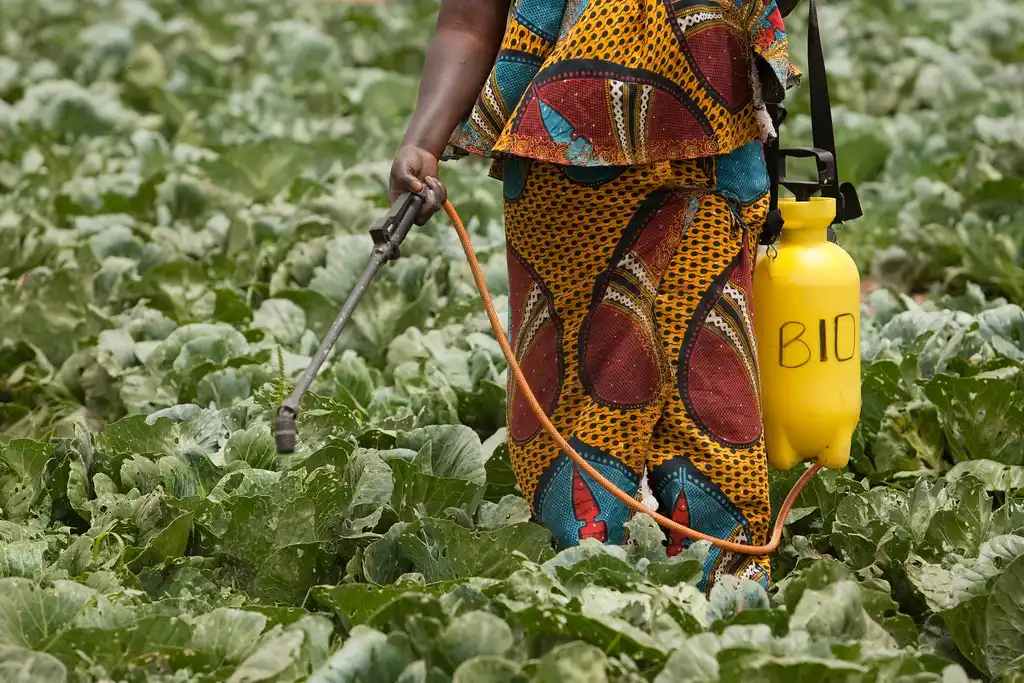
- Adopt Integrated Pest Management (IPM): Employ biological controls (e.g., predatory insects), cultural techniques (crop rotation), and low-risk pesticides.
- Secure EU-Approved Inputs: Partner with suppliers to import only products listed in the EU’s Pesticide Database.
While these measures promise long-term sustainability, their upfront costs—ranging from 15–30 percent higher than conventional chemicals—have strained smaller farms.
Government Support Measures
The Ministry of Agriculture has stepped in with:
- Subsidised Registration Fees: Fast-tracking approval for EU-compliant pesticides.
- Training Workshops: Co-organised with the Food and Agriculture Organization (FAO) to train 5,000 extension officers in IPM techniques.
- Innovation Grants: KSh 500 million ring-fenced for R&D into biopesticides developed by local scientists at the Kenya Agricultural and Livestock Research Organization (KALRO).
Agriculture Cabinet Secretary Mithika Linturi emphasises that “compliance is not optional—our competitiveness depends on meeting the highest standards.”
Cut Flowers Under Siege: The False Codling Moth Crisis
Rising Interception Rates
Since 2017, the EU has classified Thaumatotibia leucotreta—the False Codling Moth (FCM)—as a regulated quarantine pest. Kephis reports that EU sampling rates for Kenyan rose consignments soared from 5 percent in 2020 to 25 percent as of May 2024, in line with Regulation (EU) 2024/2004, which takes effect on April 26, 2025 (ratin.net, floriculture.co.ke).
In 2024, FCM interceptions drove the value of cut-flower exports down marginally from KSh 73.5 billion to KSh 72.1 billion, as Dutch auctions and direct buyers imposed tighter entry requirements (The Star, ratin.net).
Kephis’ Systems Approach
To align with the EU’s “systems approach,” Kephis has deployed the Rose False Codling Moth System Approach (Rose FCMSA), which mandates:
- On-Farm Controls: Regular orchard inspections, pheromone-trap monitoring, and orchard sanitation.
- Pack-House Protocols: Cold-chain segregation, insect-exclusion screens, and UV light fumigation tunnels.
- Post-Harvest Audits: Third-party certification before consignment.
Under the new protocol, exporters must maintain zero-tolerance thresholds for FCM, with non-compliance risking suspension from EU-bound supply chains.
Infrastructure Bottlenecks and Rising Freight Costs
Airport Cargo Capacity
While phytosanitary compliance is critical, logistical hurdles at Jomo Kenyatta International Airport (JKIA) have compounded exporters’ woes. Last year’s cargo apron expansion—now accommodating eight wide-body freighters and boasting a cold-room capacity of 1 million tonnes annually—has struggled to keep pace with surging demand (kaa.go.ke).
Airline Partnerships and Fleet Expansion
Kenya Airways, which currently operates four Boeing 737 freighters, has announced plans to introduce wide-body cargo aircraft in 2025, in partnership with the government, to secure at least 30 percent of horticultural export volumes (The STAT Trade Times). Meanwhile, Astral Aviation is expanding its charters to serve perishable exporters, but operators warn that limited night-slot availability and high landing fees continue to drive freight rates up by as much as 20 percent year-on-year.
Market Diversification and Future Outlook
Exploring Alternative Destinations
Faced with EU barriers, Kenyan exporters are accelerating efforts to diversify markets:
- Middle East & Asia: Gulf Cooperation Council countries and China offer emerging demand for fresh produce and flowers, with fewer MRL hurdles on certain products.
- Regional Trade (COMESA & EAC): Duty-free access and harmonised standards within the East African Community reduce compliance complexity and transit times.
Sustainability and Traceability
Kenya’s horticulture players are investing in digital traceability—using blockchain to record pesticide usage, cold-chain logs, and lab-test results—to reassure buyers at every step of the supply chain. These initiatives dovetail with global retail trends toward ethical sourcing and carbon-footprint transparency.
Research & Innovation
Institutions like KALRO and the University of Nairobi are collaborating on:
- Biopesticide Development: Leveraging locally sourced botanicals (neem, pyrethrum) to create cost-effective, EU-approved alternatives.
- Resilient Crop Varieties: Breeding beans and peas with natural pest resistance to reduce chemical dependence.
- Smart-Farming Technologies: Drone-based crop scans and IoT-enabled soil sensors to optimise input usage.
Conclusion
Kenya’s horticulture sector stands at a crossroads. The EU’s stringent MRL and phytosanitary measures have exposed vulnerabilities in pesticide management, pest control and logistics. Yet, they have also catalysed a powerful drive toward innovation, sustainability and market diversification.
Success in the coming years will hinge on coordinated action—farmers, exporters, government agencies and research institutions working hand in hand to meet global standards, expand infrastructure, and open new markets. If navigated skillfully, Kenya’s “green gold” can emerge stronger, more resilient, and well-positioned to flourish in an era of exacting quality and environmental stewardship.
Ready to take your career to the next level? Join our dynamic courses: ACCA, HESI A2, ATI TEAS 7 , HESI EXIT , NCLEX – RN and NCLEX – PN, Financial Literacy!🌟 Dive into a world of opportunities and empower yourself for success. Explore more at Serrari Ed and start your exciting journey today! ✨
Photo source: Google
By: Montel Kamau
Serrari Financial Analyst
19th May, 2025