In a decisive move aimed at reshaping geopolitical alliances and bolstering economic growth in Africa, European Union leaders today announced a €4.7 billion (approximately $5.10 billion) investment package during a high-stakes visit to South Africa. The announcement comes at a time when both the EU and South Africa find themselves at odds with the United States—a rift that has widened over the past several years. With South Africa now presiding over the Group of 20 nations and emerging as a pivotal voice for the Global South, this landmark investment is widely viewed as an effort to forge stronger ties with Africa’s most advanced economy while counterbalancing U.S. unilateral policies under President Donald Trump.
A New Geopolitical Landscape
The backdrop to this announcement is a rapidly shifting global order. For decades, the United States was the undisputed leader on the world stage, but recent U.S. policy shifts have unsettled traditional alliances. President Trump’s unexpected pivot toward Russia in the ongoing Ukraine conflict—along with his staunch pro-Israel stance—has not only upended established U.S. foreign policy but also strained its relationships with key international partners. European leaders now find themselves grappling with a new reality where longstanding transatlantic bonds are fraying, and emerging alliances are taking shape.
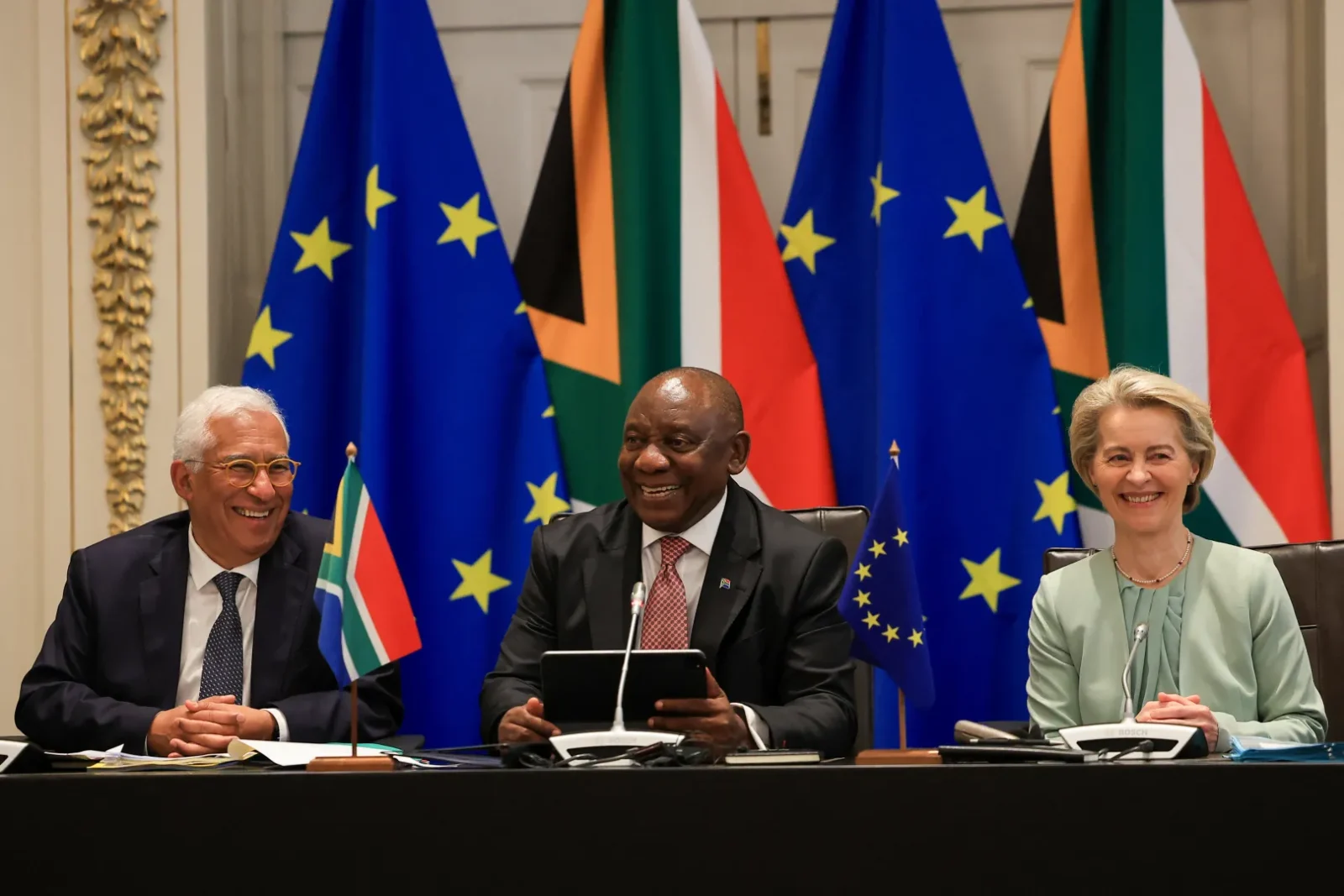
During his visit to Cape Town, European Commission President Ursula von der Leyen underscored the urgency of recalibrating these alliances. “In a moment of increased confrontation and competition, we must strengthen our partnership further,” she stated during talks with South African President Cyril Ramaphosa. The EU’s bold investment package is a clear signal that Europe intends to fill the void left by a less cooperative U.S. administration, pivoting instead to multilateral approaches that champion sustainable development and shared prosperity.
Strategic Objectives Behind the Investment
The €4.7 billion investment is designed to catalyze South Africa’s economic transformation at a critical juncture. As South Africa confronts internal challenges—from addressing historic racial land injustices to modernizing its industrial base—the infusion of European capital comes as a lifeline. The package is expected to finance a broad spectrum of projects, including:
- Infrastructure Modernization: Upgrading transportation, energy grids, and digital connectivity to spur economic growth.
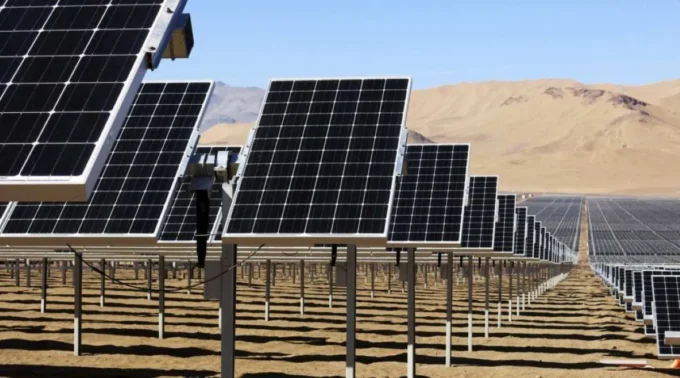
- Green Technology Initiatives: Investing in renewable energy projects, with a strong focus on clean hydrogen, where South Africa’s abundant natural resources could unlock substantial export potential.
- Industrial Growth: Supporting the expansion of local industries to create jobs, enhance competitiveness, and reduce dependency on imports.
- Capacity Building: Strengthening institutions and governance frameworks to ensure that investments translate into sustainable long-term benefits.
European Council President Antonio Costa, who accompanied von der Leyen, stressed the transformative potential of the package. “Europe understands your potential,” Costa remarked, highlighting that the support is not merely financial but also strategic, aimed at fostering innovation, competitiveness, and inclusivity in the South African economy.
South Africa’s Pivotal Role on the Global Stage
South Africa has long been recognized as the economic powerhouse of the African continent. As the continent’s most advanced economy, it plays a critical role in shaping regional trade, political stability, and technological innovation. Today, with its presidency of the G20, South Africa is uniquely positioned to influence global economic policies, advocate for the interests of emerging markets, and lead discussions on climate change and sustainable development.
In his address in Cape Town, President Cyril Ramaphosa welcomed the EU’s support, emphasizing that South Africa is eager to transition to a low-carbon economy and modernize its industrial base. “We value European support for multilateralism at a time of rising nationalism and unilateral policies,” Ramaphosa noted. His remarks underscored the broader vision of using the EU’s investment not only to stimulate immediate economic growth but also to secure South Africa’s role as a key driver of change on the global stage.
The package is seen as a strategic counterweight to U.S. policies, particularly given that American aid to South Africa has been curtailed in recent years. Critics of the Trump administration have argued that the United States’ approach has increasingly prioritized domestic political concerns over international cooperation, leaving countries like South Africa seeking new partners to help navigate their economic and social challenges.
Clean Hydrogen and the Low-Carbon Transition
One of the most promising aspects of the EU investment is its focus on clean hydrogen technology—a field in which South Africa holds tremendous promise. With vast reserves of raw materials and an abundance of renewable energy sources such as solar and wind, South Africa is well positioned to become a global leader in green hydrogen production. This technology is critical for decarbonizing heavy industries, reducing reliance on fossil fuels, and achieving long-term climate goals.
Ursula von der Leyen highlighted the potential of clean hydrogen as a cornerstone of the EU-South Africa partnership. “South Africa could harness its abundant renewable energy potential to produce clean hydrogen on a scale that not only transforms your domestic energy landscape but also positions you as a key exporter of green energy,” she explained. The investment package is expected to fund research and development in this area, as well as pilot projects that demonstrate the viability of large-scale hydrogen production and its integration into existing energy systems.
The focus on clean hydrogen is part of a broader global trend towards green energy. Across Europe and beyond, governments and private investors are increasingly prioritizing projects that support the energy transition. For South Africa, the opportunity to develop a robust clean hydrogen industry could lead to significant economic benefits, including job creation, technological advancements, and enhanced energy security. Furthermore, as international markets move towards decarbonization, South Africa’s early investments in hydrogen technology could secure its position in future energy supply chains.
Implications for U.S.-European Relations
The announcement of the €4.7 billion investment comes at a time of profound tension between the European Union and the United States. President Trump’s recent foreign policy decisions have not only upended the established order in Europe but have also reoriented U.S. alliances in unexpected ways. His pivot towards Russia in the context of the Ukraine war, combined with his controversial pro-Israel stance, has sent shockwaves through international diplomatic circles.
European leaders have expressed frustration with what they see as a retreat from shared democratic values and multilateralism. Criticism has been leveled at the Trump administration for its perceived interference in both European and South African domestic politics—accusing the U.S. of prioritizing narrow national interests over global cooperation. For instance, while Europe has been actively working to isolate extremist political elements and promote inclusive policies, U.S. officials have accused European governments of neglecting voter concerns over immigration and economic disparity.
The investment in South Africa is thus as much about economics as it is about redefining international alliances. By channeling billions into Africa’s most advanced economy, the EU is signaling that it remains committed to a rules-based international order—one that values collaboration, sustainable development, and shared prosperity. In stark contrast, the U.S. approach under Trump has increasingly leaned towards unilateral decision-making, drawing sharp criticism from traditional allies.
This divergence in policy not only highlights the ideological differences between the EU and the United States but also reflects broader global trends. As emerging economies and regional powers begin to assert themselves, the old paradigms of Western leadership are being challenged. The EU’s proactive stance with South Africa is a clear indication that the bloc is determined to chart its own course, even if it means stepping away from the shadow of U.S. influence.
Domestic Reactions and Economic Impacts
Within South Africa, reactions to the EU investment package have been largely positive, though not without cautious optimism. Economic analysts and local business leaders view the package as a significant opportunity to address long-standing challenges such as high unemployment, infrastructural deficits, and the need for technological modernization. The funding is expected to spur large-scale projects that will create jobs, enhance productivity, and improve the overall competitiveness of the South African economy.
However, there are also concerns regarding governance and the efficient allocation of funds. Critics warn that without robust oversight, large-scale investments can sometimes fall prey to mismanagement or political patronage. In response, the South African government has pledged to implement stringent monitoring mechanisms to ensure transparency and accountability. President Ramaphosa has reiterated his commitment to reform and modernization, emphasizing that the EU’s support will be channeled into projects that deliver measurable benefits to ordinary citizens.
In Europe, the investment has been hailed as a bold step towards revitalizing the continent’s engagement with Africa. Many European policymakers argue that by supporting South Africa’s economic transition, the EU is also safeguarding its own long-term economic interests. Stronger African economies mean more stable global markets, expanded trade opportunities, and a counterbalance to rising geopolitical tensions elsewhere.
Moreover, the package is expected to stimulate further investments in the region, as other international players observe the success of the EU-South Africa partnership. By setting a precedent for large-scale, sustainable investments in Africa, the EU is not only addressing immediate economic challenges but also paving the way for a new era of international development cooperation.
Broader Implications for Multilateralism
The €4.7 billion package is emblematic of a broader shift towards multilateralism at a time when global politics are increasingly defined by fragmentation and unilateralism. With traditional alliances under strain, the EU’s decision to double down on its commitment to Africa sends a powerful message: the future belongs to nations and blocs that embrace collective action and sustainable development.
European Commission President Ursula von der Leyen has been a vocal advocate for multilateral cooperation. In her remarks, she emphasized that South Africa’s role as a leading voice of the Global South is more critical than ever in a world beset by challenges ranging from climate change to economic inequality. “In a time when nationalism and isolationism are on the rise, our commitment to multilateralism is not just a policy choice—it is a necessity,” von der Leyen declared.
The renewed emphasis on multilateralism is also evident in the EU’s broader development strategy, which includes partnerships in digital transformation, education, and healthcare. By investing in South Africa, the EU is extending an olive branch to the continent at a time when global power dynamics are in flux. Analysts suggest that this could herald a new phase of European influence in Africa—one that is built on mutual respect, shared objectives, and long-term sustainability.
The Road Ahead: Challenges and Opportunities
While the promise of the investment package is undeniable, both the EU and South Africa face a series of challenges in its implementation. Chief among these is ensuring that the funds are deployed effectively to achieve tangible results. This will require close collaboration between European institutions, South African authorities, and private sector partners to develop clear benchmarks and robust accountability frameworks.
In addition, the rapidly changing geopolitical environment means that both sides must remain agile. The EU’s commitment to South Africa comes at a time when global alliances are being redrawn, and there is no guarantee that current trends will persist. Yet, many experts believe that the focus on sustainable development, clean energy, and inclusive economic growth provides a strong foundation for long-term success.
For South Africa, the investment represents a critical opportunity to accelerate its transition to a modern, diversified economy. Beyond immediate economic gains, the funding is expected to enhance the country’s capacity to address systemic challenges such as inequality, infrastructural decay, and skills mismatches in the labor market. By leveraging European expertise and capital, South Africa could position itself as a model for other emerging economies seeking to navigate the complexities of the 21st-century global economy.
Furthermore, the emphasis on clean hydrogen and other renewable technologies could transform the nation’s energy landscape. As global markets pivot towards decarbonization, South Africa’s early investments in green technology might not only reduce its carbon footprint but also generate significant export revenue. In doing so, the country would contribute to a more sustainable global energy mix while securing its economic future.
Conclusion: A Bold Step Towards a New Global Order
The €4.7 billion investment package unveiled in Cape Town marks a watershed moment in international relations. At a time when traditional alliances are under unprecedented strain and the world grapples with complex economic and environmental challenges, the EU’s commitment to South Africa is a bold statement of intent. It is an acknowledgment that the future of global prosperity lies in collaborative, multilateral efforts that harness the strengths of diverse economies and cultures.
By channeling significant capital into South Africa’s transition to a low-carbon, innovation-driven economy, the EU is not only supporting its African partner but also sending a clear message to the rest of the world. In an era defined by rapid technological change and shifting geopolitical loyalties, the investment package serves as a reminder that sustainable growth and shared progress are possible—even in the face of formidable challenges.
As President Ramaphosa and his European counterparts chart the path forward, both regions are poised to reap the benefits of deeper economic integration and strategic cooperation. The road ahead may be fraught with uncertainties—from domestic governance issues to evolving international rivalries—but the commitment to building a resilient, multilateral future remains unwavering.
In sum, as Europe and South Africa forge a new chapter in their relationship, the implications are profound. Beyond the immediate economic boost, this partnership has the potential to reshape regional dynamics, inspire further investment across the African continent, and serve as a model for international cooperation in a divided world. With sustainable development, clean energy, and robust governance at its core, the EU-South Africa alliance is set to play a pivotal role in defining the next era of global economic progress.
Ready to take your career to the next level? Join our dynamic courses: ACCA, HESI A2, ATI TEAS 7 , HESI EXIT , NCLEX – RN and NCLEX – PN, Financial Literacy!🌟 Dive into a world of opportunities and empower yourself for success. Explore more at Serrari Ed and start your exciting journey today! ✨
photo source: Google
By: Montel Kamau
Serrari Financial Analyst
14th March, 2025