Ethiopia is set to inaugurate its new stock exchange this Friday, marking a historic milestone after more than five decades without a bourse. This development is part of the government’s broader strategy to attract investors and stimulate an economy recovering from the dual challenges of a devastating civil war and persistent regional instability.
Ethiopia’s economic trajectory has been notable, with Eastern Africa’s largest economy achieving an average annual growth rate of 8% over the past decade. Despite this growth, the nation faces a high unemployment rate, particularly among its youth, and struggles to consolidate peace following a two-year conflict that claimed an estimated 600,000 lives.
The Ethiopian Securities Exchange (ESE), the country’s new bourse, is expected to become a centerpiece of Prime Minister Abiy Ahmed’s economic reform agenda. The exchange aims to list up to 50 companies in the next five years, offering investors unprecedented opportunities in one of Africa’s fastest-growing economies.
A New Era of Economic Reform
The Ethiopian government’s approach to economic revitalization includes privatizing key state-owned enterprises and creating an investment-friendly environment. Ethiopia Investment Holdings, the entity overseeing 40 state-run companies, plans to list firms like Ethio Telecom on the ESE. Ethio Telecom’s initial public offering (IPO) is expected to raise up to 30 billion birr ($234 million), setting a strong precedent for other companies to follow.
This move follows a series of critical policy changes. Ethiopia ended over 50 years of strict currency control, unlocking $20 billion in financing from the World Bank and International Monetary Fund (IMF). These reforms also improved foreign exchange liquidity and paved the way for broader economic participation.
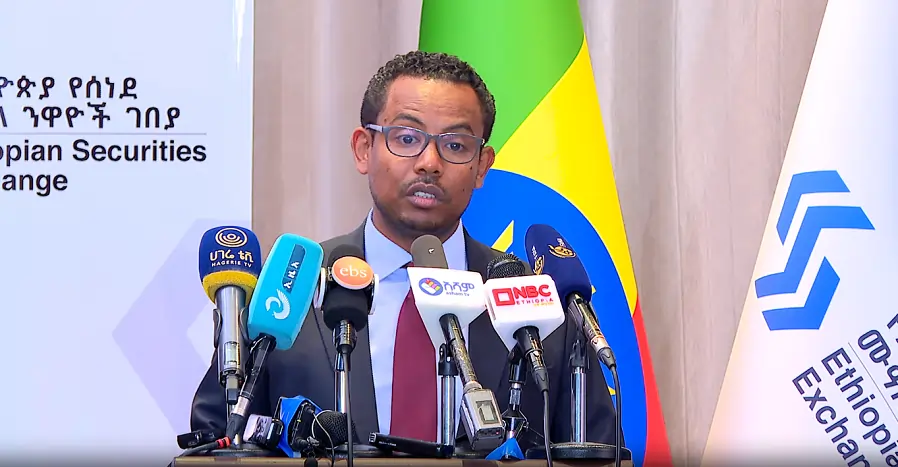
Tilahun Kassahun, CEO of the Ethiopian Securities Exchange, emphasized the significance of the stock market in transitioning Ethiopia into a frontier market. “The opening of a domestic stock exchange is a key part of the economic and political transformation,” Tilahun said.
Addressing Investor Concerns
Despite these promising developments, challenges remain. Ethiopia’s foreign currency reserves stood at just $1.5 billion in March 2024, according to IMF data. A $3.4 billion bailout from the IMF is expected to bolster these reserves, but liquidity levels remain tight.
Jacques Nel, an economist at Oxford Economics Africa, highlighted the need for careful management of foreign exchange to ensure investor confidence. Ethiopia’s currency challenges echo similar issues faced by Nigeria, where restrictions on dollar repatriation posed hurdles for investors.
To prevent speculative “hot money” flows, Ethiopia plans to implement rules requiring a minimum investment period. These measures aim to stabilize the market and build investor trust in the fledgling exchange.
Historical Context and Future Prospects
Ethiopia’s last stock exchange operated from 1960 to 1974 before being abolished following Emperor Haile Selassie’s overthrow. The new bourse seeks to reestablish Ethiopia as a viable destination for global capital while addressing the economic and political complexities that have arisen since then.
The government’s ambition to list 50 companies within five years includes a mix of traditional IPOs and listings by introduction, a process allowing companies to join the exchange without issuing new shares. This flexibility is expected to attract a diverse range of businesses, from established firms to emerging enterprises.
Sectoral Focus and Foreign Participation
Ethiopia’s liberalization extends beyond the stock market. The government has allowed foreign banks to operate domestically and opened key sectors such as coffee, oil seeds, logistics, and retail to international investors. These changes are designed to integrate Ethiopia into global trade networks and diversify its economy.
The nation has also attracted significant interest from international financial institutions. For instance, the World Bank and IMF’s recent financial support reflects confidence in Ethiopia’s reform agenda. However, the country’s ability to restructure its $1 billion eurobond debt will remain a crucial factor in sustaining this momentum.
Regional Stability: A Double-Edged Sword
While Ethiopia’s economic reforms have generated optimism, regional instability continues to cast a shadow. The peace accord signed in 2022 between Abiy’s government and Tigrayan forces marked a turning point, but ethnic tensions in the Oromia and Amhara regions remain a challenge.
“Insurgencies are ongoing in several parts of the country, and it is hard to see how the current government will reestablish centralized political power,” said Mark Bohlund, a senior credit research analyst with REDD Intelligence. These unresolved conflicts could deter potential investors seeking stability and predictability.
Nevertheless, the government’s focus on infrastructure development, job creation, and economic diversification signals a commitment to long-term stability.
Comparisons with Regional Peers
Ethiopia’s entry into the stock exchange landscape places it alongside other African nations like Kenya, South Africa, and Nigeria, which have established capital markets. While Ethiopia’s stock exchange is in its infancy, it holds significant potential given the size of its economy and its population of over 120 million people.
James Johnstone, co-head of emerging and frontier markets at Redwheel, noted the untapped opportunities in Ethiopia. “There’s currently very limited international investment in these fast-growing economies. We remain very excited by the opportunities,” Johnstone said.
By fostering a favorable investment climate and leveraging its natural resources, Ethiopia aims to emulate the successes of its regional peers while addressing unique local challenges.
The Role of Technology and Infrastructure
The launch of the ESE is also expected to catalyze technological innovation and infrastructure development. The government has prioritized projects in digital finance, energy, and transportation, all of which will benefit from increased capital market activity.
Ethio Telecom’s partial privatization represents a broader trend of integrating technology into Ethiopia’s development strategy. Improved telecommunications infrastructure will support financial inclusion, e-commerce, and other tech-driven sectors, further boosting economic growth.
A Long Road Ahead
The opening of Ethiopia’s stock exchange marks a significant step in its journey toward economic modernization. However, the road ahead is fraught with challenges, from maintaining political stability to ensuring regulatory transparency.
Despite these hurdles, the Ethiopian government’s proactive reforms and strategic partnerships suggest a determination to realize the country’s economic potential. If successful, the Ethiopian Securities Exchange could transform the nation into a regional financial hub, attracting both domestic and international investors.
With 50 companies projected to join the exchange in the coming years, Ethiopia’s capital market is poised to become a cornerstone of its economic resurgence. By addressing its challenges head-on and leveraging its opportunities, Ethiopia could emerge as a model for other frontier markets seeking to navigate the complexities of modern economic development.
Ready to take your career to the next level? Join our dynamic courses: ACCA, HESI A2, ATI TEAS 7 , HESI EXIT , NCLEX – RN and NCLEX – PN!🌟 Dive into a world of opportunities and empower yourself for success. Explore more at Serrari Ed and start your exciting journey today! ✨
photo source: Google
By: Montel Kamau
Serrari Financial Analyst
10th January, 2024