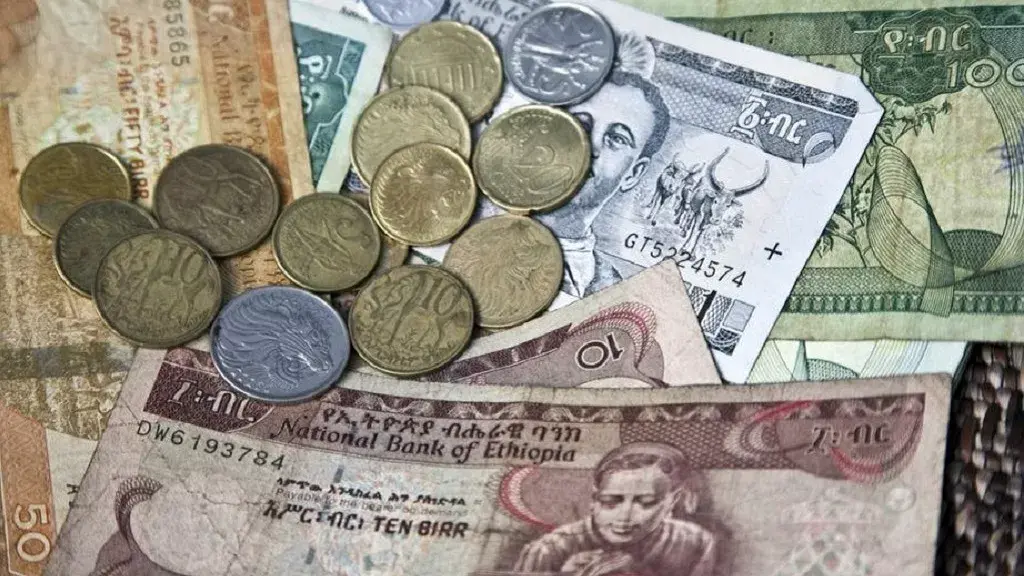
Ethiopia’s National Bank (NBE) has announced a cap on all foreign-exchange (FX) transaction fees at 4 percent, effective May 26, 2025. The move—part of a broader series of reforms to modernize the forex market—also bans supplementary service charges and mandates transparent, publicly disclosed pricing on the NBE website from June onwards (National Bank of Ethiopia).
Background: From Fixed to Flexible
On July 29, 2024, Ethiopia took the bold step of shifting from a tightly managed FX regime to a market-based determination of the birr’s value under Directive FXD/01/2024. The birr was devalued by roughly 30 percent against the dollar in a single day—dropping from 57.48 ETB/USD to 74.73 ETB/USD—to correct chronic overvaluation and unlock IMF support for a US $10.7 billion financing package (Reuters).
Since then, the FX market has witnessed:
- Export surges: Goods exports have more than doubled, fuelled by an uptick in horticulture and textile shipments.
- Service-sector gains: Remittances and tourism inflows rose sharply, helping to bolster foreign reserves.
- Capital inflows: Private and official lending, including World Bank and IMF disbursements, have improved liquidity.
Ethiopia’s ambitious reforms mark one of the most radical currency-policy overhauls since the Derg era, aimed at dismantling distortions that hindered business and investment (National Bank of Ethiopia, Legal 500).
Details of the 4 Percent Fee Cap
Under the new directive issued May 20, 2025—published on the APANEWS portal—all commercial banks must:
- Limit fees for FX purchases (imports of goods, service payments, or cash‐note acquisitions) to no more than 4 percent of the transaction value.
- Prohibit supplementary charges such as “handling,” “service,” or “remittance” fees above the 4 percent ceiling.
- Disclose fees on their websites and via notices in branches, with summary reports uploaded monthly to the NBE platform starting June 2025 (APAnews – Agence de Presse Africaine).
The NBE stressed that these measures bring Ethiopia’s FX costs “closer in line with global norms,” promoting “competitive, transparent and simplified pricing” for consumers and businesses.
Expanded FX Limits for Importers and Travellers
In tandem with the fee cap, the NBE has revised foreign-exchange limits to alleviate working-capital constraints:
- Import advance payments: Raised from US $5,000 to US $50,000 per transaction, allowing importers to pre-fund larger orders without seeking multiple approvals.
- Travellers’ allowances: Individuals may now purchase up to US $10,000 in cash or debit-card FX for personal travel, while business travellers can acquire up to US $15,000, up from the previous US $5,000 threshold (Zawya).
These adjustments aim to reduce bottlenecks in supply chains—especially for critical imports like machinery, pharmaceuticals, and raw materials—and to make overseas business trips more predictable for entrepreneurs.
Rationale: Aligning with Global Practices
Despite Ethiopia’s nascent FX market, other emerging economies have long used fee caps to balance bank margins and customer protection:
| Country | Max FX Fee | Notes |
| Kenya | 3 percent | Nairobi Securities Exchange – cross-listing charges |
| Nigeria | 2 percent | Official rate; parallel-market spreads can exceed 10 percent |
| South Africa | 4.5 percent | Includes service fees for travel-currency purchases |
While exact structures vary—some markets impose tiered fees or differentiate between spot and forward transactions—Ethiopia’s 4 percent ceiling sits comfortably within international norms, signalling maturity and consumer focus .
Impact on Importers and Exporters
Reducing Input Costs
For manufacturers reliant on imported inputs—such as leather, textiles, and agro-processing—transaction fees of 4 percent can shave millions off annual costs. Consider a leather exporter importing hides worth US $100 million annually:
- Prior fees: If banks charged 6 percent, total fees would have been US $6 million.
- Post-cap fees: At 4 percent, fees fall to US $4 million—a saving of US $2 million that can be reinvested in capacity expansion or worker training.
Streamlining Supply Chains
By simplifying fee structures and raising import advance limits, Ethiopia is tackling long-standing complaints that cumbersome FX approvals and opaque charges drove businesses into the parallel market—where premiums of up to 15 percent over the official rate once prevailed.
Indeed, following the July 2024 float, the parallel-market premium stabilized in single digits—around 6 percent by Q4 2024—down from peaks above 20 percent, reflecting rising official FX availability .
Benefits for Consumers and Travellers
For individual Ethiopians, transparent fees and higher allowances unlock new opportunities:
- Education abroad: Students remitting tuition fees of US $20,000 annually now face a known maximum cost of US $800, aiding financial planning.
- Medical travel: Patients seeking specialized treatment overseas can reliably budget for FX costs, crucial in life-or-death situations.
- Business trips: Entrepreneurs no longer need to ration scarce FX allocations, supporting SME growth and cross-border partnerships.
By limiting hidden surcharges—such as “documentation” or “swift” fees—the NBE is safeguarding households against unpredictable bank mark-ups.
Market Response: Steady Gains
Early feedback suggests the reforms are bearing fruit:
- FX turnover: Daily average official FX trading volumes have climbed to US $60 million in May 2025, up from US $45 million a year earlier.
- Reserves build-up: Gross international reserves reached US $4.3 billion in April 2025, equivalent to 3.1 months of imports, compared to 2.4 months in mid-2024.
- Export growth: Coffee and horticulture exporters report easier repatriation of proceeds, contributing to a 12 percent year-on-year rise in goods-export receipts in Q1 2025.
Analysts at EY observe that Ethiopia’s FX-market improvements mirror those in other frontier markets—where liberalization spurs capital-inflow confidence and tightens the spread between official and parallel rates (EY).
Expert Opinions
- IMF: In its January 2025 review of Ethiopia’s Extended Credit Facility, the IMF praised the “strong progress” in FX liberalization, noting the parallel-market premium’s stabilization and improved macroeconomic indicators (IMF).
- World Bank: A May 2025 report highlighted that flexible exchange rates, coupled with transparent fees, can boost economic resilience against external shocks and support sustainable growth in low-income economies.
- Local Economists: Dr Mulat Wolde, senior researcher at the Ethiopian Economics Association, applauded the fee cap but cautioned that enforcement will be key: “Banks may try to repackage charges unless supervision is rigorous,” he said.
Challenges and Considerations
While the headline 4 percent cap is promising, hurdles remain:
- Enforcement capacity: The NBE must monitor dozens of banks, some operating in remote regions, to ensure compliance.
- Residual informality: SMEs and individuals still resort to black-market FX dealers for convenience, sustaining a parallel market.
- Inflationary pressures: A one‐time birr devaluation contributed to overall inflation of 32 percent in 2024; continued price stability is vital to maintain public confidence.
- Digital uptake: Limited internet penetration and e-banking adoption may restrict access to published fee schedules, underscoring the need for branch-level disclosures.
To mitigate these risks, the NBE is reportedly recruiting additional supervisors and exploring a mobile-app interface for real-time fee browsing.
Comparison with Regional Peers
| Metric | Ethiopia | Kenya | Nigeria |
| FX-fee ceiling | 4 percent | 3 percent* | 2 percent |
| Import-advance limit | US $50,000 | US $30,000 | US $25,000 (L/C collateral) |
| Traveller FX allowance (personal) | US $10,000 | US $7,000 | US $5,000 |
| Parallel-market premium (2024) | ~6 percent | ~8 percent | ~12 percent |
* Kenya’s limit applies to currency conversion at select commercial banks for corporate investors.
Ethiopia’s reforms place it at the forefront of the region in terms of liberal FX access and consumer protection, though enforcement and digital inclusion remain critical to sustaining progress.
Looking Ahead: Next Steps in FX Reform
The NBE has signalled further measures in H2 2025:
- FX‐market deepening: Launch of an electronic auction platform to match buy and sell orders among banks and institutional clients.
- Retail FX desks: Piloting kiosks in major malls and airports to widen public access to official rates.
- Digital FX wallets: Exploring partnerships with mobile-money operators to facilitate small-value FX transfers for diaspora remittances.
- Regulatory reviews: Quarterly assessments of fee-cap compliance, with penalties for banks that breach the 4 percent limit.
Conclusion
Ethiopia’s imposition of a 4 percent ceiling on FX fees is a landmark step in its broader economic-reform agenda. By combining transparent pricing, higher transaction limits, and a flexible exchange rate, the NBE is laying the groundwork for a more efficient, inclusive market—one that can support exporters, attract investment, and shield households from unpredictable costs. As the country navigates enforcement and digital-access challenges, sustained commitment from regulators, banks, and businesses will be essential to ensure these reforms yield lasting benefits for Ethiopia’s rapidly growing economy.
Ready to take your career to the next level? Join our dynamic courses: ACCA, HESI A2, ATI TEAS 7 , HESI EXIT , NCLEX – RN and NCLEX – PN, Financial Literacy!🌟 Dive into a world of opportunities and empower yourself for success. Explore more at Serrari Ed and start your exciting journey today! ✨
Photo source: Google
By: Montel Kamau
Serrari Financial Analyst
27th May, 2025