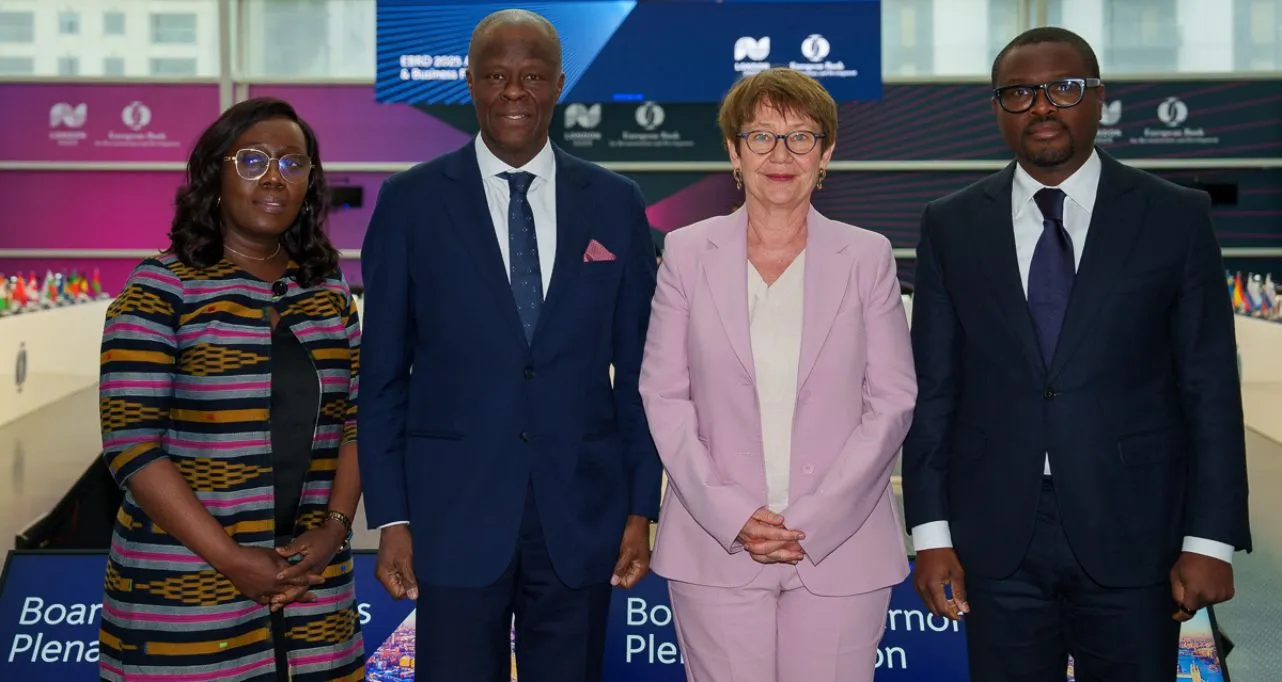
On 21 May 2025, the European Bank for Reconstruction and Development (EBRD) and the European Union (EU) announced a landmark partnership to identify and prepare investment projects across six sub-Saharan nations: Benin, Côte d’Ivoire, Ghana, Kenya, Nigeria and Senegal. Underpinned by a €15 million grant from the EU’s Global Gateway strategy, this technical-assistance package aims to pave the way for sustainable, private-sector-led investments in agribusiness, energy, infrastructure, small business, critical raw materials, and digital/telecoms sectors (International Partnerships.
A strategic boost from Global Gateway
Launched in December 2021, the Global Gateway initiative is the EU’s answer to the growing infrastructure gap in emerging markets. With a headline budget of €300 billion earmarked for 2021–2027, Global Gateway seeks to:
- Accelerate the green transition, scaling up renewable-energy capacity and clean-hydrogen production.
- Drive the digital transformation, boosting broadband and connectivity to narrow the digital divide.
- Foster sustainable economic growth and job creation, with a focus on small and medium-sized enterprises (SMEs).
- Strengthen health and education systems, making them more resilient against future shocks (International Partnerships).
In sub-Saharan Africa, Global Gateway’s Team Europe approach—pooling resources from the EU, its member states, and European financial institutions—has already mobilised over €150 billion for projects spanning transport, energy, digital, and social infrastructure (International Partnerships). The €15 million earmarked for EBRD technical assistance represents one of the first instances this funding is deployed in the region by the bank, marking a pivotal moment in its geographic expansion.
EBRD’s foray into sub-Saharan Africa
Since its founding in 1991 to aid post-Cold War Eastern Europe, the EBRD has invested more than €200 billion globally—primarily in private-sector ventures across natural resources, financial institutions, agriculture and infrastructure (Reuters). In May 2025, the bank’s Board formally approved Benin, Côte d’Ivoire and Nigeria as new recipient member states, unlocking their access to EBRD financing once an amendment to its founding treaty takes effect in July 2025. Meanwhile, Ghana, Kenya and Senegal are on track to join pending certain pre-membership criteria.
By pairing its deep project-finance expertise with €15 million in EU grants, the EBRD will deploy feasibility studies, environmental and social-impact assessments, and market-analysis work to “de-risk” early-stage projects—laying the groundwork for future loans, equity investments or guarantees.
Focus sectors: From farm to fiber
The technical-assistance activities will target six priority areas:
- Agribusiness
- Energy (renewables and efficiency)
- Infrastructure (transport, logistics, water)
- Small-business development
- Critical raw materials
- Digital, telecommunications, media and technology (TMT)
In agribusiness, sub-Saharan Africa’s potential remains largely untapped: the region accounts for just 5% of global agricultural exports despite producing nearly a quarter of the world’s farmland output. Feasibility studies financed under this programme could support value-chain upgrades—such as storage-facility expansions in Côte d’Ivoire’s cocoa sector or mechanised irrigation schemes in Kenya’s horticulture belt—boosting yields, reducing post-harvest losses and enhancing export revenues (International Partnerships).
Deep dive: Country-level opportunities
Benin
A gateway to the Gulf of Guinea, Benin’s logistics network is strained by aging port infrastructure and inadequate hinterland connections. EBRD-backed technical assistance could fast-track feasibility studies for a dry-port facility in Parakou, linking the Port of Cotonou to regional markets in Niger and Burkina Faso. Improved multimodal connectivity would slash transport times and costs for agricultural and manufactured goods (EBRD).
Côte d’Ivoire
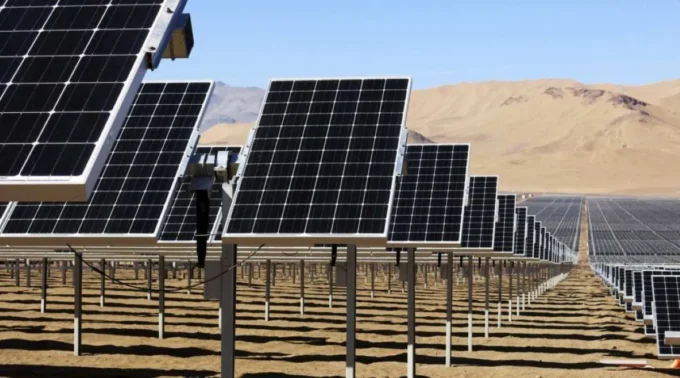
Already West Africa’s economic powerhouse, Côte d’Ivoire seeks to expand its renewable-energy mix to meet booming demand. Feasibility work on utility-scale solar PV and battery storage projects could pave the way for 200 MW of new clean capacity, reducing reliance on thermal plants and cutting carbon emissions by an estimated 200,000 tonnes annually (International Partnerships).
Ghana
Ghana’s burgeoning digital economy—projected to grow at 15% CAGR through 2030—faces bottlenecks in broadband access and data-centre capacity. Technical assistance could underwrite market studies for public-private partnerships to build up to 5 data centres, potentially unlocking thousands of high-skilled jobs and reinforcing the country’s position as a regional ICT hub (International Partnerships).
Kenya
East Africa’s tech trailblazer, Kenya’s “Silicon Savannah” has attracted global investors but still grapples with grid instability. EBRD could commission grid-stability studies, evaluating microgrid and battery-storage pilots in rural counties, improving electrification rates beyond the current 75% national average (EBRD).
Nigeria
Africa’s largest economy, Nigeria contends with chronic power shortages and critical-raw-material dependencies. By funding prefeasibility work on lithium-ion battery manufacturing plants and rare-earth mineral processing facilities, the programme could help Nigeria capture more value on exports now dominated by crude oil sales (International Partnerships).
Senegal
With strategic ports at Dakar and planned expansions in Ndayane, Senegal aims to diversify beyond phosphate exports. Technical assistance could support feasibility of an integrated port-industrial zone, combining deep-water berths with free-zone facilities for agro processing and light manufacturing (EBRD).
Leveraging €15 million into billions
While €15 million may sound modest against the backdrop of €300 billion, technical assistance often unlocks 10–20× its value in mobilised investments. For example, EBRD-facilitated studies in Eastern Europe historically attracted over €6 billion in follow-on financing from public and private sources, illustrating the catalytic power of early-stage support (Reuters).
EU perspective: Creating the right ecosystem
European Commissioner for International Partnerships Jozef Síkela emphasised that technical assistance is only one piece of the puzzle. “We are supporting concrete projects and also creating an environment where the private sector can thrive,” he said. Stable regulatory frameworks, transparent procurement processes and strengthened local institutions are essential complements to on-the-ground feasibility studies (International Partnerships).
To buttress these efforts, the EU will engage its bilateral aid channels and multilateral partners—including the African Development Bank and European Investment Bank (EIB)—to align priorities and co-finance large-scale infrastructure under the Global Gateway umbrella (African Development Bank Group).
Navigating challenges
Despite the promise, several hurdles loom:
- Political risk: Elections in Côte d’Ivoire and Nigeria later this year may trigger policy shifts affecting investor confidence.
- Currency volatility: Depreciating local currencies could erode project returns unless hedging mechanisms are in place.
- Capacity constraints: Limited local expertise in complex sectors (e.g., battery manufacturing) necessitates parallel investments in skills development.
- COVID-19 aftereffects: Supply-chain disruptions linger, potentially delaying equipment deliveries and inflating costs.
The EBRD and EU intend to address these by integrating Political-Risk Insurance (PRI) tools, leveraging blended-finance structures and fostering knowledge-transfer partnerships with European universities and technical institutes.
Parallel success stories
The EBRD’s recent entry into neighbouring North Africa and the Western Balkans underscores its model’s efficacy:
- In Morocco, a €50 million EBRD loan for on-farm solar pumps helped smallholders increase yields by 30% within two harvest seasons.
- In Bosnia & Herzegovina, EBRD-backed technical assistance catalysed a €200 million regional wind-farm portfolio, now powering 150,000 homes.
Such precedents offer a blueprint for sub-Saharan Africa, where rapid population growth and fertile land present unique opportunities for transformative change.
What’s next?
With the treaty amendment expected in July 2025, the EBRD will launch country-specific scoping missions over the summer. By Q1 2026, the first wave of feasibility studies and transaction-advisory work should be underway, followed by the mobilisation of sponsors and lenders through late 2026 and early 2027.
Stakeholders from national ministries to local entrepreneurs are already signalling interest. In Ghana, the Ministry of Agriculture has drafted a shortlist of pilot irrigation schemes, while Kenya’s ICT Authority is mapping potential data-centre corridors.
As the EBRD and EU embark on this collaborative journey, the critical question will be whether €15 million in EU grants can indeed spark the €1 billion-plus in private-sector investment needed to accelerate Africa’s green and digital transition.
Ready to take your career to the next level? Join our dynamic courses: ACCA, HESI A2, ATI TEAS 7 , HESI EXIT , NCLEX – RN and NCLEX – PN, Financial Literacy!🌟 Dive into a world of opportunities and empower yourself for success. Explore more at Serrari Ed and start your exciting journey today! ✨
photo source: Google
By: Montel Kamau
Serrari Financial Analyst
22nd May, 2025