
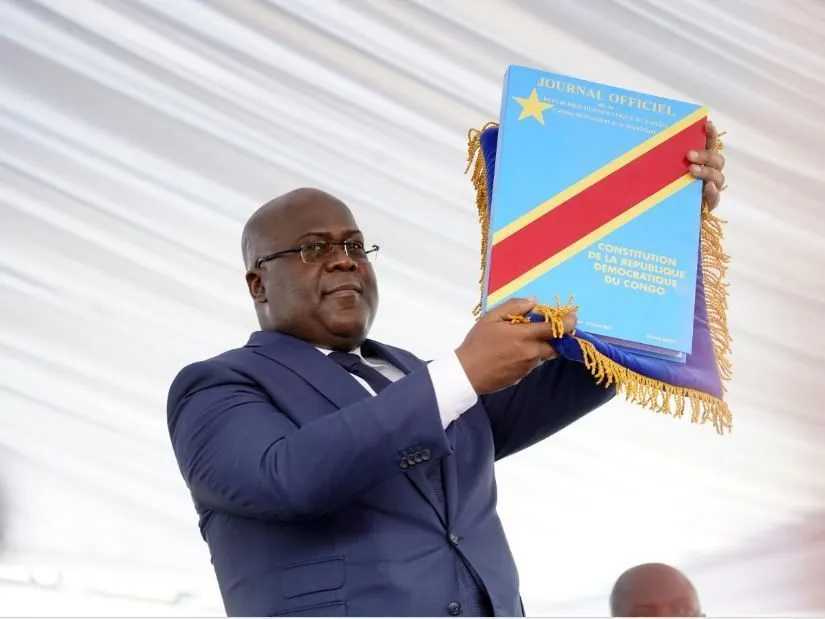
The Democratic Republic of Congo (DRC) has achieved a major milestone, completing the integration of its customs data exchange system with the East African Community’s (EAC) Single Customs Territory (SCT). This technical readiness means that, beginning November 28, the DRC will formally join Kenya, Uganda, Tanzania, and Rwanda on the centralized customs platform, dramatically altering the economic and logistical landscape of Central and East Africa. This move, hailed by regional trade bodies, represents a significant step towards fully liberalizing intra-regional trade among the EAC’s burgeoning member states.
The Northern Corridor Transit and Transport Coordination Authority (NCTTCA), a key facilitator of trade between the Kenyan Port of Mombasa and the hinterlands including Burundi, Rwanda, Uganda, and South Sudan, confirmed the successful technical integration. This achievement is particularly notable given the complexities involved in reconciling the DRC’s French colonial administrative heritage with the predominantly Anglophone-influenced customs and legal frameworks of the older EAC members.
Build the future you deserve. Get started with our top-tier Online courses: ACCA, HESI A2, ATI TEAS 7, HESI EXIT, NCLEX-RN, NCLEX-PN, and Financial Literacy. Let Serrari Ed guide your path to success. Enroll today.
John Deng, the NCTTCA executive director, noted that overcoming the language barrier was a primary hurdle to speedy integration. “Integrating a language translator in the system has been one of the hinderances to speedy integration,” Mr. Deng said, emphasizing that Kinshasa successfully developed a conformed system to address challenges related to data and information exchange. This technical conformity is vital for ensuring more efficient trade facilitation and reducing the administrative drag that has historically plagued cross-border commerce.
The planned system integration is expected to deliver substantial benefits. According to Deng, it “will enhance data exchange between customs administrations, effectively addressing non-tariff barriers that hinder trade.” By facilitating seamless information sharing, the initiative will reduce trade fraud, improve revenue collection across the bloc, and, most critically for logistics, significantly cut down transit times for cargo moving from the ports of Mombasa and Dar es Salaam deep into the vast Congolese interior.
The Mechanics of the Single Customs Territory
The SCT model is the most advanced stage of economic integration within the EAC’s Customs Union framework, designed to turn the entire region into a single trading zone. The foundational principle is the principle of ‘destination principle’ of taxation. Under this model, customs taxes and duties are processed and paid at the first point of entry into the EAC—typically the ports of Mombasa (Kenya) or Dar es Salaam (Tanzania).
Under the model, officers of the revenue authorities of each EAC country—such as the Kenya Revenue Authority (KRA), Uganda Revenue Authority (URA), and now the DRC’s Direction Générale des Douanes et Accises (DGDA)—are stationed at the first points of entry. They process customs declarations, collect relevant taxes, and clear goods destined for their respective countries.
The most critical operational aspect of the SCT is interconnectivity of customs systems. This interconnectivity, which was initially done on a bilateral basis and is now moving toward a centralized platform, enables real-time information sharing and transmission of notifications between the destination country’s customs authority and the first point of entry. Once cleared at the port, the transit cargo is tracked electronically, reducing the need for multiple physical checks. This single-clearance process drastically minimizes the transit time, the vulnerability to corruption, and the incidence of non-tariff barriers (NTBs) along the corridor. Before the SCT, cargo could take weeks to reach Kigali or Kampala from Mombasa; the SCT aims to reduce this to just a few days.
A project launched in 2021 sought to formalize this process by creating a Single Customs Territory centralized platform, aiming to liberalize intra-regional trade in goods based on mutually beneficial trade arrangements among all partner states. The DRC’s successful systems integration is the culmination of years of technical work following its official accession to the EAC in March 2022.
DRC’s Economic Gravitas: A Game-Changer for the Bloc
The entry of the DRC into the SCT is transformative primarily because of the sheer economic and geographical size the country brings to the EAC. With a population exceeding 100 million people, the DRC instantly becomes the most populous member of the EAC, surpassing Tanzania and providing the bloc with a total market of nearly 320 million people.
Furthermore, the DRC’s economy, driven by its unparalleled mineral wealth, adds substantial weight. As a major global supplier of cobalt, copper, diamonds, and coltan, the DRC’s inclusion will deepen the EAC’s role in global mineral supply chains. The combined GDP of the expanded EAC is estimated to exceed $240 billion, creating one of Africa’s largest and most dynamic regional economic communities.
For landlocked EAC countries like Uganda, Rwanda, Burundi, and South Sudan, the DRC represents an immense and largely untapped export market for manufactured goods, agricultural products, and services. Kenyan and Tanzanian ports, logistics companies, banks, and manufacturers will gain direct, streamlined access to the DRC’s burgeoning urban centers, particularly Kinshasa, Lubumbashi, and Goma. This connectivity is vital, particularly as countries like Kenya seek to increase the contribution of manufacturing to their GDP.
The DRC’s vast geography also provides the EAC with a connection to the Atlantic Ocean via its western ports, creating a trans-continental trade corridor that spans from the Indian Ocean (Mombasa/Dar es Salaam) to the Atlantic. While infrastructure on the DRC’s western side remains nascent, this potential for an East-to-West African trade route is a long-term strategic asset for the entire bloc.
One decision can change your entire career. Take that step with our Online courses in ACCA, HESI A2, ATI TEAS 7, HESI EXIT, NCLEX-RN, NCLEX-PN, and Financial Literacy. Join Serrari Ed and start building your brighter future today.
Remaining Challenges and the Role of the World Bank
Despite the technical success of the SCT integration, significant challenges remain for the DRC and the wider EAC. These include persistent issues with physical infrastructure, political stability, and the complete synchronization of regulatory frameworks.
Infrastructure Deficit and Non-Tariff Barriers
While the SCT streamlines customs procedures, it does not solve the underlying problems of dilapidated roads and railways, which lead to high transit costs. For instance, the Northern Corridor requires continuous maintenance and rehabilitation, particularly in sections leading into the eastern DRC. The successful implementation of the SCT requires that all partner states uphold their commitments to eliminate persistent non-tariff barriers, such as arbitrary roadblocks, redundant weighbridges, and inconsistent application of standards. These NTBs remain a significant economic drain, often costing traders more than the tariffs they replace.
South Sudan and Other Integrating Members
The integration journey of other newer EAC members continues, highlighting the phased nature of the SCT implementation. South Sudan is also actively working towards developing its SCT system. This effort is supported by external partners, with the World Bank offering $2.6 million to facilitate the process. This funding is critical for ensuring speedy cargo documentation and reducing the notorious queues at the often-congested borders, such as Nimule.
DRC’s integration now leaves Burundi, South Sudan, and Somalia at different stages of internalizing the protocols of both the Customs Union and the Common Market.
- Burundi: While a long-standing member, Burundi’s full SCT integration has faced domestic challenges, primarily related to political transitions and administrative capacity.
- South Sudan: Heavily reliant on customs revenue, Juba’s adoption is progressing with World Bank support, focusing on modernizing its revenue and customs management systems.
- Somalia: The newest entrant to the EAC, Somalia’s integration is at the earliest stages, focusing first on internalizing the fundamental protocols of the Customs Union and the Common Market. Given its recent history and fragile institutional environment, its full SCT participation will likely take several years, but its long coastline offers immense potential for alternative maritime trade routes.
Beyond Customs: The Long-Term Vision
The successful integration of the DRC into the SCT is not merely a technical fix; it is a vital step toward realizing the EAC’s ambitious long-term goals. The EAC vision extends beyond a customs union to a Common Market, a Monetary Union, and ultimately, a Political Federation.
The Common Market, which aims to guarantee the free movement of labor, capital, goods, and services, is dramatically improved by the DRC’s entry. For instance, Kenyan professionals, ranging from bankers to engineers, now have a streamlined legal framework to operate in the DRC, accelerating the export of professional services. Similarly, Congolese entrepreneurs gain simplified access to capital markets in Nairobi and Dar es Salaam.
The inclusion of the DRC also necessitates a re-evaluation of the path to the Monetary Union, which seeks to establish a single currency for the bloc. The sheer size of the DRC’s economy, while beneficial, introduces new complexities in macroeconomic convergence, debt management, and central bank harmonization.
The Security and Peace Nexus
Finally, the economic benefits are inextricably linked to the issue of security, particularly in the eastern region of the DRC, which has been plagued by instability and conflict for decades. The EAC has actively pursued a dual-track approach: deepening economic integration while deploying its own regional force, the EAC Regional Force (EACRF), to stabilize the region and facilitate humanitarian access. The SCT integration signals a belief that increased trade and economic interdependence will ultimately serve as the most powerful catalyst for long-term peace and stability.
As cargo documentation and transit times are cut, the cost of doing business decreases, generating employment and legitimate economic opportunities that counter the illicit trades often fueling conflict. The DRC’s successful adherence to the SCT, despite the challenges, reinforces the principle that economic integration is a prerequisite for security integration in the volatile Great Lakes region.
The November 28 deadline is not the finish line, but the starting gun for a massive undertaking. With the DRC’s full customs integration, the EAC has decisively shifted from being an East African bloc to becoming a Central and East African powerhouse, cementing its place as one of the most exciting and complex economic experiments on the continent. The challenge now lies in ensuring that the digital seamlessness of the SCT translates into tangible prosperity and stability for all 320 million citizens across the expanded territory.
Ready to take your career to the next level? Join our Online courses: ACCA, HESI A2, ATI TEAS 7 , HESI EXIT , NCLEX – RN and NCLEX – PN, Financial Literacy!🌟 Dive into a world of opportunities and empower yourself for success. Explore more at Serrari Ed and start your exciting journey today! ✨
Track GDP, Inflation and Central Bank rates for top African markets with Serrari’s comparator tool.
See today’s Treasury bonds and Money market funds movement across financial service providers in Kenya, using Serrari’s comparator tools.
Photo source: Google
By: Montel Kamau
Serrari Financial Analyst
18th November, 2025